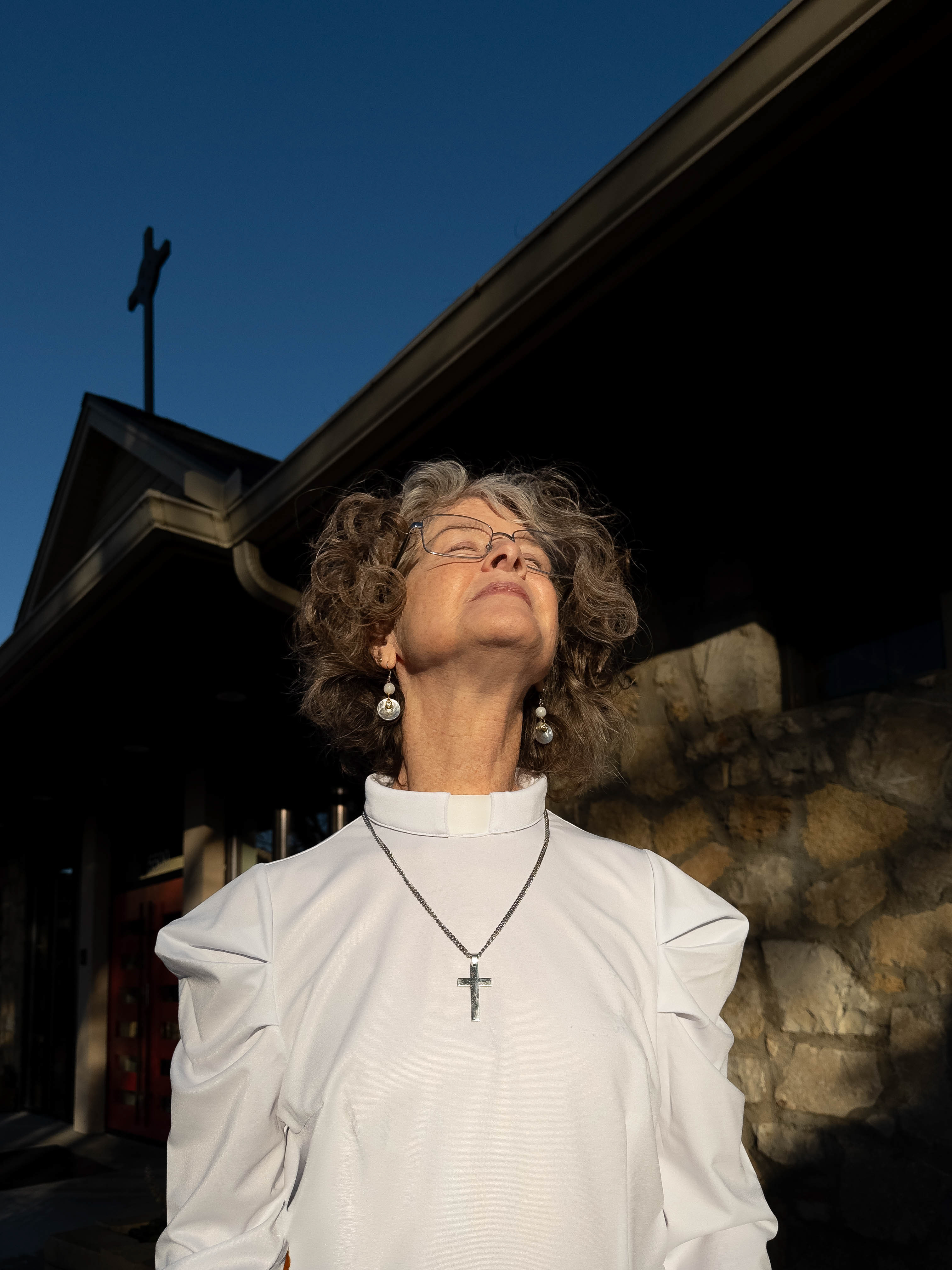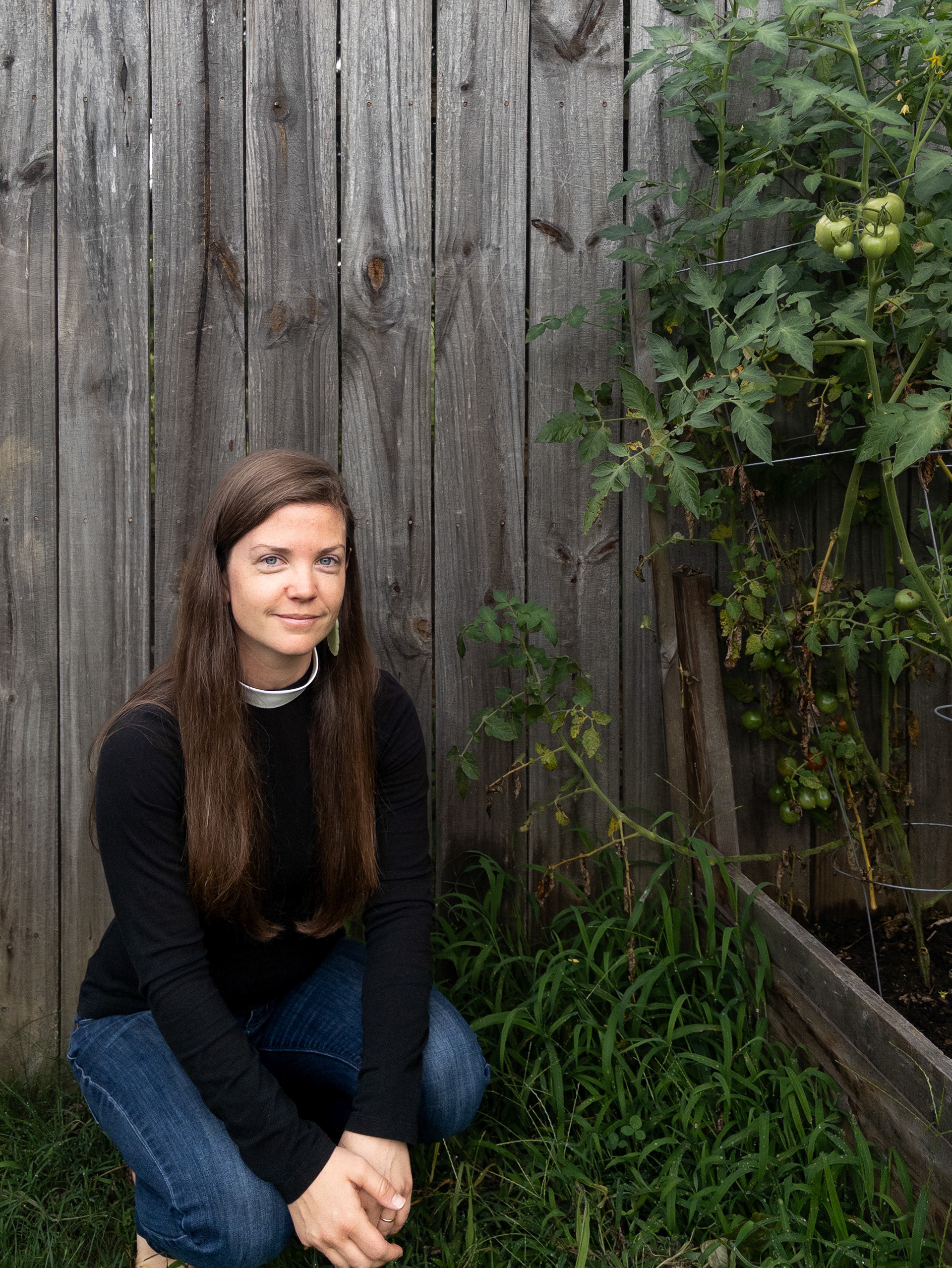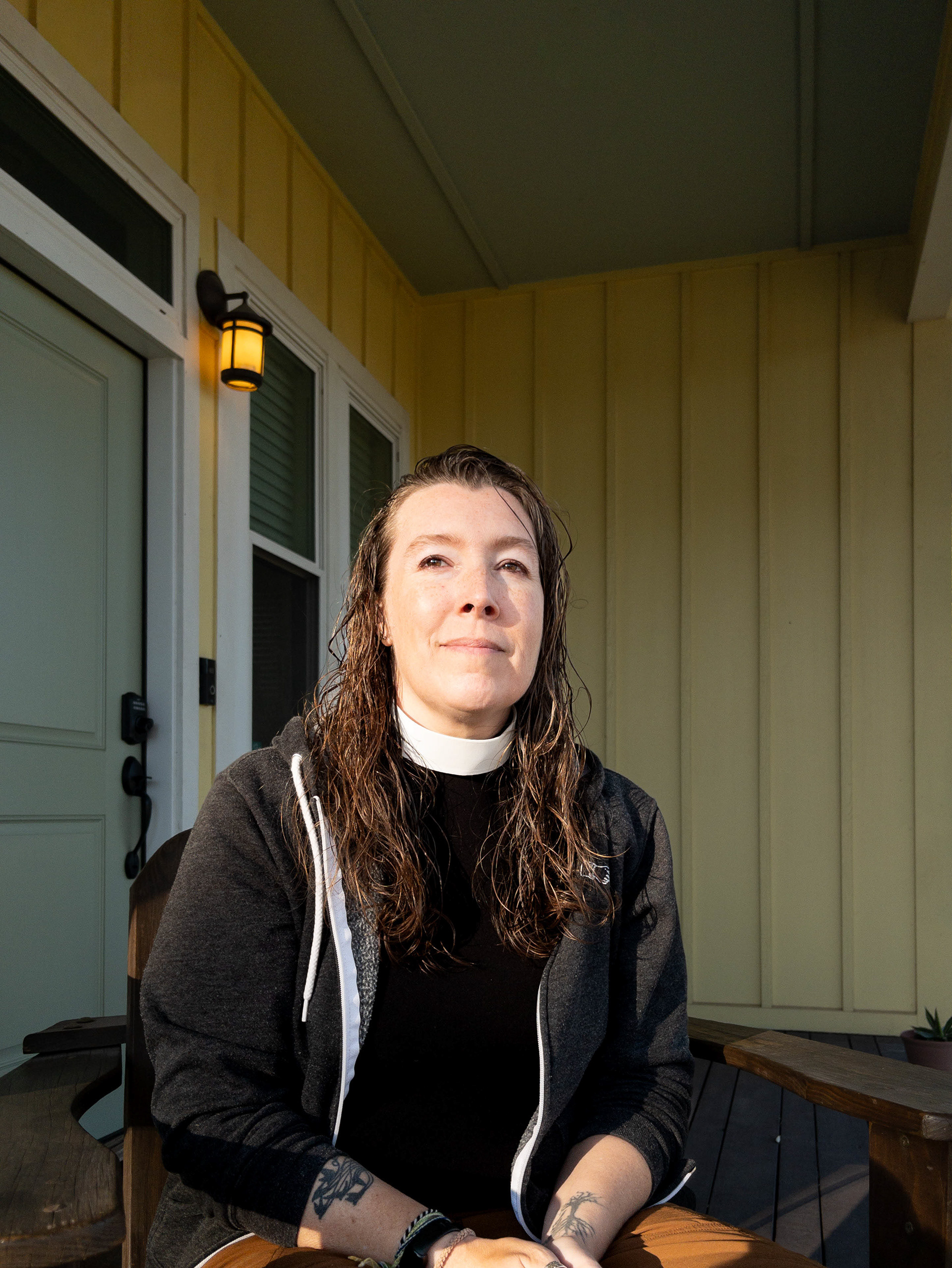
"In moments that I feel discouraged about what's happening in the world more generally or what's happening among Christians in the“big C” Church, the Lord brings me down and reminds me to focus on the local church and the beautiful stories that the local church holds."
It's such a privilege to be a part of the local church. Ministering to people, being present to and equipping these people, helping them see their own calling and the work of God in their lives.
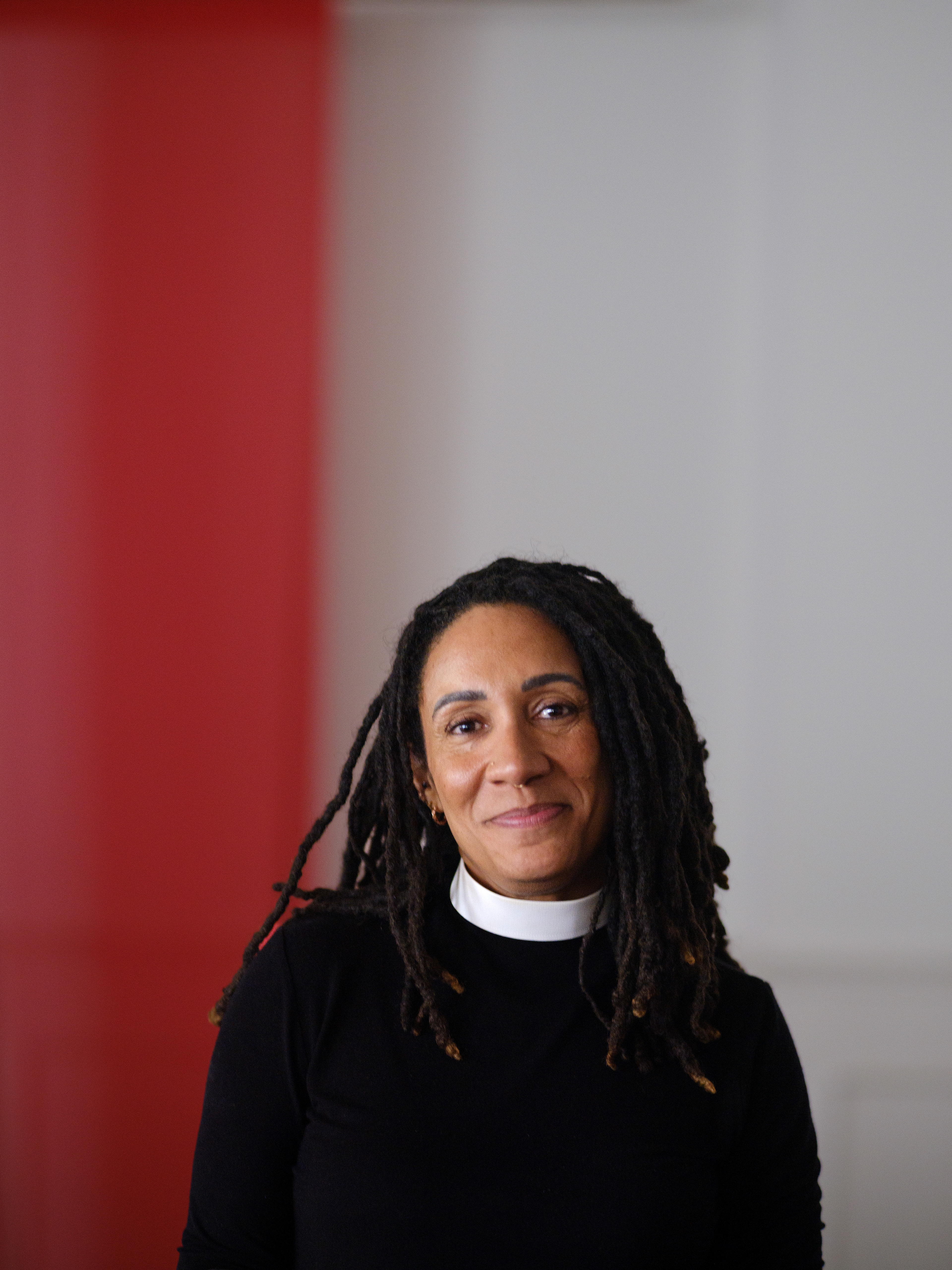
Juliet San Nicolas de Bradley
Hello everyone and welcome to Call and Response, the storytelling project where we hear the story of women and their call to holy orders. I'm joined today by Kimberly. Would you introduce yourself?
Kimberly
I am Kimberly and I am a priest in the Anglican church. I oversee care and mission at our church. And, I love this work. I spent quite a bit of time prior to pastoral ministry working as a social worker as well. I feel that the Lord has enabled me to use a lot of what I learned both in my education for social work and in my practical experience as a social worker in the work that I'm called to as a priest in the local church.
Juliet San Nicolas de Bradley
Thank you. We'll jump straight into it. Kimberly, will you tell us some of the story of your call to ministry?
Kimberly
Yeah, for sure. It's been a little while since I've told this story. There was a season where it felt like I was telling it a lot, so it's kind of fun to think back, having not spoken about it for a bit. I did not grow up in the church, although I say that maybe with an asterisk. I was raised in the Unitarian Universalist Church. So I was raised in a faith community, but at a really young age, in grade school, I started having a lot of questions, particularly about the Trinity. When I look back on it, it always makes me laugh a little bit just because I was probably this weird, I don't know, fourth or fifth grader, asking questions like, “but what about the Trinity? What about the Father, Son, and Holy Spirit?” So I wasn't raised in a Christian community.
Although in that community, there was space for me to ask those questions. I didn't feel self-conscious or as if I didn't belong or that I was kind of an outsider because I was curious and had questions that differed from that faith community. That's always felt like such a gift and even to this day, when I think about the formation of the kids in our church (including my daughter), I think about having a space where I could ask questions, where I could have differing beliefs and work my way through that in a place that felt safe to do that was really important.
I had a couple of friends growing up whose dads were pastors. In my curiosity, I would go to church with them. My parents were very, “sure, whatever.” So, starting in middle school I would attend church wherever I could get a ride to. It ended up being a PCA [Presbyterian Church in America] church and an Assemblies of God church. I love that part of the story too. I also tend to be very loyal. So, even though my parents didn’t say, “ you have to come to church with us,” I was still going to church with them, while I was going to this Assemblies of God Church and a PCA church. I was really active in a youth group at a PCA church, and just bouncing all over the place. It was then that I came to know Jesus, with these really clear encounters with Him. I started in my journey of faith and life with Him. Even as I look back, I think a part of my questions around faith and
following Jesus and the Trinity really came from these encounters with the Holy Spirit that, at the time, I couldn't have described. I was in grade school, middle school. I didn't grow up in a home with parents who were Christians. But as I look back, thinking through my own testimony as I got older, there are these really clear encounters of moments in my family life where I felt especially alone. I was a little bit of a black sheep in my family, not just related to faith, but other things too. There's quite a bit of dysfunction, with these really clear moments of Jesus being present to me. I think that a part of what led me into asking questions and led me to curiosity about the faith and ultimately led me to life with Him. So fast forward a little bit into high school, and I was more and more active in various churches. Again, a lot of it was where I could get a ride to, that kind of a thing, but I was pretty involved in a youth group in a PCA church. I started having this really clear sense of calling to pastoral ministry, which felt so weird. I think it didn't strike me as weird in the moment, thankfully. I say “weird” because I didn't know any women who were pastors. I had zero context or understanding of what that meant or would look like. I didn't even really have a full understanding of what a calling to pastoral ministry meant or would be. So it's such a weird thing, but it felt so clear.
As I began thinking about college, I was looking at different schools and programs and ended up going to a large division one school because I was an athlete. I wanted that school for my sport but the disadvantage to that was what it meant for thinking about pastoral ministry. What should I major in at a big state school? Religious studies was the major. I started out freshman year and it was interesting, but it pretty quickly just felt clear that it wasn't the road toward a vocation in pastoral ministry. The major wasn't gonna prepare me for that, so I ended up moving over to major in social work, then working as a social worker for a little over a decade. I earned a master's degree in social work. But throughout that time I was deeply connected to different churches and ministries. I helped start Fellowship of Christian Athletes at the college that I attended.
I think that when I went to college, in a lot of ways it felt like my faith became a little more my own. I didn't have a sense of needing to keep participating in the church community that my family was a part of. I had more space for figuring out what my life with Jesus could look like, figuring out some of my own theology and understanding of God, and how that manifested itself in my day-to-day life, in the way I participated in the world.
Social work, in many ways, fit with a lot of that, and I was also able to help start ministries and mentor and lead in various ways. I think, as is often the case for women,the churches that I was attending through that decade or so were happy to have me serve in a lot of ways. I helped start a foster care ministry at a church and helped serve in high-level ways. Of course, all of that was unpaid. Often those doing “work” in churches that didn't have female pastors would consider themselves complementarian or use soft complementarian terminology. It felt like a really significant season in my faith and formation, one that I wouldn't change.
It was when my daughter was a couple of years old, two I think, that a few things happened at once. I was married, and we were leaving a church that we'd been at for quite a while. We had spent quite a bit of time in prayer and discernment and conversation with the pastor around some things that were concerning to us. It had been a couple of years of that, and we had a sense that it was time to transition from that church. And in the midst of that, I was also starting seminary. It was a couple weeks after we left that church, that my seminary journey was beginning. I was doing that just for fun. There was a seminary program where we lived that was very accessible and affordable. It was an MA in missional theology with this really cool cohort model.
I also met a woman who I would now call my best friend. In my first conversation with her, she has this prophetic gifting, and she said, “ I think you're called to pastoral ministry. Did you know that?” All those things kind of converged at once. In that conversation with her, she brought up this Anglican church plant where we were living that was in the very early stage of launching. It was forming a core group of people.
All those things happened at once and the Lord, you know, thankfully knows us well. He knows our idiosyncrasies and what we need. He really gently gave this tap on the shoulder, like “hey, remember what I called you to 15 years ago.” I think I can really quickly go to shame and guilt. So the gentle way in which he gave me that reminder was not “hey, what have you been doing? You've wasted all this time. You're not listening to my calling.” It was such a gentle reminder and invitation.
Those things converging are what reminded me and helped me turn back to or toward this calling. Truthfully, in that season of my life, there were certainly still barriers but it made so much sense. There were these clear things that the Lord had put in place to enable the next steps toward vocational ministry that just weren't available when this sense of calling first came, fifteen years or so before.
Juliet San Nicolas de Bradley
Thank you for sharing that. What I find remarkable about your whole story is the way that God was making doors where there would not be ones. You were raised in a non-Christian family, but had friends and were getting rides to church, and then became a religious studies major.You had a friend who said that you were called to pastoral ministry. All of these gentle nudges and ways for the Holy Spirit to draw you into this space. and I love how you named that those ten years [as a social worker] were not wasted. Your time as a social worker deepens and enriches you as a priest. Was there a discernment time for you to think of either the diaconate or the diaconate and the priesthood, or did it feel like a call to priesthood straight from the get-go?
Kimberly
That’s a good question. Initially, in the church plant that we were a part of, there was a male priest who was planting it. He had been praying - we kind of laugh about this now - he'd been praying that the Lord would bring him somebody to co-plant with, and he'd been praying specifically for a person of color. So, the joke was, “Well, God brought you a person of color. You might not have been praying for that person to be a woman, but here I am.” And he was gracious and excited about it. It wasn't an issue that I was a woman, but it was funny. However, the diocese that he was planting in did not ordain women as priests. He had his own story about why he chose that diocese, and there were many things that were lovely about it. In some ways, he didn't have the imagination that he might end up planting with a woman and he hadn't thought that far ahead.
So, initially, we would joke, “Well I'm discerning. I need to spend time discerning if I even want to begin this process.” Everybody needs to do that to a certain extent, but I think that there were times where this priest that I was planting with was thinking, “All right, come on. haven't you discerned long enough?” There's a parish discernment committee. There's local discernment. There's lots of space for that. But I was pre-discerning discernment. I think at that point I didn't have a clear sense of diaconate versus priesthood. That was part of it, but I think another part of not having a clear sense was that it felt really scary. The process as a whole felt really exciting, but also scary. I'm sure you've heard other women talk about this, and I'm sure you've experienced it yourself. There's this additional thing that we're saying “yes” to as women, right? That's just not true for our male clergy. We’re saying “yes” to all these other things that we don't necessarily feel excited about, but that complicate our call to ordained ministry as women. Then there was the additional potential of questions or pushback or pressures or expectations. All of the things that came with saying “yes” to it as a woman. It felt hard enough to like to say “yes” to ordination, much less the diaconate or priesthood. In a way, it was a little easier because we were in a diocese where the diaconate was my only option.
After I began the process, probably six months to a year into it, we reached the point where our people and our church were kindly, gently, in a very encouraging way, asking me to consider the priesthood. As we were getting ready to officially launch our church and thinking about clergy and staff for the church, there were just these moments where it felt clear that my next step would be as a transitional deacon. Again it felt scary to say that out loud. Part of it was the practical reality of being in a diocese that didn’t ordain women as priests. I didn't want to burden my church with thinking through changing dioceses. I didn't want to create more work as we were trying to launch this church.
The bishop of that diocese was very kind and gracious and entered into conversations with us about this. We had an interest in C4SO already. The bishop of my former diocese suggested that we consider C4SO before we even asked. Even that felt like the Lord leading the way. He helped connect us to Bishop Todd and gave us his blessing. We've continued to have a relationship with the bishop of that diocese. It was really gracious of him. At that point, I had gone through the whole process of ordination to the vocational diaconate in that diocese and there were just a few minor steps to change from vocational diaconate to transitional. Once we moved into the new diocese, I had to preach, to answer one additional exam question, things like that. I had already been preaching, and I could answer the question. At that point, it was a pretty easy transition. A lot of that discernment had already happened.
I think that there was something unique about going through the ordination process in a church plant because everybody's involved, in a way. Everybody's kind of the parish discernment committee because at the point that I was ordained, we hadn't even officially launched or had our first public service. That community and their calling, their like being able to name the need and desire for me to serve as a deacon (once a deacon, always a deacon), but also to serve the community sacramentally as a priest was really helpful. I think it gave me the courage to say out loud, “I feel a calling to the priesthood.”
Juliet San Nicolas de Bradley
That's so beautiful. One of the things I love about our discernment process in the Anglican church is how communal it is. I actually love how slow it is, even though that is definitely complicated in many ways, especially for women. The gift for so many of us who heard a clear call from God, but also had fears or doubts, was to have a community say, “yes, this is true. Keep pursuing this.” It is a thing that I hear throughout many of our stories, which is beautiful. You've talked a little bit about the struggles, but what were the struggles and barriers you encountered in your process towards ordination and since being ordained?
Kimberly
In any ordination process you encounter a lot of different people who are playing different roles. In my ordination process there were many lovely people and there were many things I loved about the process. It’s connected to what you were saying about the very communal aspect to it. I loved being able to discern with other people, with the Lord. I loved that it wasn't rushed because it's a big decision. It is life-changing in so many ways. Not just for us individually, but for our families, our extended families, our friends. It's significant. I love the process itself. So many of the opportunities I had to interact with people who played a role in that process, even outside of our local church, impacted me, and they asked really good questions. They helped me think more deeply about ordination and this calling.
However, my exams were really hard because there was a question about my view on women's ordination. Our bishop knew that I was pro-women's ordination. Even before the decision to pursue the priesthood and to change dioceses, I was pro-women's ordination. It wasn't a secret. I knew that I could still hold that belief as a parishioner and as clergy in the diocese. I could disagree with the diocese, but also part of my being a part of that diocese was that I was not going to make a big stink about it. So he knew that I would answer truthfully, and I did. I was able to articulate that I knew I was in a diocese that did not ordain women to the priesthood. I don't think that there was anything shocking about my response, but it just so happened that the person who was grading those exams had a different posture around that than our bishop did. So the response that I got to that one from the exam grader was that she wasn’t sure I would be able to move forward in the process. We needed to pause and have a phone call to understand this better. That process was hard and was definitely a moment of, should I even be doing this? At one point the guy that I was planting with got his old exams out and said, “I want to see your response and I want to look at mine.” He said, “mine's horrible and has way less information but it’s basically saying the same thing, but nobody flagged me.” I had to have multiple calls with this person. I had to write more, to defend my position. That was really hard.
In that process, the bishop connected me with a female deacon in the diocese, in case there was someone I wanted to talk to. She was amazing. Coincidentally, we both get to work with her now, because she's in our diocese. I think that ended up helping me stabilize and reset. She helped me as a friend, in the middle of something really hard and discouraging. I think in that too there was that moment of asking, “Is this what it's going to be like? If I continue in this process and I'm ordained, is it always going to be this way?” I'm happy to say it wasn’t. That has not been the overarching thing that has characterized my life as a priest, but it was probably the lowest moment in the process.
Juliet San Nicolas de Bradley
That sounds exhausting. I'm so sorry. I am also grateful that the Holy Spirit gave you a person that you needed to talk to, and probably multiple people, to stabilize you in your call and to support you with that.. That's hard, but also beautiful to hear. Our good God continued to shelter you, throughout this story.
Kimberly
For sure. So many things that don't make sense in my life and my story, except that God's hand was present. He was allowing all these things to fall into place and that wouldn’t have.
Juliet San Nicolas de Bradley
I haven't made it through one of these interviews without crying at some point. The Holy Spirit is so present in these stories. The Holy Spirit is present in ways that we could not have orchestrated. Even with all the struggles and barriers, there's such a sense of this deep love of the Holy Spirit towards you. There is a deep care and gentleness amidst the ups and downs of that story. It’s so powerful.
What are some moments of joy that you have encountered since being ordained?
Kimberly
I often think of these big moments, but then they’re nearly every Sunday. Sometimes coming into a Sunday, I’m tired. There's moments where it's, “I have to work every Sunday!” Sometimes I just have to get the energy up and deal with the logistical pieces. Then, I think that every Sunday there’s a moment as people begin coming in the building. There's just something about that moment that I experience, certainly as a parishioner as well. But there's something about experiencing that as a parish priest. It's like the flock is entering the building. That feels like such a privilege, week in and week out. The privilege is to know these people and to know their stories. To know how faithful God has been in their lives, and to know how so many of them have had intense seasons of loss and grief and doubt and you name it. And they have just continued forward, sometimes really slowly, really small steps, sometimes some steps backward, but there's such a privilege in being present to people and in helping them notice God's presence. Then each week, celebrating the Eucharist, looking people in the eye and offering them the body and the blood of Christ. It's hard to fully articulate.
A lot of times when we talk about female clergy, and it’s my tendency too, we think it's great for the little girls in our churches to see. One of the things that's been such a joy is when parents say, “I'm so excited that my son gets to see this too.” Having both male and female clergy serving and leading in our churches has just been such a a gift to participate in. It gives a beautiful, realistic vision for the kingdom and for this work that God's calling our churches and our people into.
I love the church. I love the local church so much. In moments that I feel discouraged about what's happening in the world more generally or what's happening among Christians in the“big C” Church, the Lord brings me down and reminds me to focus on the local church and the beautiful stories that the local church holds. It’s not just our church, but people I meet who attend other churches and other pastors I talk to. There's just something so beautiful about the local body and this ancient thing called the church. I think all of us are imperfect in living into our calling as the bride of Christ, but there's such beautiful things that the church has done for centuries and continues to do. It's such a privilege to be a part of the local church. Ministering to people, present to and equipping these people, helping them see their own calling and the work of of God in their lives. I think a lot of it is not the big moments. A lot of it feels like the everyday.
Juliet San Nicolas de Bradley
I just added this question about joy four or five interviews ago. partially because sometimes the struggles part was so heavy, but my favorite piece has been the last four priests all saying, “It's Sunday morning.” That has been the first response. Some of them have also had particular stories, but almost all of them have said that it's every Sunday morning. That is such a beautiful confirmation of the Holy Spirit to know when you step into that world and when you are caring for God's people. As as a shepherd, as you're feeding the sheep, that is the thing that comes up. I love that. One of my favorite things about this project is the surprising consistency of so many of our answers. When I put this out, the women did not talk to each other, I promise, but we serve the same God, right? We serve a God who is faithful, a God who has called us in our unique giftings. and there's something really beautiful to hear, both the uniqueness of the callings, but also the things that remain the same.
That leads straight into the next question. What would you say to a woman who is thinking about ordination?
Kimberly
Find a good core group of people who are your supporters, encouragers, cheerleaders. In the ordination process, of course, within the Anglican church, we have a discernment committee. There are different formal ways in which that's encouraged, which is really beautiful. But there's also something so important about having people outside of that. It doesn't have to be a ton of people, just a few who can support and encourage. People you can process with, who are praying for you. They may not even fully understand the process, but they can listen. That feels so important. I say that knowing it’s easier said than done. As we move into adulthood it's harder to make friends and connections ,and if you've relocated somewhere, there are all kinds of factors, but I would encourage a woman first to make sure she has some people around her. It's okay if those people live in a different state, but people who can really journey with you.
I would also encourage them to think about someone who can be an advocate. Hopefully that's the rector in their church. I would encourage them - and this can be a scary thing to do - to have specific asks of that rector that might look different than how their role is outlined in the process. Be clear about what you need from them. There's some prayer and discernment for the person who's discerning ordination. What do they uniquely need? I think it's easy to assume that a rector who said “yes” to helping someone enter into the ordination process, sees a role as advocacy, but I don't know if that's necessarily a fair assumption or expectation. Think about what you need from the rector,specifically and how can they be an advocate for you. As you alluded to earlier, the ordination process takes a while. There tend to be more barriers for women for whatever reason. There are reasons. Maybe they entered into ministry later in their career or in their life, or they had kids and weren't working outside of the home at all for a while. Various things. So you need someone who can really advocate for and believe in you. The people around you feel really important in the process.
Then, as much as I laugh about it, I would encourage a woman who's considering this to do a little bit of that pre-discerning discernment piece. Find some space. With our busyness what we can all do looks different, but even if they can find a weekend or just twenty-four hours for retreat and prayer and silence and time with the Lord, throughout the journey, find spaces like that. Ideally it’s more than a Sabbath because it is a long, hard journey. I think anyone would tell you that, male or female. There's a really important aspect of care for yourself: spiritual care and physical. So as best you can, make space for that in the process as well.
Finally, I would just offer the encouragement that you will learn so much about yourself and about God in this process. There will be so many ways in which you will be surprised. I think often as adults, there are less opportunities for things that surprise us in fun ways and learning new things. I think thatfor me very much characterized the ordination process and was a really fun part of it.
Juliet San Nicolas de Bradley
Thank you. That's so good. To close us out, do you have a favorite collect from the BCP to read to us?
Kimberly
I might not be the only one who has chosen this one.
Juliet San Nicolas de Bradley
We have actually had no repeats of collects so far. That's really cool. I did not realize that until now. So you might be the first, you might not.
Kimberly
My favorite one is the Collect for Social Justice.
Almighty God, you created us in your own image. Grant us grace to contend fearlessly against evil and to make no peace with oppression. And help us to use our freedom rightly in the establishment of justice in our communities and among the nations, to the glory of your holy name, through Jesus Christ our Lord, who lives and reigns with you and the Holy Spirit, one God, now and forever. Amen.