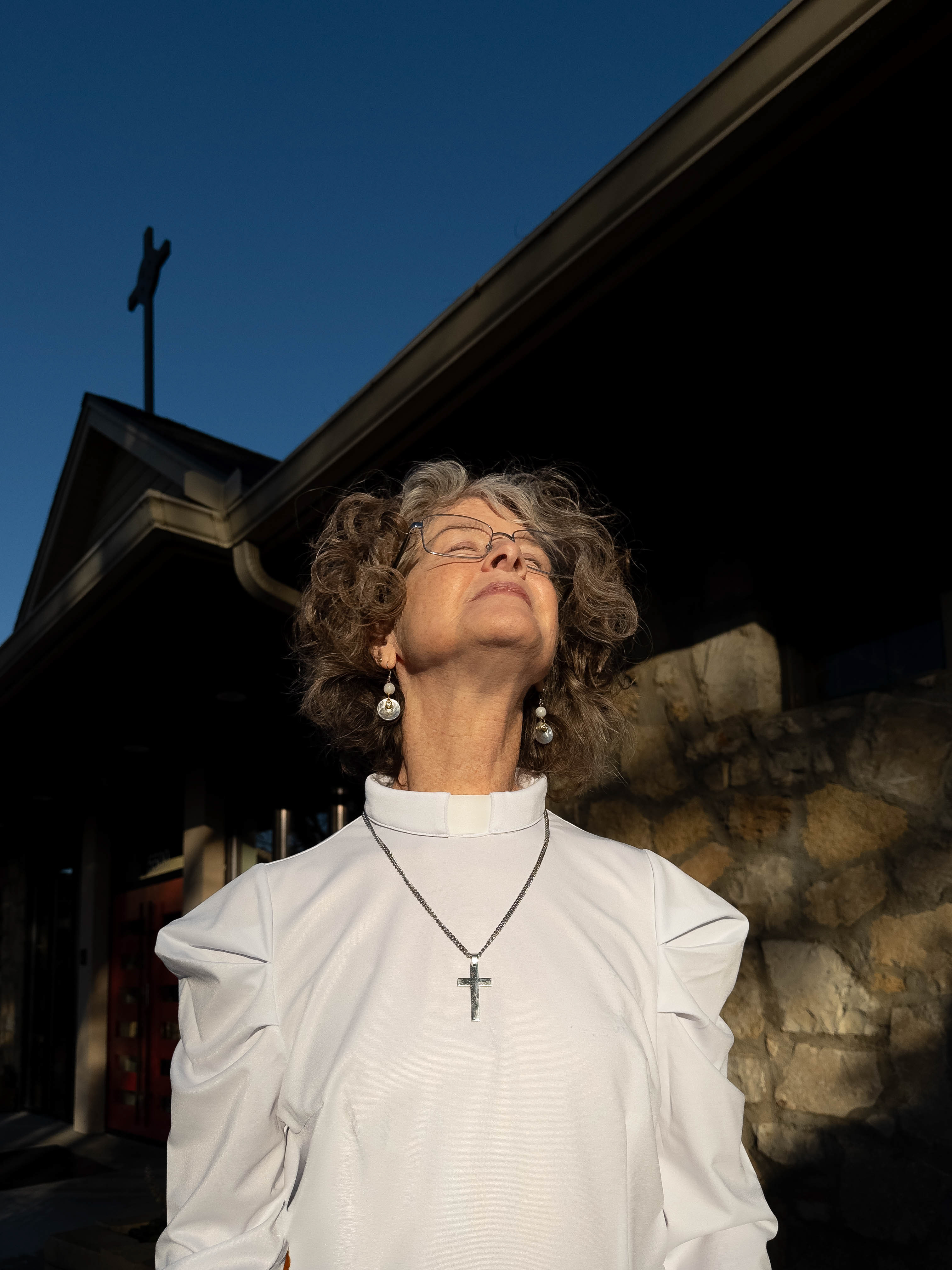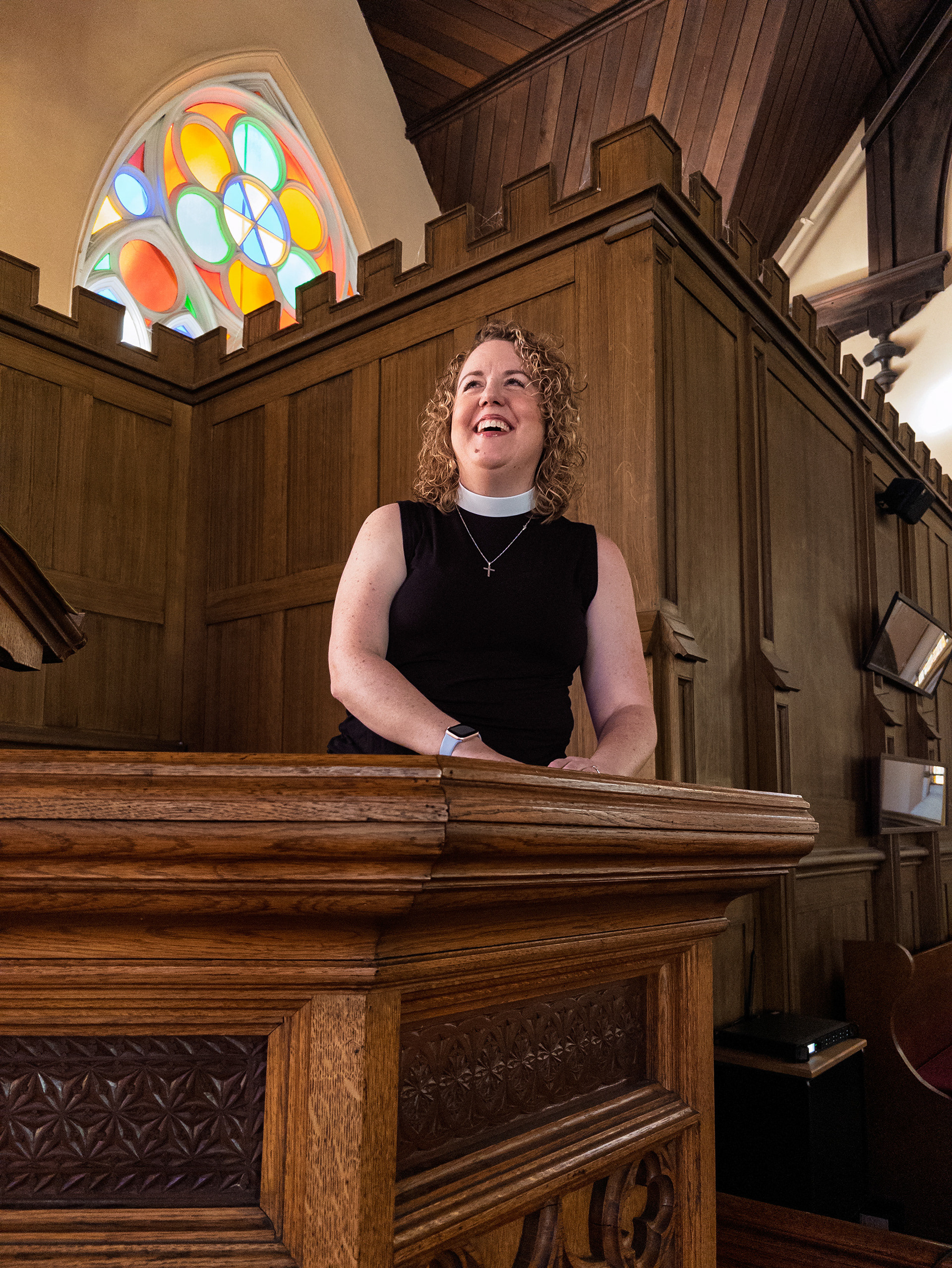
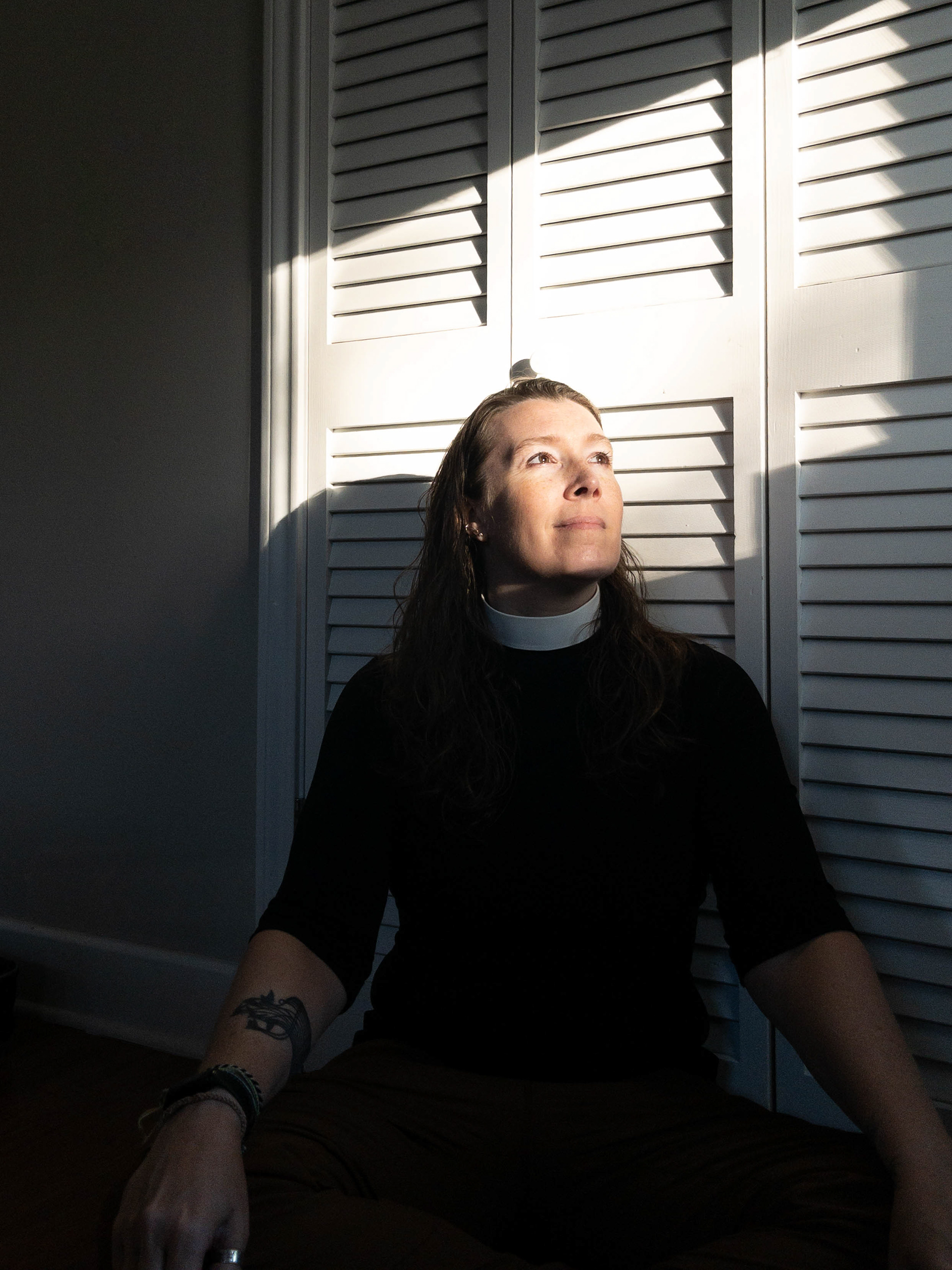
"The church needs you - whether it is through ordination or as a gifted lay person who is giving their heart to the church and serving, the church absolutely needs you, and your gifts are nonnegotiable."
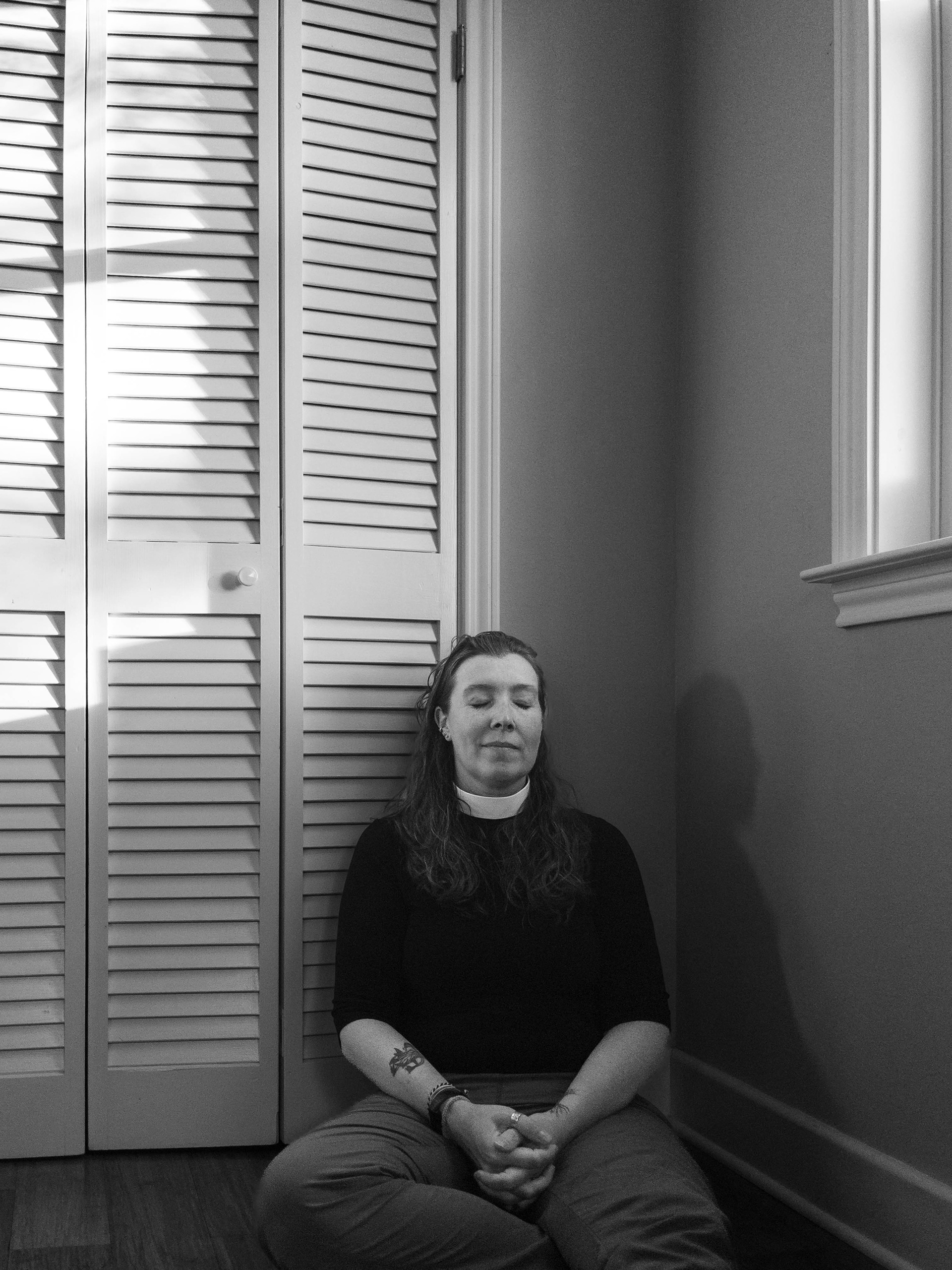
Juliet SNdB
Hello everyone and welcome to Call and Response, the storytelling project where we hear the story of women and their call to holy orders. I'm joined today by Erin. Erin, do you want to introduce yourself?
Erin
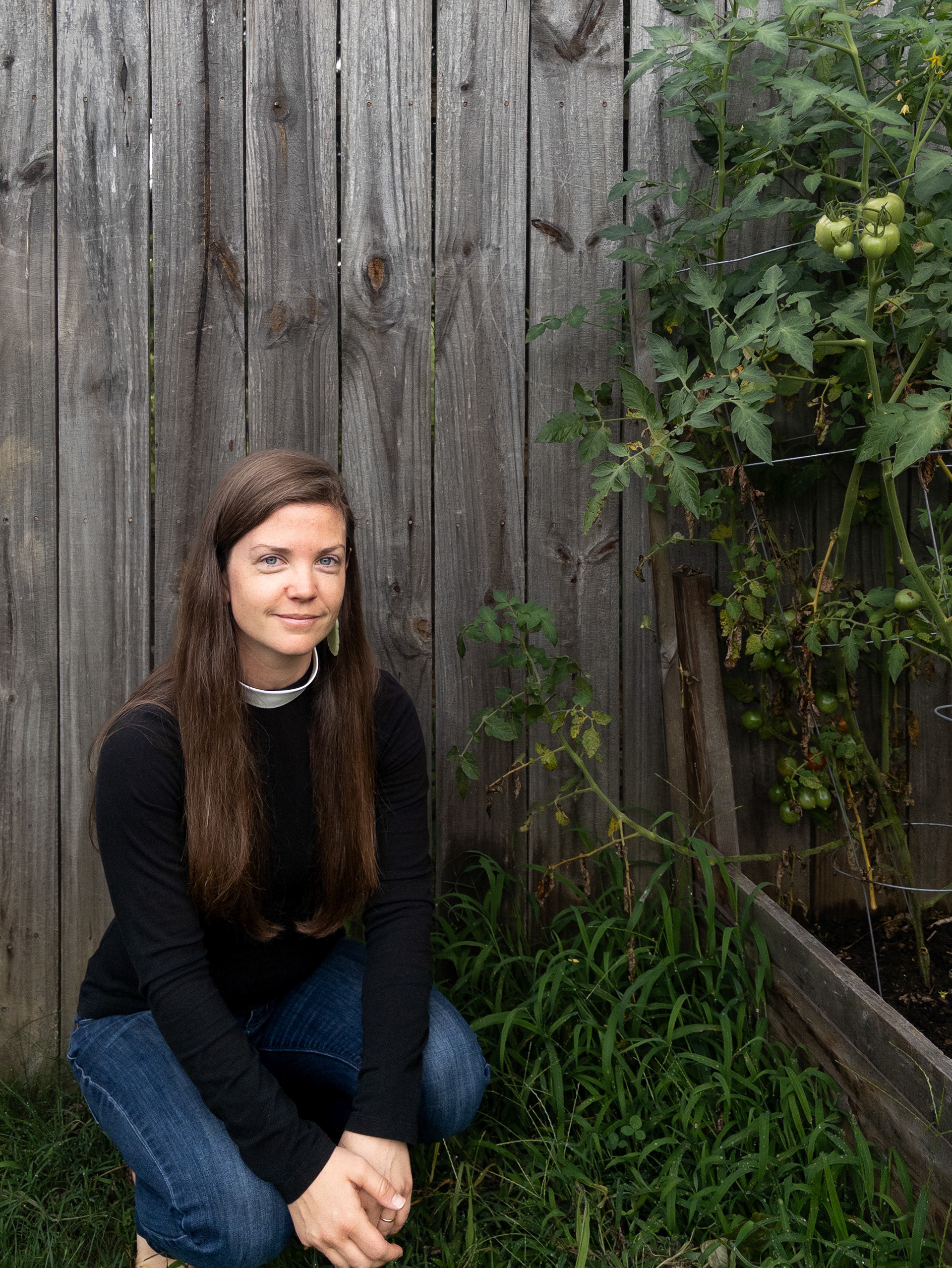
Yes, I am Erin Moniz. Depending on if you find me at Baylor University, I might be Dr. Moniz. If you find me at church, I'm Deacon Erin. But otherwise, just Erin.
Juliet San Nicolas de Bradley
Wonderful, well, we'll just jump into it. Can you tell us some of the story of your call to ministry?
Erin
Yes, it's kind of an interesting story. I was raised in a Southern Baptist household where we were very dedicated to church. Anytime the doors were open, we were there, we were that family. My mother was a part of a ton of things. My father was a part of a ton of things. My brother and I were expected to be a part of anything that was offered for our age groups, so children's choir and youth group and youth choir and Sunday school and Sunday morning church and Sunday evening church. We were such church people that when I felt my first call to ministry when I was around 11, I thought that that would be just like ecstatic news for my family.
And so I remember, I have this really vivid memory of a car ride with my mom when I told her, she was asking me how youth group had gone, and I [said], I can't believe that this is a thing and that people do this for a living and I [said], I think that I would love, this is what I want to do with my life. I just felt like this was it, youth ministry. And my mom very kindly but directly told me like, “Honey, that's not really a job that you can have.” And I was like, “Oh my, I didn't know.” I'm good kid. I'm just like, oh, okay. Interesting. There's so many other things that women can do and women can't do in the church. And so I was like, oh, okay. You know, what are some things that are on the table for me?
And she gave me three options and I'll never forget them. She said, you could teach Sunday school. And I had been through enough Sunday school to know that that was an absolute no. And she said, you could teach children and I was like, well, kids are fine but not really my thing. And then the third one, as many people probably are already guessing right now is I could marry a minister. I'm really not sure what sort of vocational track one does to secure that occupation for life. I just sort of took that and said, oh I guess I'm not called to ministry then because none of those things resonate with me in the same way that youth ministry did. And so I just kind of packed it away. And so it kind of became this sort of winding journey through my youth trying to figure out what my life was for and never really was able to land on anything else as solidly went to college and studied sociology and anthropology, which I love studying, but had no idea what to do with any of it after college. I never had a direct track. I was just sort of taking things as they came and just figuring things out along the way in my young adulthood.
And it also kind of put me on a track with God where, especially during college, I really kind of got into this back and forth, kind of this antagonism with God that actually started earlier in high school and really bled into college, what I often refer to as my angry phase. And I was asking a question then that I didn't know I was asking until later, but that question essentially was, is God sexist? And does God believe that I am a second class citizen in the kingdom. And I wouldn't have said that directly back then, but that's what I was asked.
That's really what was going on. And so I started studying the Bible in ways that I'd never studied before. I started trying to learn and do sort of a self-taught biblical Greek. I wanted to get into it. I really needed to know because I knew that I was, depending on what the answer was, would depend on whether or not I could stay a Christian. So I just didn't know if I could follow a God that thought I was a second class citizen, but I couldn't love a God that thought I was a second class citizen. so that ended up being a really valuable journey for me as I came to really push in deeper with the Lord in ways that brought me a lot closer to him and in many ways came to terms with a lot of these like clobber passages and verses and things that have been used to weaponize against women. And I came to them over years and with good friends and mentors and just had a a good journey to where I sort of got into a nice plateau where God and I were good again kind of out of college and I was dating my husband at the time and but I didn't I didn't exactly take that to revisit my calling. I just sort of held off because at that point, I wasn't sure if I wanted to take everything I'd learned and then thrust it into an occupation. So I didn't know if I wanted a dog in that fight. I didn't know if I wanted to go to work every day with my resume pinned to my shirt.
I was pretty tired. I didn't know if I wanted all of that. So it wasn't until I was almost 30 that I was on sort of this trajectory towards seminary. And it was really my husband and other friends who, since college, just kept reading and rereading books from my religious studies and was just in my own sort of seminary in a way. And I was volunteering, you know, with youth ministry and just, and again, on nobody's radar, just enough to kind of stay in. But, but [my husband said] why don't you go to seminary? And I'm like, to what end? To what end? What would I do? And I really didn't have any idea, so the way this all sort of ended up turning out is I did end up going back to, I went to seminary, got my MDiv.
I started at 29 and finished in my 30s. And while I was on that journey, I got a job as a chaplain at a school in Georgia, at a college in Georgia, and found during that time that I absolutely loved ministry to college students. And ended up working at a secular institution, and my boss, who was the chaplain, was an Anglican priest.
And he was like, hey, have you thought about ordination? And I was like, doing what? That's new for me. Because I'd only ever thought about ordination as somebody who wanted to run a church. And that was just never something that I wanted and saw myself doing. Me and church people are not, we don't jive really well. I do a lot better with the college students. And he was like, have you ever heard of the diaconate?
And I was like, I don't know this word you're using. And it was explained. I've known about deacons from my Southern Baptist upbringing. So the short of it is we, my husband, I sort of started on a journey to look, where do we want to sort of house our faith in terms of like the local church? And we landed on Anglicanism for a lot of different reasons. But ultimately, that's what started my move towards a discernment process that landed me in the, being ordained into the diaconate and the ACNA under the Anglican Diocese of the South. I was ordained by Archbishop Foley in June of 2016. And so that's, and since then, it's just been a wild ride. It's been great, but that's sort of how I got there from 11 years old to then. So it's been a ride.
Juliet San Nicolas de Bradley
I love hearing that. When you were ordained to the diaconate, was it within a diocese that ordained women to the priesthood as well, or was it only to the diaconate?
Erin
It was so ADOTS, and I think still at the time of this recording, only ordains women to the diaconate. But the interesting thing to say about Adots is that they have this robust understanding of the diaconal order in the sense that even though this was the only sort of place for women to occupy within holy orders, they gave us so much support and education and attention that while I think so I'll talk to people who know that I came up in the Anglican Diocese of the South and as a woman they're like what was that like for you and I'm like honestly I never felt like a second-class citizen there because for my own calling into the diaconate I was treated as though I was a clergy of like a of equal standing with anybody within the diocese. We always had a deacons retreat every year. The bishop was always really attentive to us as deacons, knew all of us and had a wonderful group of deacons there that just taught me and showed me just this beautiful way to exist in the church as the diaconate. And so it was a place where I felt very fortunate. For my own story. It was really good. Although I have to caveat that with the fact that I know many women for whom that was not the case. So I just want to hold those two things and in truth.
Juliet San Nicolas de Bradley
So it sounds like you've had a very strong call to the diaconate from the beginning, but was there ever a moment where you thought like, do I have, like, should I discern the call to the priesthood? Now that's an option that's available to me. Or did you kind of know even from the beginning, like, nope, that's, that's not what I'm called to. I'm firmly called to the diaconate.
Erin
Yeah, I didn't really. The diaconate was great because it gave me language and a framework for what I felt called to that I didn't know that there was an order that existed for someone like me. I felt like so much of calling and ordination really was geared towards someone whose central focus is the local parish, which I think in many ways like that, that makes a lot of sense why that's sort of the general framework local churches require. And of course in our Anglican tradition, requires someone to administer the sacraments to be able to be the person who's focused on that. So I love my priests, but it was never a question of whether or not I was going to be a priest because I mean, like it's not that God couldn't. But it is, I mean, I stay open, like, it's just so, so unlikely.
And again, like the priesthood, it's just a different calling. For me, I look at the two and I say, you know, there's real, not a yoke, but a call to the priesthood where you are there to serve the local parish which comes with such a regularity and even tedium that you put yourself in front of these people who week in and week out, have joys and sorrows and celebrations and complaints and you're having to figure out building stuff and then the HVAC goes down and the bread is, somebody baked it really funky this week and like. There's just so many things that as a priest you are bound, because you are the shepherd for this flock. That is what you do. That is your call. And it requires sort of a narrowing, a very essential and important narrowing. So this is not a negative sense, but I think in terms of like thinking about the priesthood, like it's this idea of like, I'm here to do a very specific and special job that requires a very special and particular calling.
And I love that priests always retain their diaconal identity in the sense that a priest is always a deacon. And I see that. I see that in priests who, our priest has a love for the marginalized and the poor, the immigrant and the refugee. We're in sort of a season right now where we're talking about neighboring, and boy, it just comes to life when he's up there preaching about it and is talking, this is like what he's made for, and that's his diaconal side. That's his diaconal call really coming through. And I love that. But he just doesn't, this is like an opportunity that he just doesn't get like a lot of the time because we're in our third location just for this year because we've had venue issues. We've had new people coming in, people experiencing deaths, sickness and for the priest, it's just you kind of have to take some of those things that might excite you about ministry and there will just be week in week out where you just put those over here and say what does the parish need and I appreciate that work so much because it is not mine. It is not mine. It is not mine.
And I love getting to support that. I love that there's a really important place for deacons in the life of the local parish where we are assisting, where we have special acts as part of the liturgy that are in our prayer book. The fact that the catechesis and different forms of training of the church are ours and we get to share in preaching of the word. I love being able to participate in church life, but not bear the responsibility for that. And what that also means is that as a deacon, I get to have one eye on the local church while also looking at these other things that I feel particularly called to, these people groups and sort of burdens of the world. And the thing is, I believe this is a really wonderful pairing because you have to have deacons who can do that because priests will just not have the time, the ability, you're always going to be snapped back into why the HVAC isn't working and things that just require that attention from you. And so a priest can't be both a priest and a deacon in full throttle at the same time.
So that's why I think having priests and deacons working alongside each other allows for that great sort of spread so that you don't just get focused in sort of insular ways where the local church becomes this sort of a navel-gazing place where we're always about each other. But you're also not just neglecting the regular needs of the church in order to be an outward witness. There's that balance of both. And I think that the two orders together bring this beautiful picture of the church. So I love being a deacon because for me, I am much more comfortable sitting with those crazy college students who are making all kinds of bad choices. God bless them. And asking questions that I think would make some people just go, “This is not for me.” And that's great, because I'm there all day. I'm like, put me in, that's me, that's what I love. And so for me, I've never really wrestled much between the diaconate and the priesthood, because those distinctions were made really clear to me. I get to see how fruitful those partnerships are.
I don't have to abandon the local church and the love and support for the local church. And so that's what I'm doing most days. And then I get to enrich the church by communicating the needs of the world to the church and equipping the church to be connected to those broken places that I get to have that sort of bringing together and be the connecting point.
So yes, God bless priests. God bless them and their call to say, I'm gonna, I wanna hear from these people weekend and week out. That's what I wanna do. These are my, I wanna lead them. I'm just like, okay, okay. Thumbs up, I will help you. I will help you. But it's great because if somebody wants to like, I see them making a beeline for me, you know, after the service, because they're gonna wanna complain about something with the kids, I just say, “I think you wanna talk to a priest.” And I just like, I just usher them right along. And it's great, because I'm just here for my diaconal role, but it keeps me busy and I love it. So yeah, I think for most of us that distinction is really important in discernment, because I've talked to a lot of people who they're like the course between priest, deacon, and equipped lay leader. It's like, where do I find myself? And usually what unites all of these is the diaconal pull. The fact that they are something that they are passionate about, something that they feel really called to. And so I believe that discernment resides in this idea of, well, that passion is good, but is that passion something that you can steward within the context of prioritizing the week in, week out needs of the church and administering the sacraments and seeing that that passion is channeled through that and may not be able to be as much of a project, as much of a thing as you want. Or if you're like, no, this is something I really want to dedicate my time to, then the diaconate's probably a good place for you. And if you're like, I really want to do that, but I don't necessarily want to have to have some of the seminary training or the biblical knowledge to exist as a clergy who's helped stewarding in the local church in the assistance of the priest, then probably that passion is well in the hands of a trained lay leader who is just doing that passion without having the ability and the education and the experience to be able to also assist as a member of the clergy. Because while I don't administer the sacraments in every other pastoral avenue, I'm there with the priests to visit the sick, to sit with people and with their theological questions. Like there's, like you're, you're very much a clergy. And so you just have to, you have to be prepared because of that collar, a lot of times people don't know the difference. They're just, they're coming to you. So, those are the buckets I try to think about.
Juliet San Nicolas de Bradley
What struggles or barriers would you say that you encountered during your journey toward a nation or since being ordained?
Erin
Hmm. Yeah. Well, the ordination process was, or the discernment process was in its own way a struggle. Because yeah, for a long time, just, I didn't know. I didn't know if God actually meant for women to be serving in leadership. And for a long time, I just wanted to be extremely honest about that concern and that journey.
Because at the end of the day, even when I kind of come to my peace with the passages in scripture that are often used to keep women in different roles, to me it almost didn't matter so long as I was pleasing God. Like at the end of the day, I was like, yeah, yeah, I get all that. But if God is like, I have this reason, I have this heart, I have this desire, by that point.
I was ready just to say, if this is not your will, and if this is not for women, then I know now that you love all of us and that I can follow that. And so for me, it just took a while. It took a while to be able to come to terms and we're talking, you know, a couple decades of that to really kind of finally get me here. But what I really appreciated all that being considered is the discernment process we do as Anglicans. Because any self-doubt, any misgivings, any theological qualms I might have are are basically redistributed into a multi-approval process where you're meeting with your bishop, you have your, for me I had a lay sponsor and a clergy sponsor, I had a parish council, a discernment committee, I had a psychological exam, I had to take these quizzes, right, like these tests. And so there's multiple avenues where if I'm ever sitting here saying, was this just me? Did I just, did I just make all this up? I have a yes and amen that's resounding from a multitude that says, no, no, we did due diligence too. We looked at you and we tested and tried you and we can affirm this. And that, for me, means I don't have to ever sit around and question or worry. And I really appreciate that about our process and I've come to really love the kind of the process that we go through to become a clergy. So it's, I think the struggle along the way was mostly just with my own journey with God and just needing to stay honest about what was still bothering me and then giving God room to work on that in his own time.
So I was, oh gosh, yeah, I was mid-30s when I was finally ordained. And I feel like it kind of took a long time to get there. But now in my 40s, I look back and I'm like, no, everything was really kind of right on time. I think anything different would have been disingenuous. I would have worried if I was just forcing it.
So, but I've been fortunate enough to have been really supported, my husband's really supportive, my boss has been really supportive. I haven't had a ton of opposition. I know a lot of stories of women who have and that's a reality that we have to keep naming until it no longer is happening. And so, but it's kind of, for what it's worth, being a deacon gets me into a lot of rooms that other clergy women don't always get into. Being a woman who's a deacon kind of puts me in this weird neutral space of people who have strong opinions. And it's weird. It's weird when I talk to their female deacons about this and it's just like, yeah, mean, we just like, we're cool. Like you can come in, like we're just non-threatening. I don't know if it's, I honestly think it's not only sexism so much as it is an artificial elevation of the orders that really isn't biblical or historic to our tradition in terms of thinking of diaconates and the diaconate and the priesthood as being in a hierarchy. And so in some ways it's just those distortions that make that true.
But it's, you know, and this is not something that I particularly like. This is not something that I worry about being known because it's something that I tend to talk about publicly whenever the topic arises. But theologically speaking, I am convinced that if women can be called to the diaconate, they can be called to the priesthood because these are two equal, shared, but like different expressions of the work of the gospel. And if a woman can become a priest, she can become a bishop because that is really just a person of authority who takes their priestly role to encompass a larger area. so theologically and in systems, there really isn't a barrier that I feel any conviction to.
I am a deacon, I am firmly a deacon. I don't think I'm going anywhere else with that. But my conviction, and I will gladly talk with anyone about this because again, I take a long time with these things. And I work around them in multiple ways. And I'm happy to be convinced otherwise, but also really just supportive of wanting to champion women to the height of their calling, particularly within a church that I just love so much and our Anglican expression of Christianity has its flaws, but boy, I've really found a home there and would want to see us be enriched by the diversity within the clergy that covers multiple categories not because of some artificial premise, but because it is truly the great multitude that we see in Revelation 7 that shows us that this is the church and the church is less complete without these categories. So yeah, it's a conviction that I feel very strongly about and hope to see continued in our church to all levels.
Juliet San Nicolas de Bradley
I share that hope so so so much. And there's a gift in your story of talking about decades of wrestling with this right? Because also it gives you that space for empathy for people who are in the middle, right? And thinking like, don't know, like, yes, no, that I don't know space can last very, a very long time. And there's nothing inherently wrong about that. If you are seeking God and seeking the Word, I think that's, we're talking about with a true dual integrities province. It's when you're seeking, “What is God asking of me?” Right? And wherever you land theologically, the answer is to love God and to love your neighbor. That's where you end up.
And what would you say to a woman who's thinking about ordination?
Erin
Examine myself. I don't know, ordination is a tricky thing that I think about. Gosh, if there's anything else you can do, maybe do that. Because it's just so, like for me, the oath of conformity that we sign at our ordination was a big, huge, fat gulp.
And it took me a long, like I had to wrestle quite a bit with that because I've never been good with authority. I've never been the poster child for like adheres well to authority. And I had to really get into my prayer life about willfully submitting and putting myself into our polity and putting myself under our bishops.
And while I believe that we do that by the grace of God and in his mercy, because we're all very flawed humans and none of us are great leaders, all just struggling together, I think for everyone it is a thing that you have to be really sober about because that authority structure. We don't get to not sign it. I can have all my opinions in the world, but at the end of the day, I serve at the pleasure of the bishop and I signed to that effect and I feel called to that effect and by God's grace, I am there. Now that doesn't mean I don't hold my convictions and speak into the truth I see in the church. It's always about the gospel, it's always about drawing people back to Jesus regardless.
And so sometimes that means we do that, we do that by being straightforward. So don't hear me say that our polity just makes us all puppets, but for every woman and honestly any person within any sort of underrepresented group who is thinking about ordination, the first thing I wanna just say is this is a big ask. It's a big, massive act of submission and it comes with a lot of responsibility and very few perks. It's one of those things that I also say that having said that, that the church needs you.
And whether that is through ordination or just as a gifted lay person who is giving their heart to the church and serving, that the church absolutely needs you and your gifts are non-negotiables. And to surround yourself with people who can walk alongside you, both during that process and then once you're out, you know,
It is a community. This is not an individual effort. And so, yeah, I hope to be a support to all of our women in whatever way I can be. But boy, what a thing. What a thing to be a part of this polity that we have. Yeah, boy, that was the conformity. Yeah, I did a number on me before I got to my ordination day and I'm glad I signed it and I think about it often. But you gotta know thyself. That's the part we don't always talk about.
Juliet San Nicolas de Bradley
It's important, so deeply important. Thank you. Thank you for sharing all of that. Were you able to choose a collect to close us out with?
Erin
I did, I did and I couldn't believe I was able to find it. It's actually a proper that I love that's right smack in the middle of ordinary time. But I remember I caught it this past summer and I thought, that one is just beautiful. To me, it's very, very simple. And so if you will just join me in prayer.
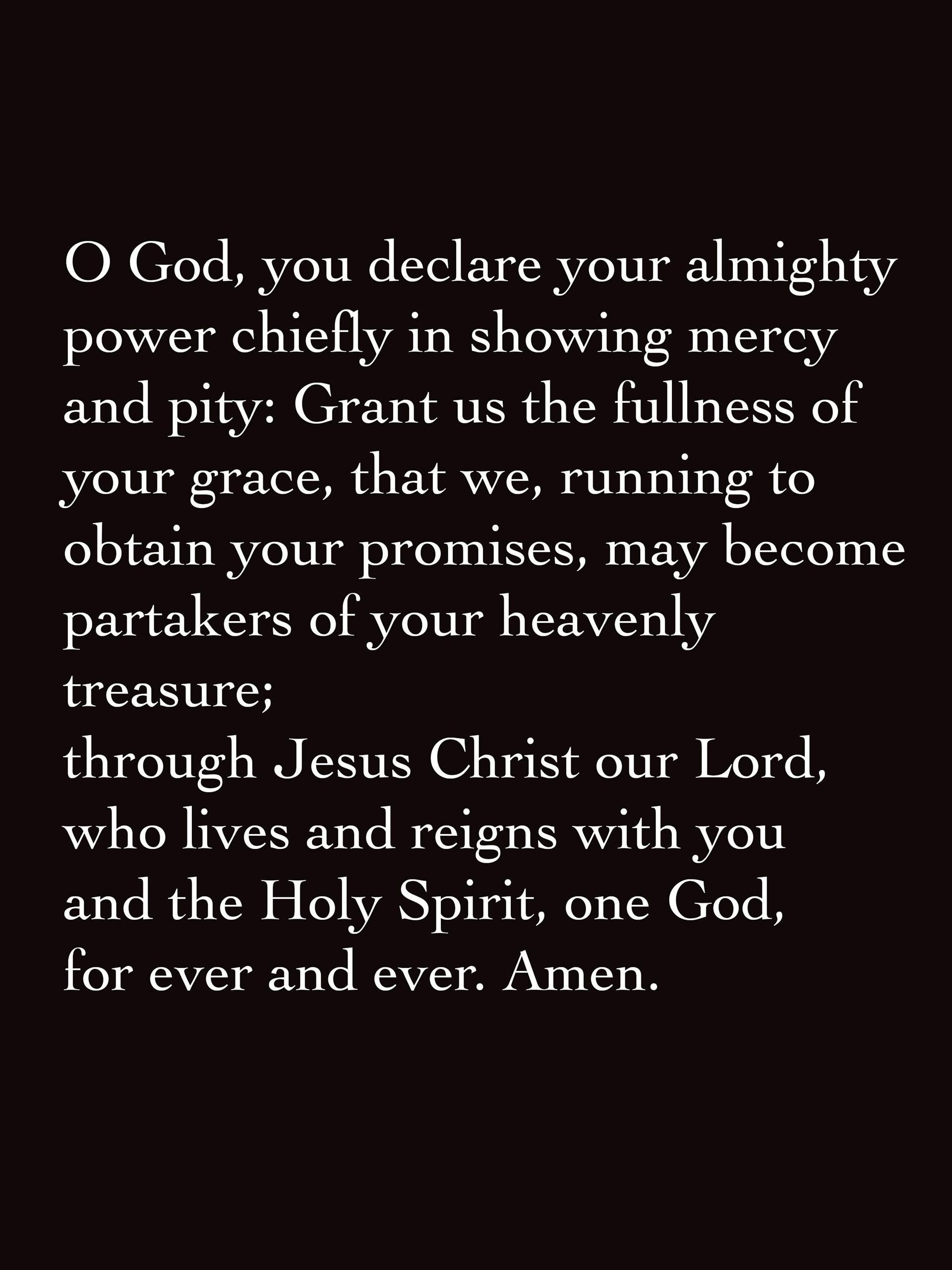
O God, you declare your almighty power chiefly in showing mercy and pity. Grant us the fullness of your grace that we, running to obtain your promises, may become partakers of your heavenly treasure. Through Jesus Christ, O Lord, who lives and reigns with you in the Holy Spirit, one God forever and ever. Amen.