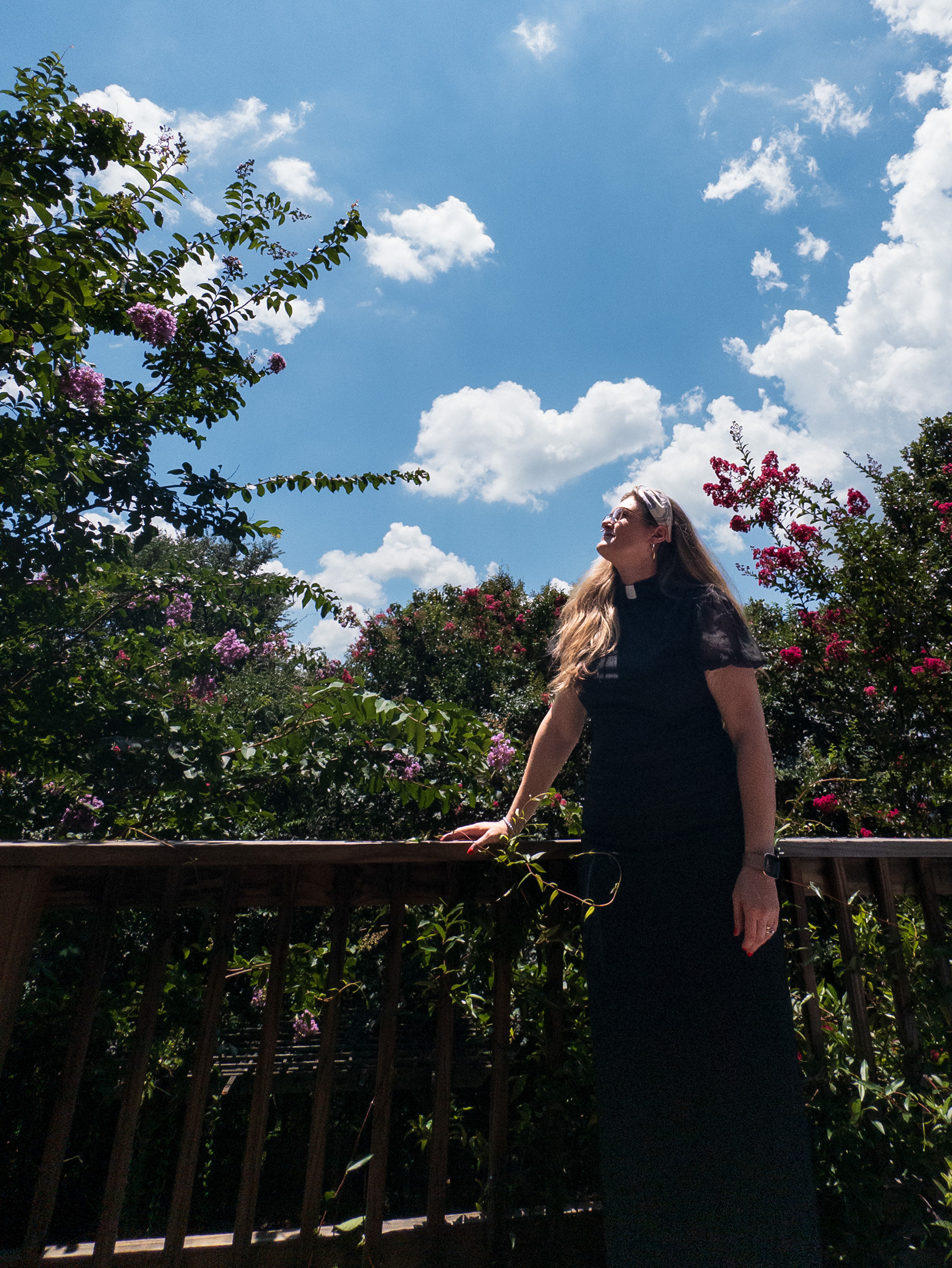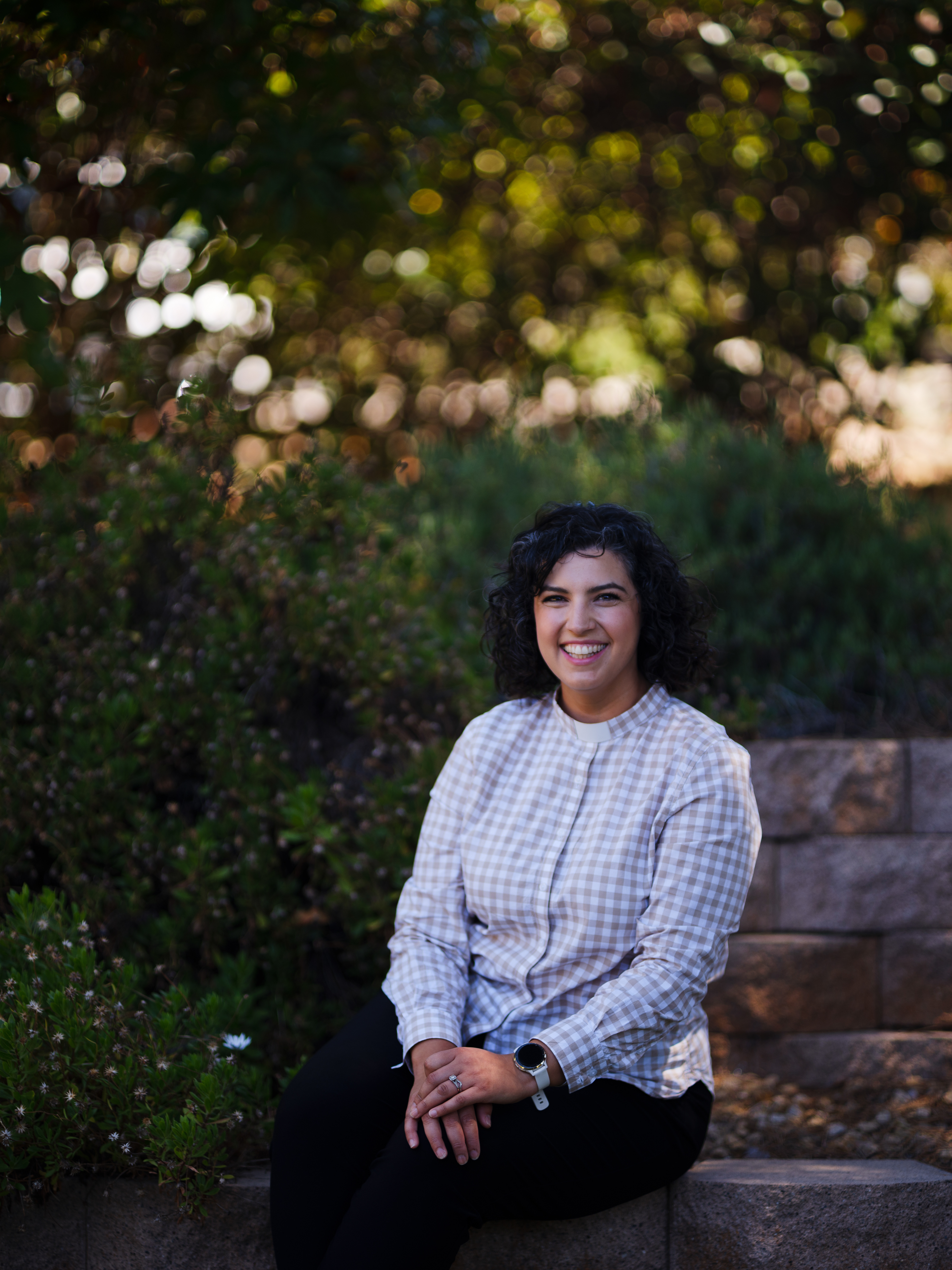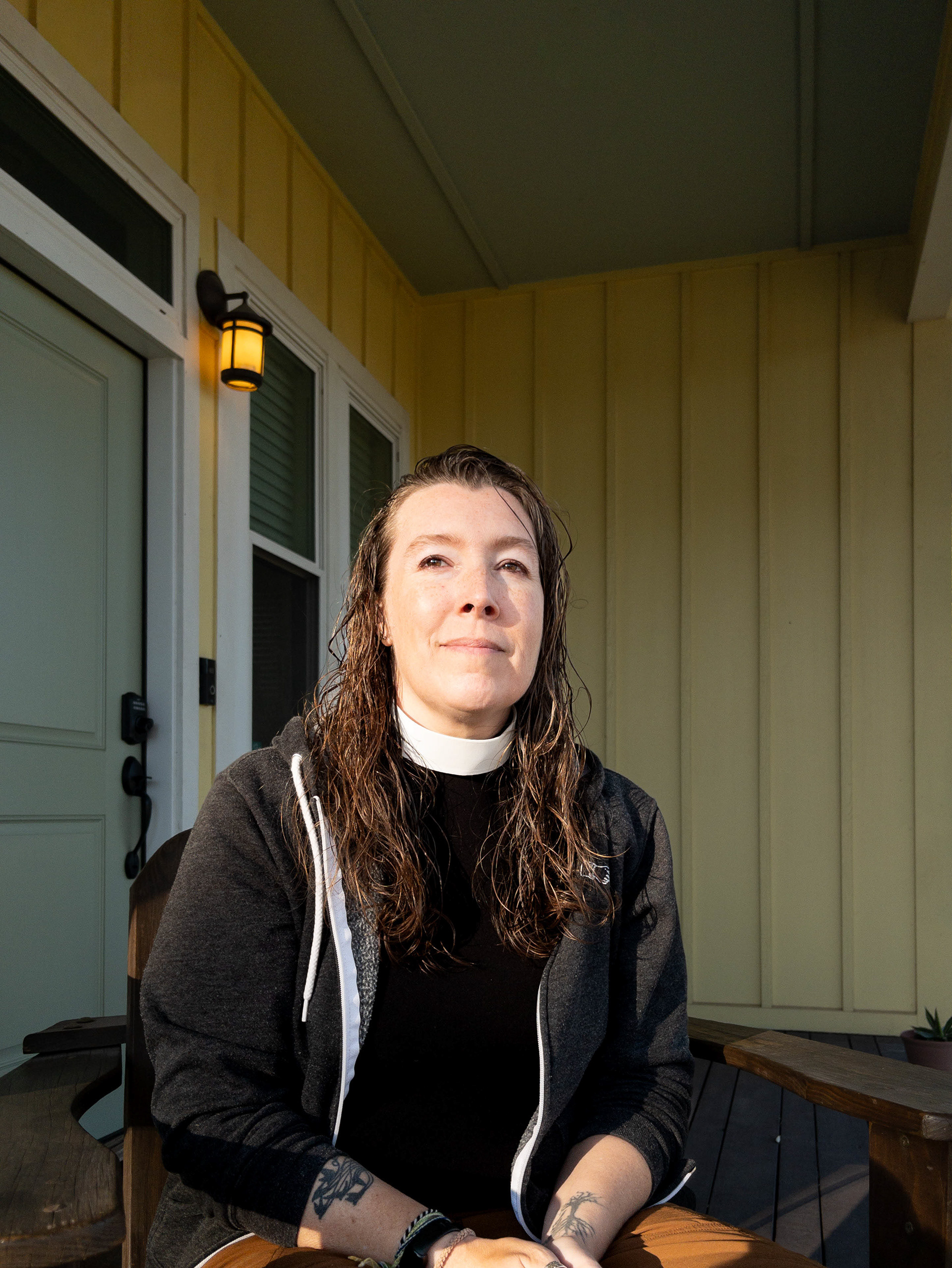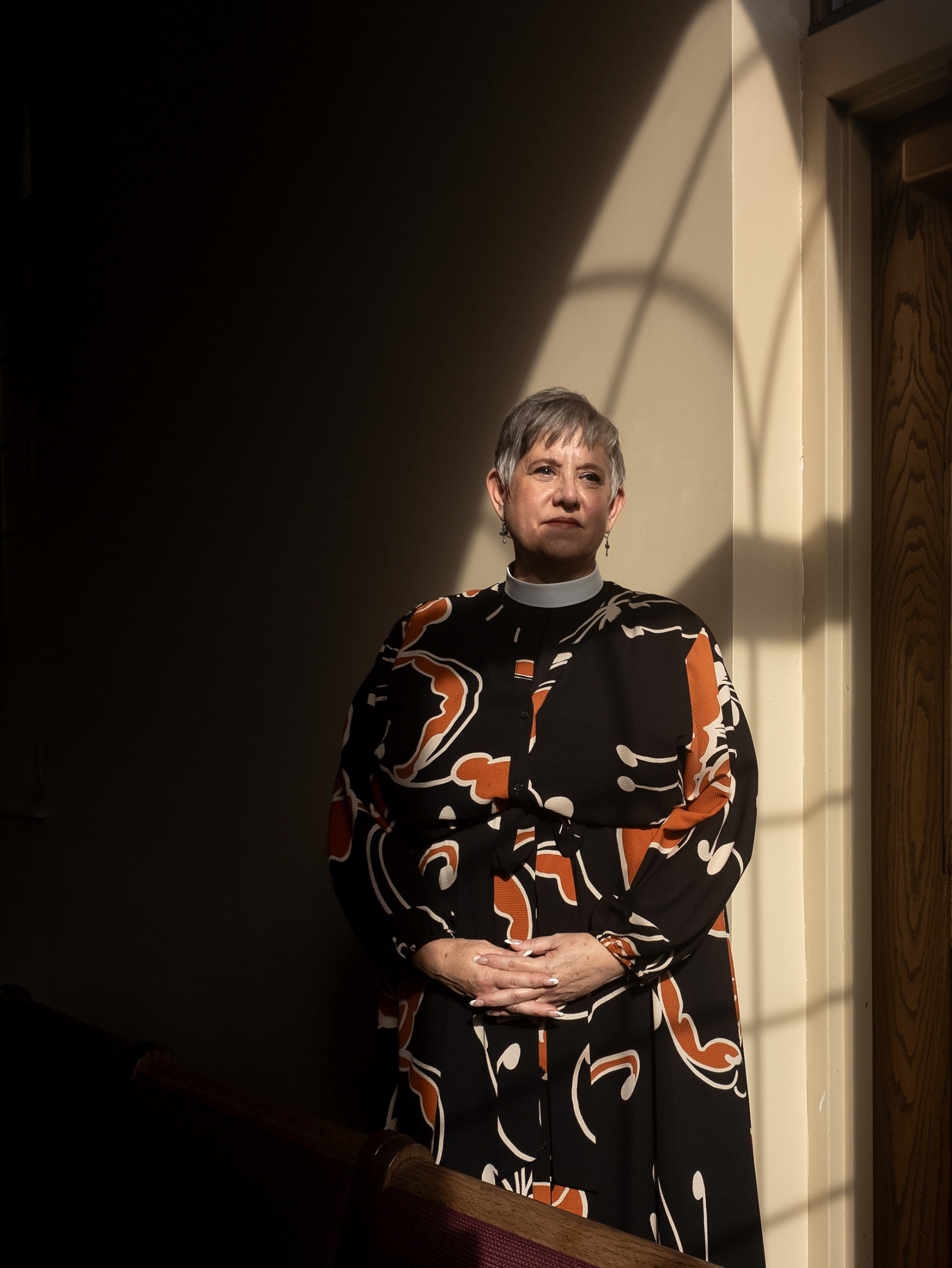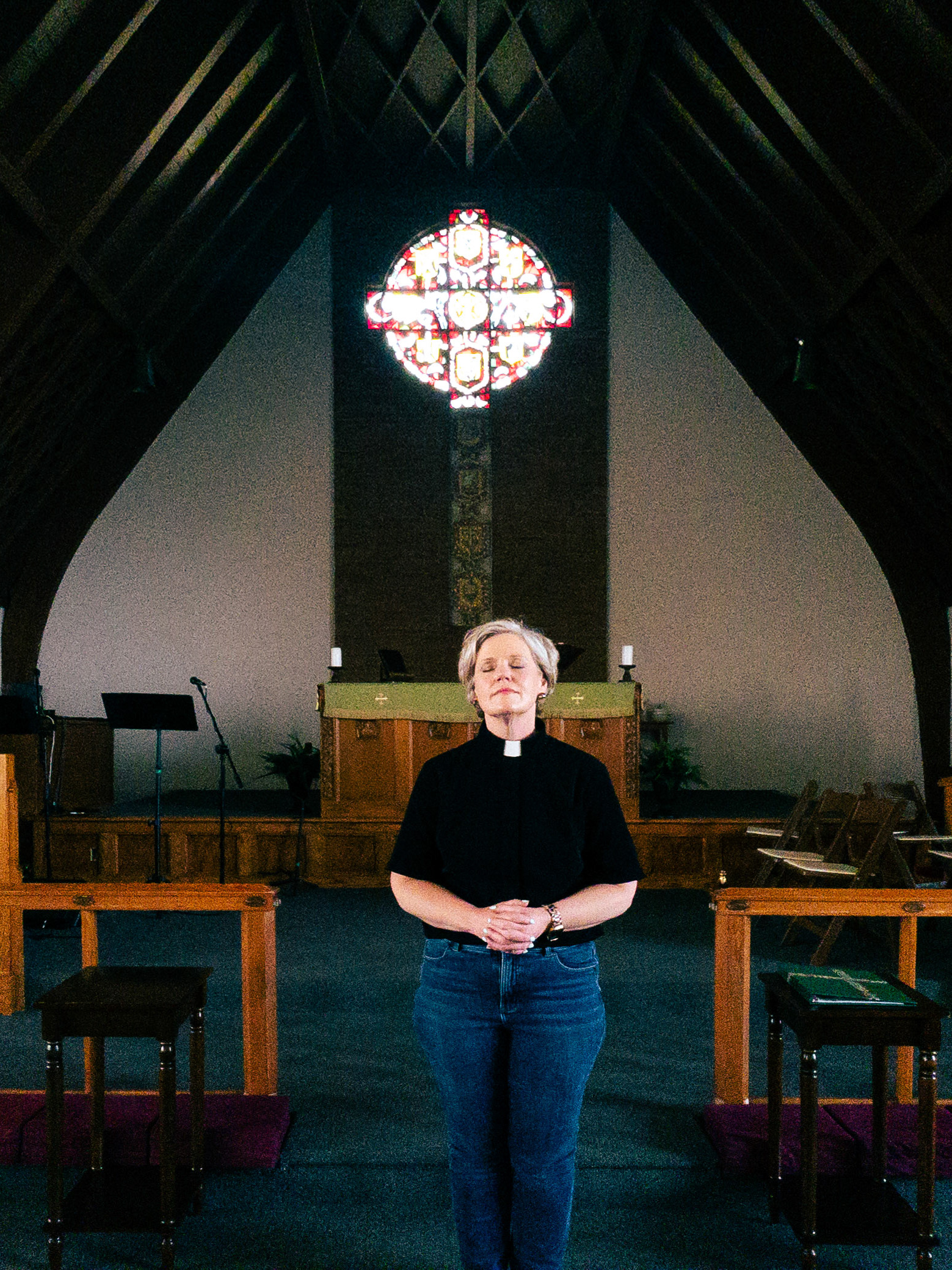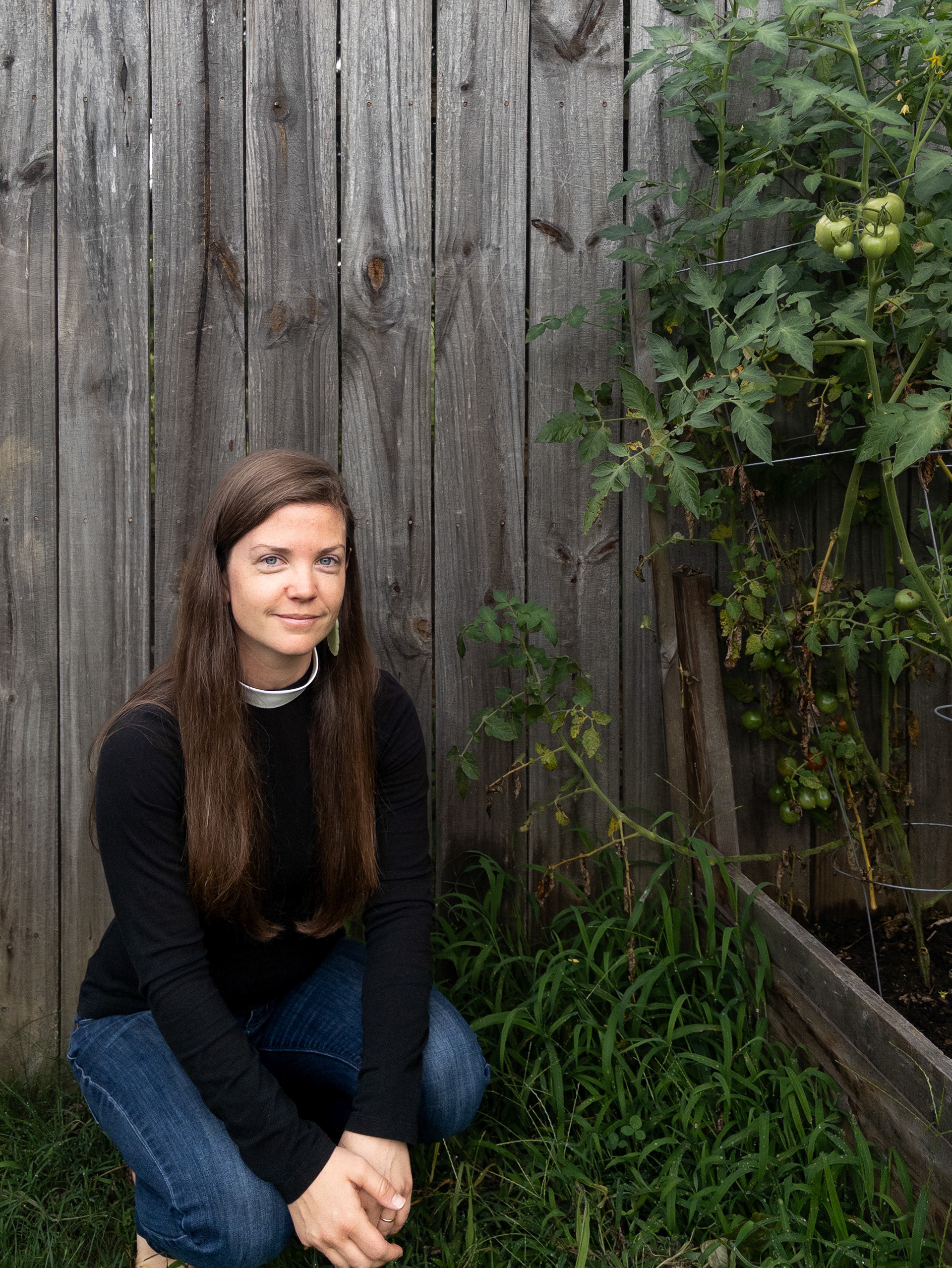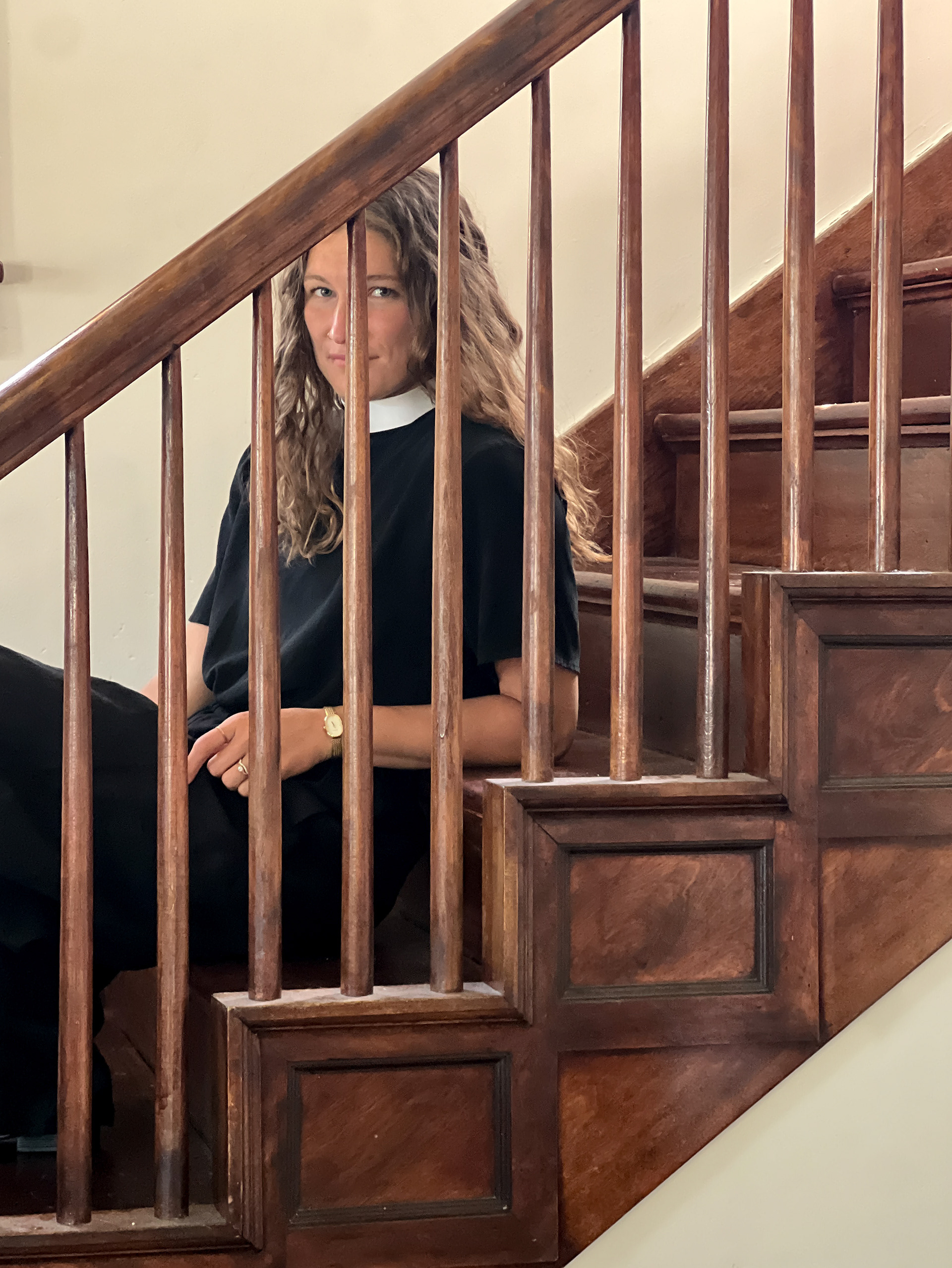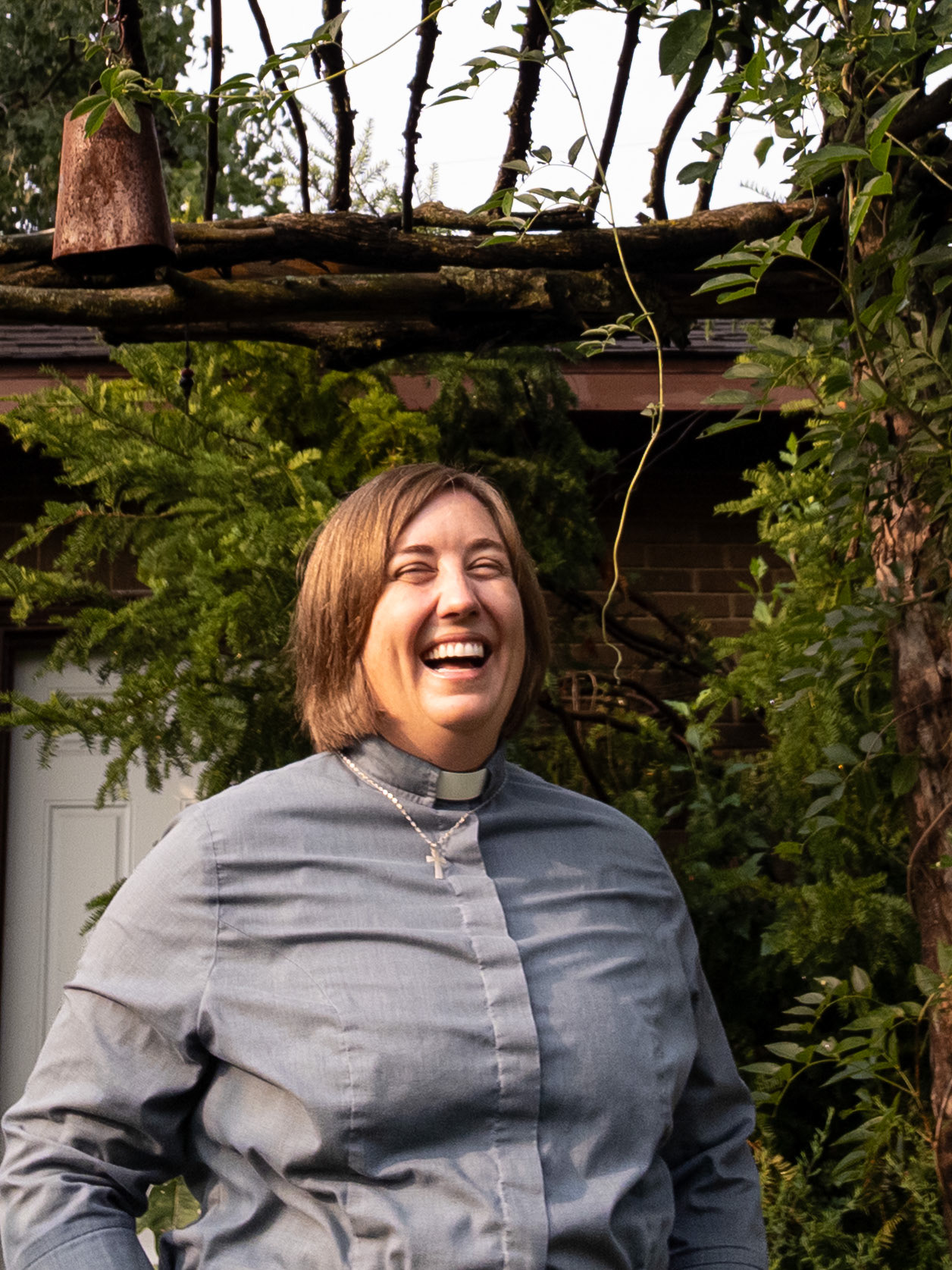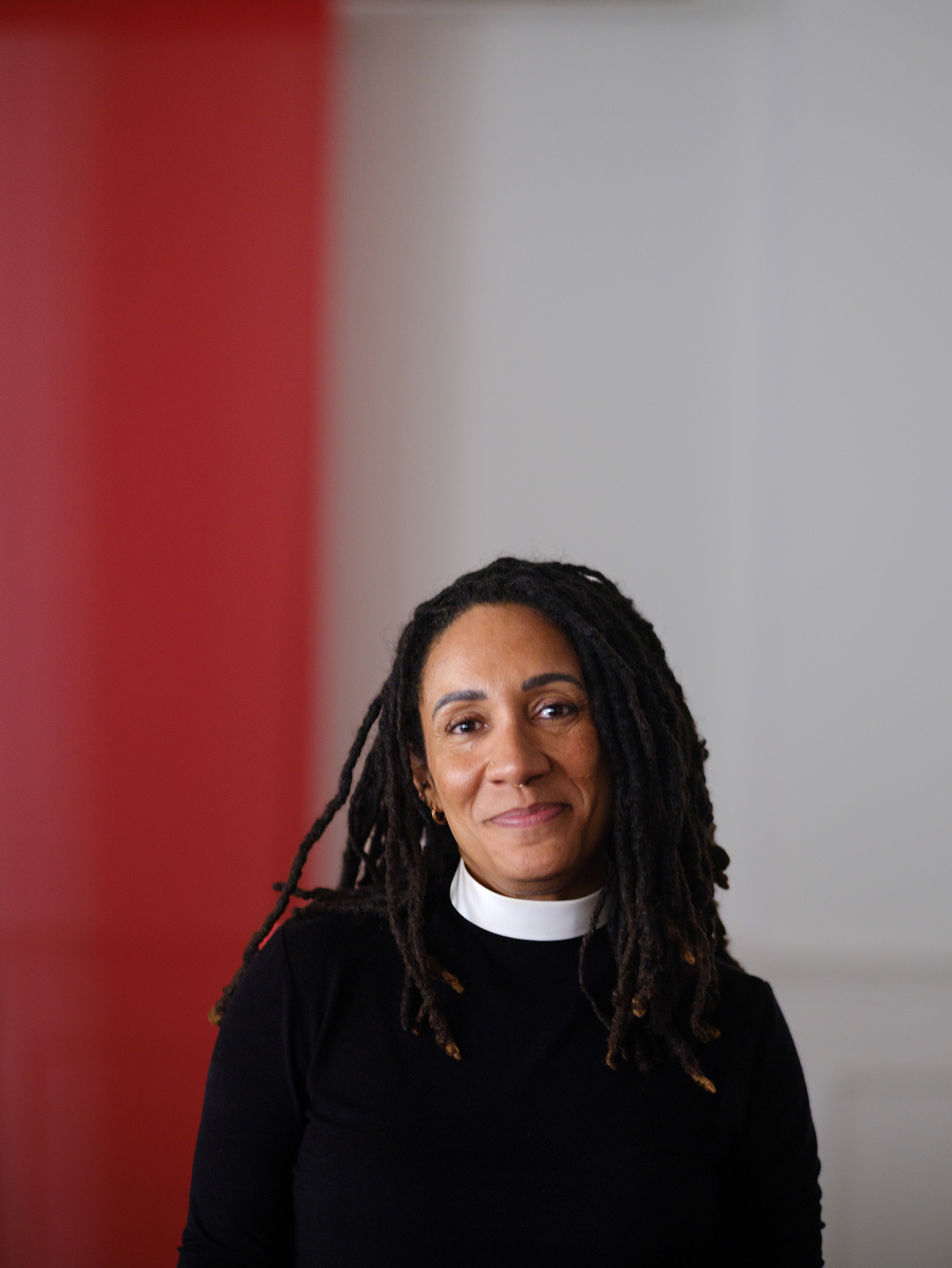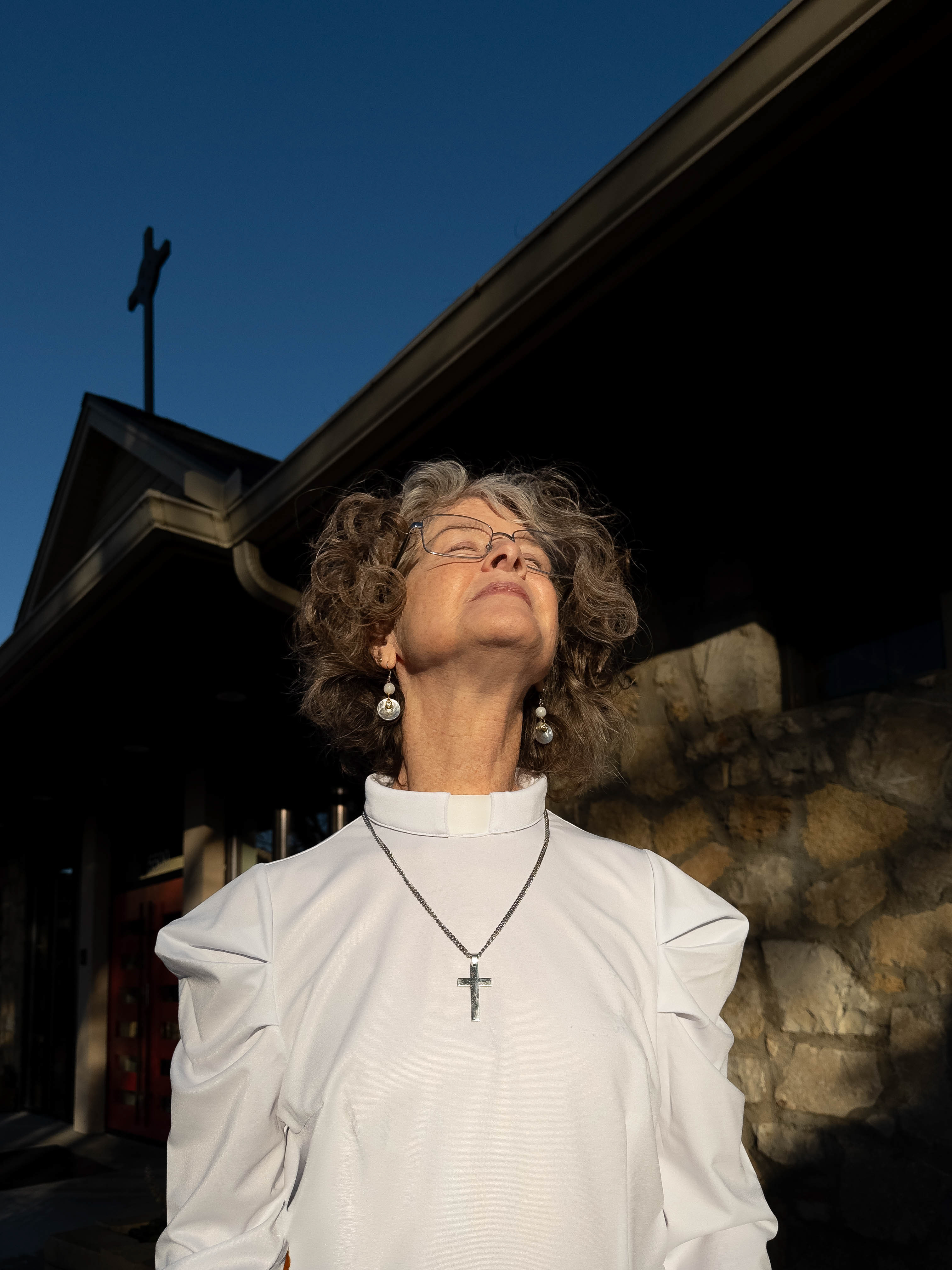
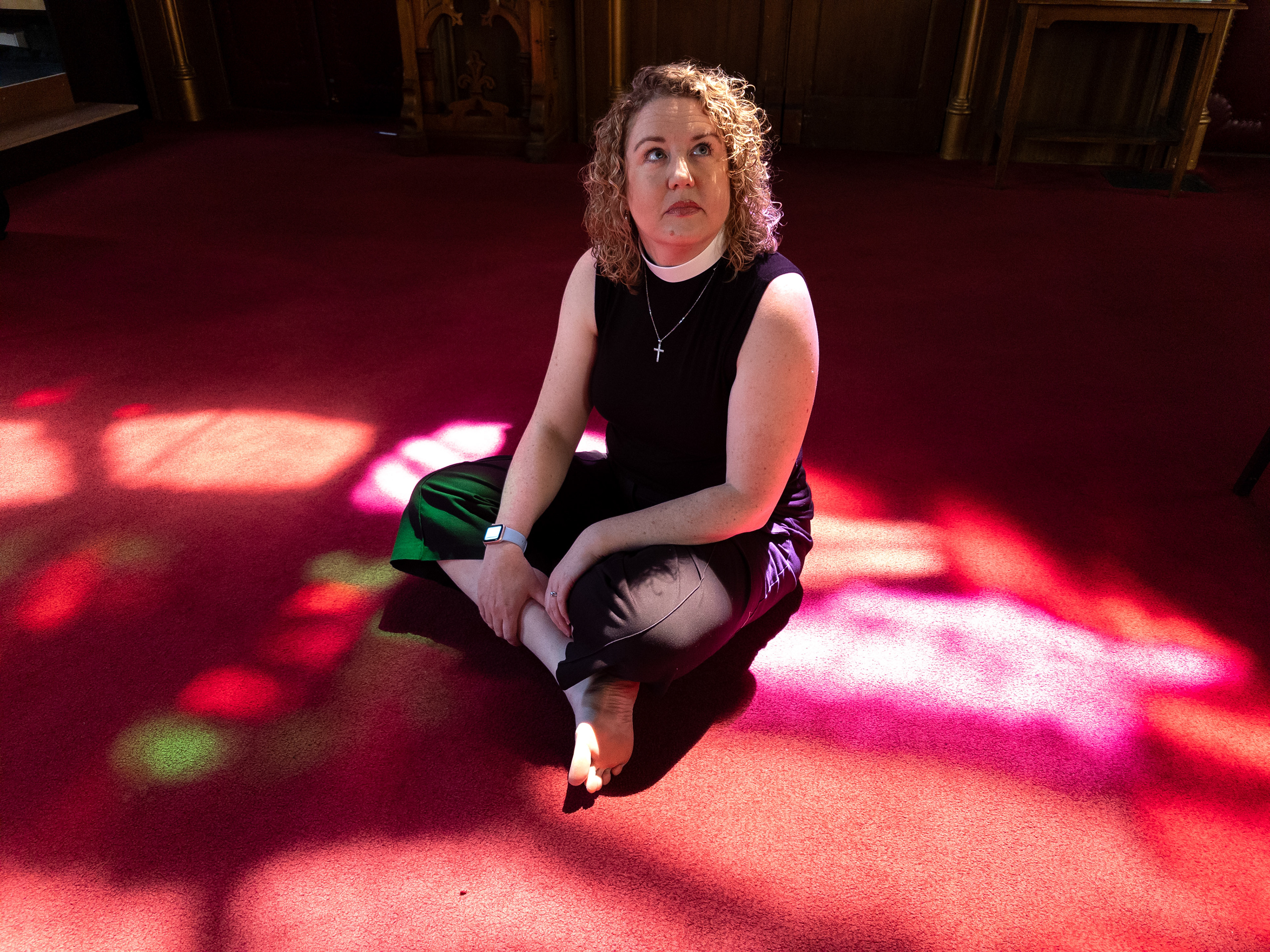
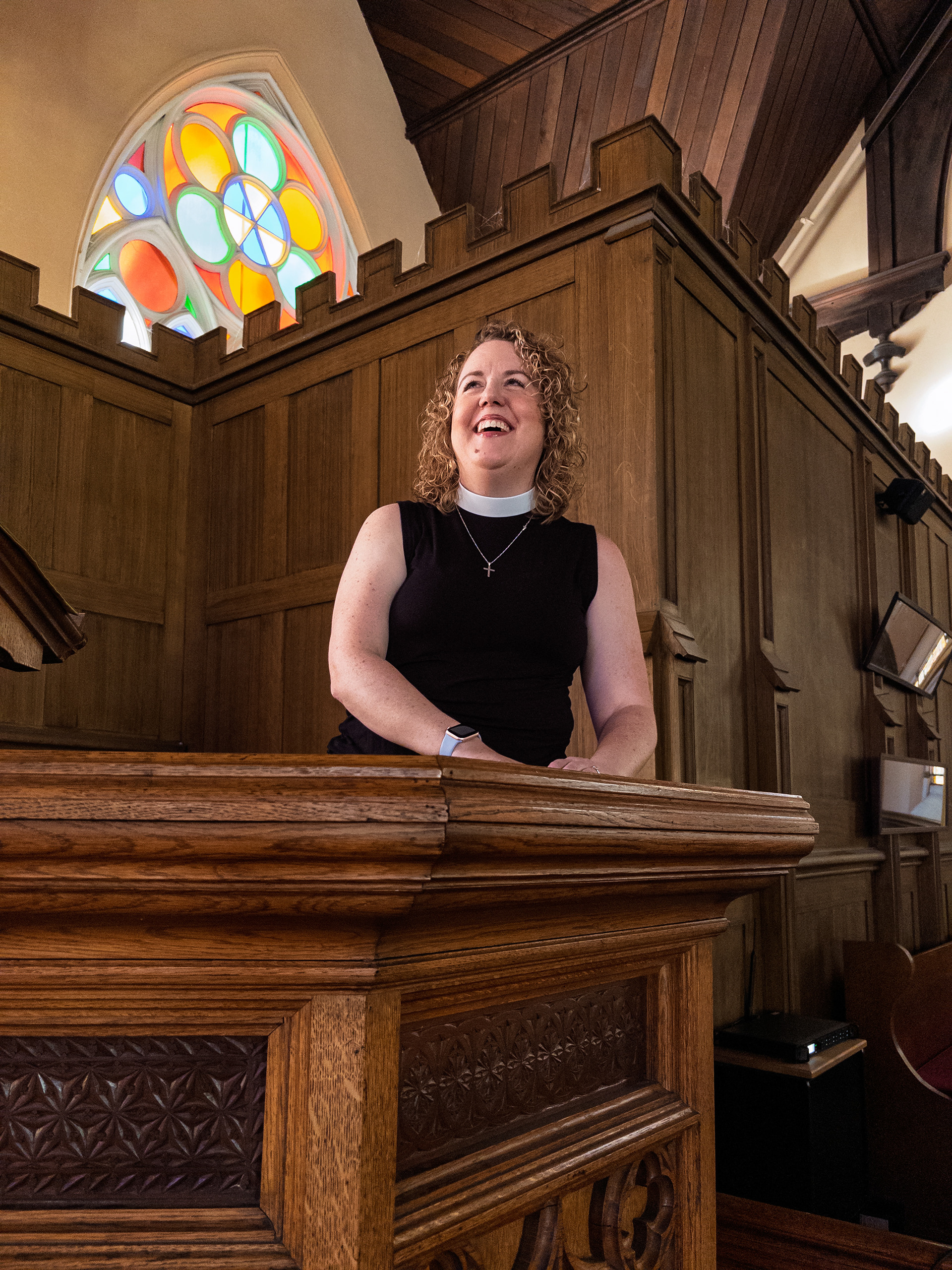
People need to see that, right? We need to see living embodied examples of the call of God on people's lives, so that we have the imagination for it, so that we know what it is, and how it can be lived out in the world.
The beauty of our Anglican identity is that it's a collective one. We don't come to ordination alone.
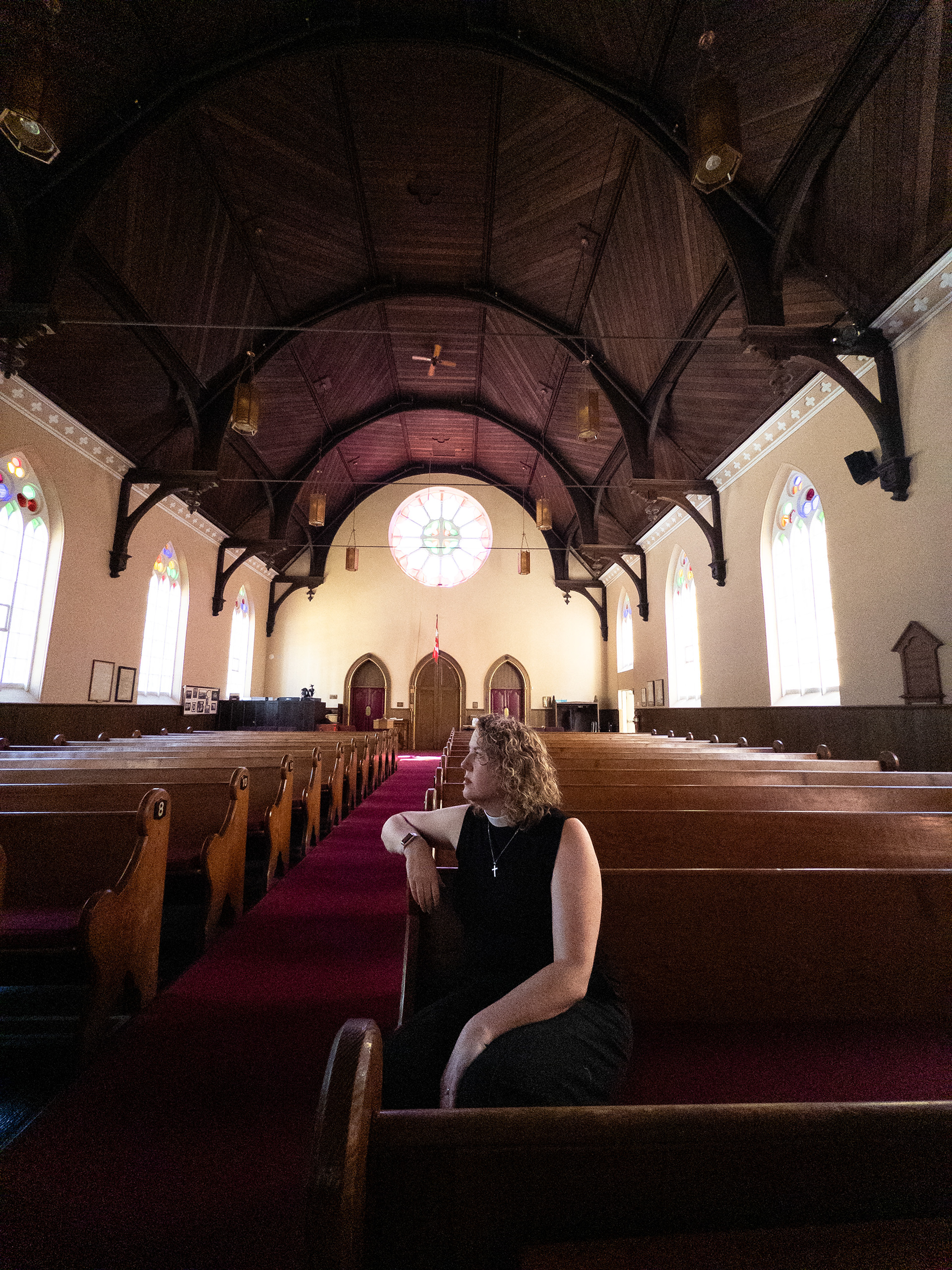
anna & juliet
Recorded: July 2026
Transcript
Juliet San Nicolas de Bradley
Welcome to Call and Response. The project where we hear the stories of women and their call to holy orders. Today, I have Anna with me. Do you want to introduce yourself?
Anna
Yeah, thanks, Juliet. My name is Anna. I've been ordained for almost seventeen years and have served in two different dioceses in that time. I served in a couple parishes as a deacon and I've been in my current parish now for about twelve years. I have really enjoyed the progress of ministry. It's great to talk to you.
Juliet San Nicolas de Bradley
All right, well we'll jump right into it. Our first question is what is the story of your call to ministry?
Anna
I really love to tell this story because it's not just about me. My calling was really nurtured in community. So I grew up in the Anglican church and grew up in a very close knit, family-like Anglican church.
When I was about 15, my church did community wide youth events a handful of times a year with a bunch of different churches that got together, all the surrounding youth groups from the area, and they would have somebody give their testimony. And so my youth pastor asked if I would give my testimony. That was my first public speaking experience. I was in camp ministry and was given lots of opportunity for leadership and just was really consistently affirmed by other parishioners in my church, leaders in my church, mentors, godparents, and it was really the voices of the community adding to the confirmation of this Holy Spirit in my life saying, “You really should think about this, this is what you're gifted to do. This is what you're naturally good at.” And I think, you know, even though I'd had people in my family that were ordained and lots of ordained people kind of in and around my life, there was always a sense of like, well, you do ordain ministry when you become old and wise and you know you've some kind of unknown threshold of wisdom or something. But it was really people in my life from my church and in my surrounding community that really affirmed the gifts and calling that God had placed on my life. And that was really, really helpful because I think I probably would have put it off. I probably would have attempted another career first.
But ministry was always the thing I loved to do most. It was always the thing I came back to. I had had some aspirations to teach history at one point, but ministry was always the thing that was calling my name. And the Holy Spirit was pretty persistent. But it's so important to have those real voices and faces of the people around you articulating and confirming what the Lord is saying, so you just really can't ignore it.
Juliet San Nicolas de Bradley
Yes, absolutely. and sorry, I think I missed it at the beginning. Are you ordained to the diaconate and the priesthood or is it to the diaconate?
Anna
I've been a priest since two thousand and ten. I can always remember the dates because I was pregnant with our first child when I was ordained a demon. And so the timing of everything was a little tricky having maternity leave and everything in there, but I was priested, I think, when my daughter was two.
Juliet San Nicolas de Bradley
Okay, wow. And can you tell me a little bit about what it was like for you to discern between the calling to the diaconate and the diaconate and the priesthood?
Anna
Yeah, that's an interesting question. I had a vocational deacon in my parish growing up and watched their ministry and really appreciated that example of servanthood and support. And so I had seen that role embodied throughout my life and then my grandfather actually was a priest and so I had seen the priesthood embodied. I was always much more interested in whatever he was doing than what the deacons were doing. I mean it was great what the deacons were doing, but being up front and being in more of a leadership role, being vocal, teaching, celebrating the Eucharist, all that stuff was much more resonant with how I wanted to disciple and care for people. The whole sort of postulancy process took about three years, and I don't even recall even a discussion about the diaconate. It was just like, yeah, this is what Anna's gonna do. It was full steam ahead and I appreciated that.
Juliet San Nicolas de Bradley
What a gift that you gotta see both a priest and a deacon embodied, as you said, right? These weren't just roles that you were thinking through in abstract ways, you grew up actually seeing that. That makes a lot of sense that for you that the discernment period wasn't much of a discernment period. You knew what you were called to, and your community also knew that.
Anna
Community discernment is incredible. I was meeting with a person just last week who said one of the reasons they chose our church was because their daughter was excited that there is a female priest. People need to see that, right? We need to see living embodied examples of the call of God on people's lives, so that we have the imagination for it, so that we know what it is and how it can be lived out in the world.
Juliet San Nicolas de Bradley
Yes, that really is the heart of this project. Because even with all the different priests and deacons, you all embody your ministry in such unique ways, and it's a gift to see how the Holy Spirit has called us all uniquely to our own ministries and to hear, as you said, like the embodied-ness of that.
Anna
I work with a lot of deacons now. I'm actually walking two people in our congregation through discernment to the diaconate at this moment. We're talking a lot about that. What does ministry look like to you? What does your sense of calling look like? And it was interesting, these two people in our parish, they're already in ministry in the community and they very much see their call to the diaconate as a complement to that. So they already have that sense of clarity. And I know for me, you know, it was really life in the church that I was excited about and really the priestly vocation.
Juliet San Nicolas de Bradley
I love that. For our next question, what struggles and barriers have you encountered during your journey to ordination and since being ordained?
Anna
When you sent me this question, I thought, my goodness, there's not enough time in the world.
Juliet San Nicolas de Bradley
I know.
Anna
I think - if I could sum it up, because I've served in two different dioceses in and two different contexts - you know, one on one side of the ordination debate for women and one on more maybe on the other side. And the difficulty I found is that no matter who you are or how you present yourself or how your call is articulated or what your educational background, as a woman, you're never able to really fit whatever it is that people are looking for. In one diocese, I was too outspoken or too female or I'm too evangelical or I'm too orthodox. There's a sense of whatever it is people are looking for, bishops, committees, whomever, I do not fit that thing. So there's a sense that people have an expectation, unspoken, unarticulated, of how they expect you to be, and some kind of prototype that it expects you to fit. And I just have never fit the prototype ever. I was in a very liberal diocese at one time and I was far too evangelical for them and I was always getting in trouble having to go before the bishop and explain myself.
Now I'm on the other side of things where I'm in a sort of a more evangelical orthodox diocese. And again, I'm too outspoken and I'm too opinionated and I'm too whatever. So there's just always been this sense of whatever expectations people have, I'm never going to meet them. My ordination and my ministry is about the call of God and His confirmation on my life and living to serve and to be in obedience to him. And I remember on the day of my diaconate ordination, I was ordained in this cathedral and, you know, we're lying prostrate on this very cold floor. And I was very filled with emotion because I knew without a doubt I would not be here without the Lord's hand because there were so many obstacles. There was just no way it could have happened. So many people had to sign off to be able to make my ordination possible and there's no way they would have all been in agreement if it wasn't for the Lord's interceding. So, in a sense, I'm grateful because, man, there's just no pleasing people. I'm definitely not here because of the favor of others, that's for sure. It really is the Lord's supernatural intervention in my life and in the church. And that to me that's an incredible gift because I know this isn't because of the influence of someone or I just got the wrong idea one day or whatever. This is all the Lord's doing. It would have literally been impossible without Him. So that gives me a lot of peace and sense of purpose too. I'm here to do His work and not to please others. I often describe myself as a loyal opposition. I'm loyal to Christ and His church and I'm loyal to my bishop but I definitely speak up when I feel that it's important and the Holy Spirit is prompting me to. And I just think given the culture of ministry today, given the culture of our society, there is always gonna be the sense of women, minorities, whomever, having to always endure and survive and succeed and persevere because you don't fit the traditional stereotype that people think of when they envision a priest. And I'm always adamant that just as I had to see examples of ministry around me embodied as a child, other people need to see that today. And so that's a lot of the reason why you know, when our diocese is looking for people to be on committees or be on councils, I always stick my hand up because somebody has to do it to be able to be that living embodiment, right? Somebody has to. The Lord just made me stubborn enough that I'm willing to be. I don't know how wise that is but it is what it is.
Juliet San Nicolas de Bradley
I've cried each time I've heard an interview with someone, just listening to how the Holy Spirit is leading because it's so beautiful to hear that. As someone who's very young in ministry, it's a gift to hear that you just keep going. I am so grateful, Anna, to hear you talk that some of us are, like you said, loyal opposition. I think some of that is a Holy Spirit call. And, of course, I will probably have to repent of much arrogance and things in the future.
Anna
It's tricky, right? Because you're taking a risk every time you stick up your hand or raise your voice or, you know, bring up a point that's inconvenient. The Lord made me risk averse, I guess. But I definitely get in trouble on the regular. But I think I mean what I'm grateful for now is I think my bishop and I have come to an understanding that however annoying I am and persistent, I think he understands that I do it for the good. I'm doing it for the betterment of our fellowship together. And so I think he's slowly coming to that. But I also know that if I had been a man, if I had been a white man, I'd be a canon by now, I would have my own large church, all these other things. So I just have to know that God in his wisdom made me as I am. And even though I might be ambitious for other things, this is the work he's given me to do. And so I'm gonna do it.
Juliet San Nicolas de Bradley
That actually is a really good segue to what would you say to a woman who's thinking about ordination?
Anna
I would say - God bless you because it's a long and difficult road. I would say really try to gather supporters around you. Find people to pray for you, find advocates, find mentors. Make friends who have been ordained longer than you and really want to support you. I was so fortunate, I didn't even know that when I was interviewing for my postulancy, there were people that barely knew me that were advocating for me behind closed doors. I didn't even know that was happening. And somehow the Lord put all those people in place. So just know that it takes more than you alone to get there. And if you're gonna embark on this long obedience in the same direction, you need people and encouragement and things to keep you going because it is a long road and it's hard and we do get tired. And you know it's easy to succumb to bitterness or unforgiveness - God preserve us from that temptation. It's really hard to resist that temptation. But the beauty of our Anglican identity is that it's a collective one, right? We don't come to ordination alone.
And so even as you have people that will be questioning you and interviewing you, have people at your side and at your back too that are walking with you. And the system is designed that way, right? We're asked to have a supporting parish and supporting rector and support committees and so get all your people in place and don't do it alone.
The second thing I would say is try to entrust yourself to trustworthy people. I think serving in different dioceses, I've served many different bishops over the years and had many different relationships with them. And the thing I've learned is we will always have differences, right? They will all always see things differently than I will. But can I trust their walk in the Lord? Can I trust their heart's intention? And we can't know that entirely. But I think what gives me peace of mind now and the reason why I stay where I am now is that I do trust that my bishop, even if we may not agree on everything, he is desiring to do the Lord's will. And that hasn't always been the case everywhere I've served. I was very aware when I was newly a deacon, that, you know, there were political dynamics going on and and in that context it was advantageous to leadership to have an articulate evangelical young woman standing up and teaching on their behalf or representing them. And so yeah, I guess I would just say a word of caution about who you're entrusting yourself to. I mean, ultimately we're in the Lord's care. But hopefully our bishop is a Christian person that we can trust is trying to do the will of God and and you can serve them without violating your vows. You know, that kind of comes back to the loyal opposition thing. You know, it's like, yes, I will voice opposition, but I am loyal. You know, I did take vows of obedience and I seek to fulfill them as best I can. And, you know, if I ever come to a place where I don't feel I can be obedient, then I do need to leave. And that, you know, I have had to do that before. So yeah, it's complex. It's really complex. but hopefully God leads us to the right place in his time.
Juliet San Nicolas de Bradley
Amen. Yes. Thank you for all of that. Did you pick a favorite collect from the BCP to close us out?
Anna
Yeah, it's hard to pick one. It's hard to pick one. But I think I settled on the third Sunday in Lent. So do you want me to pray it now?
Juliet San Nicolas de Bradley
Yes, please.
Anna
Heavenly Father, you have made us for yourself, and our hearts are restless until they rest in you. Look with compassion upon the heartfelt desires of your servants, and purify our disordered affections, so that we may behold your eternal glory in the face of Christ Jesus, who lives and reigns with you in the Holy Spirit, one God, for ever and ever. Amen.