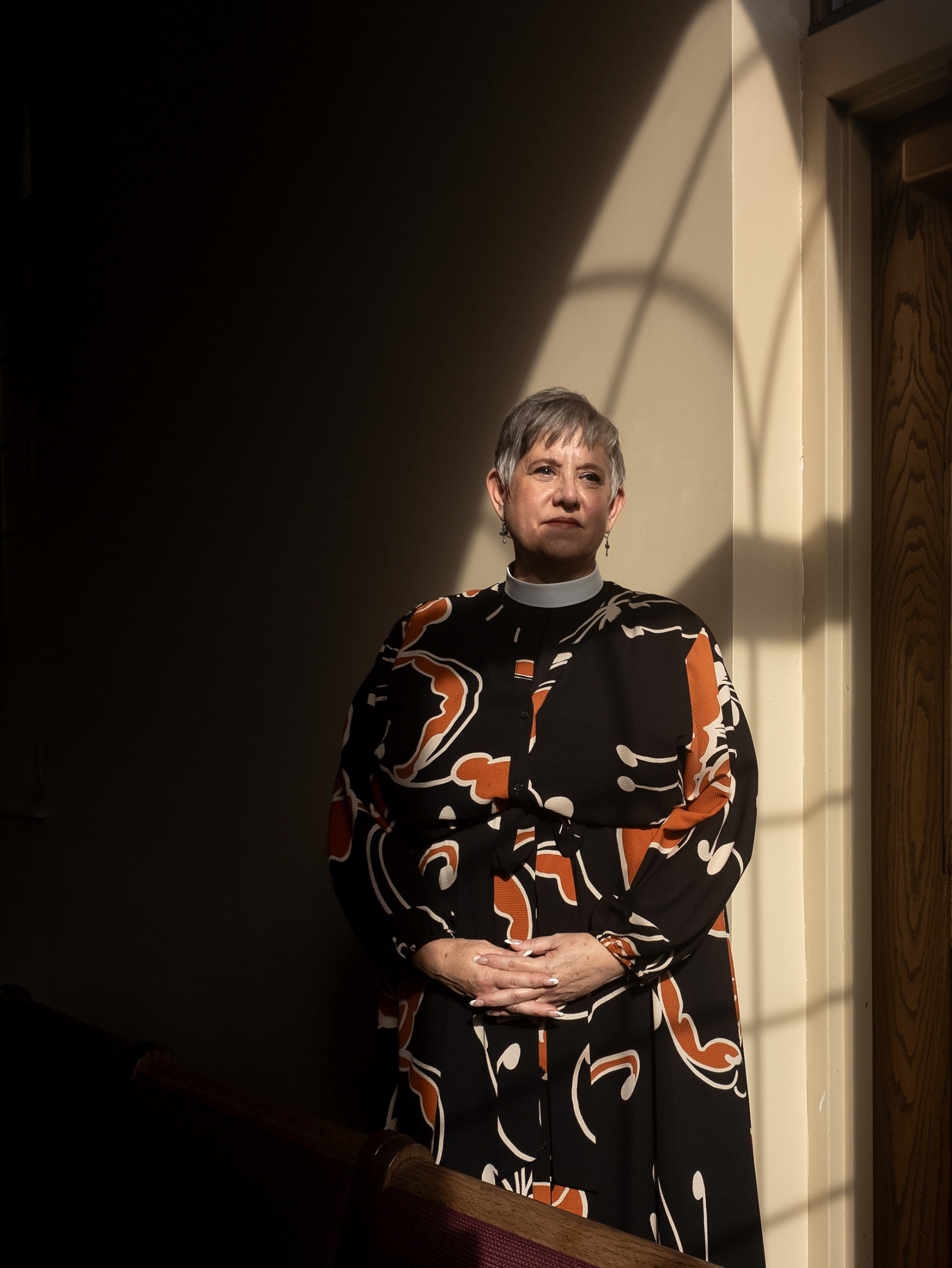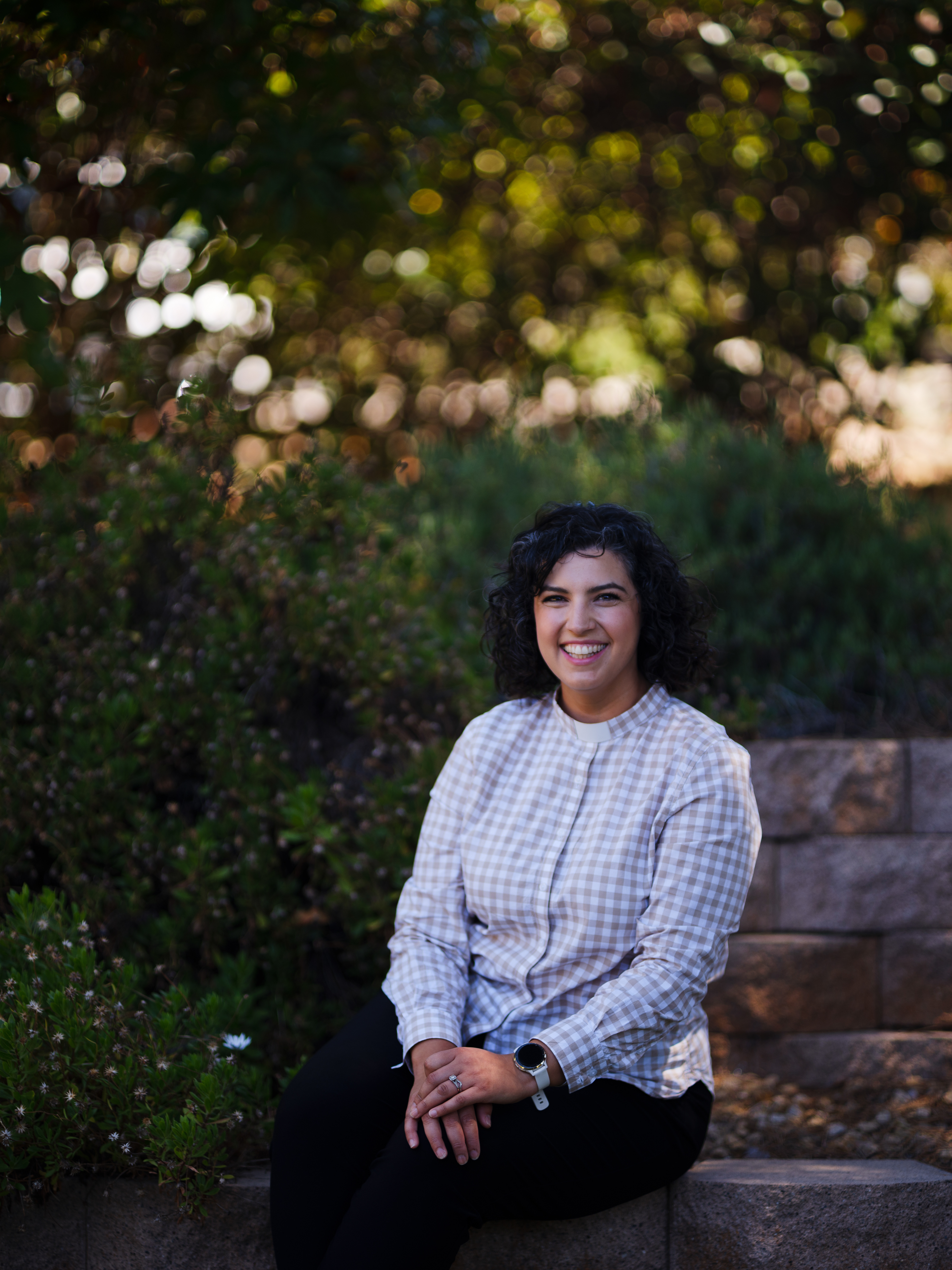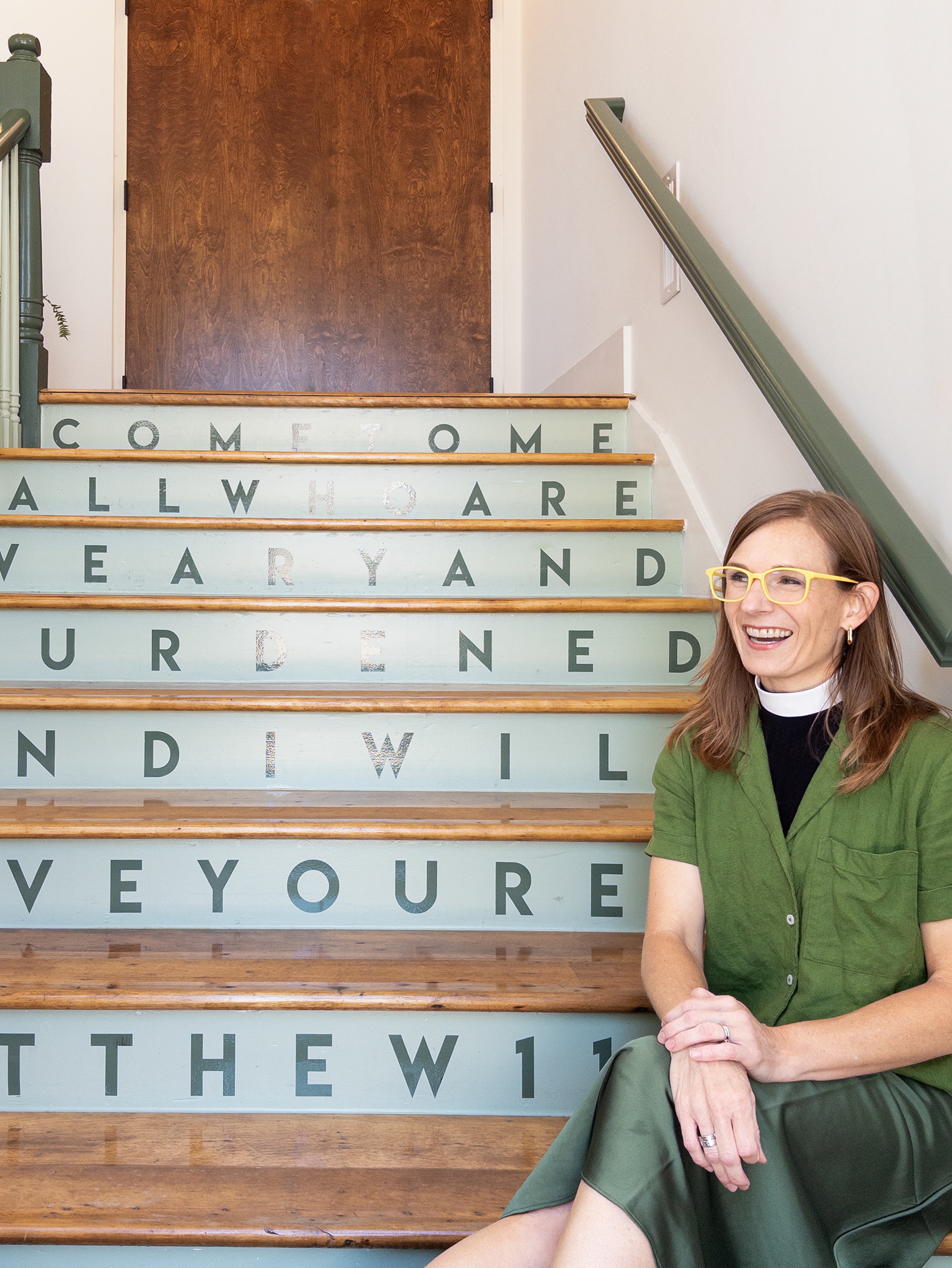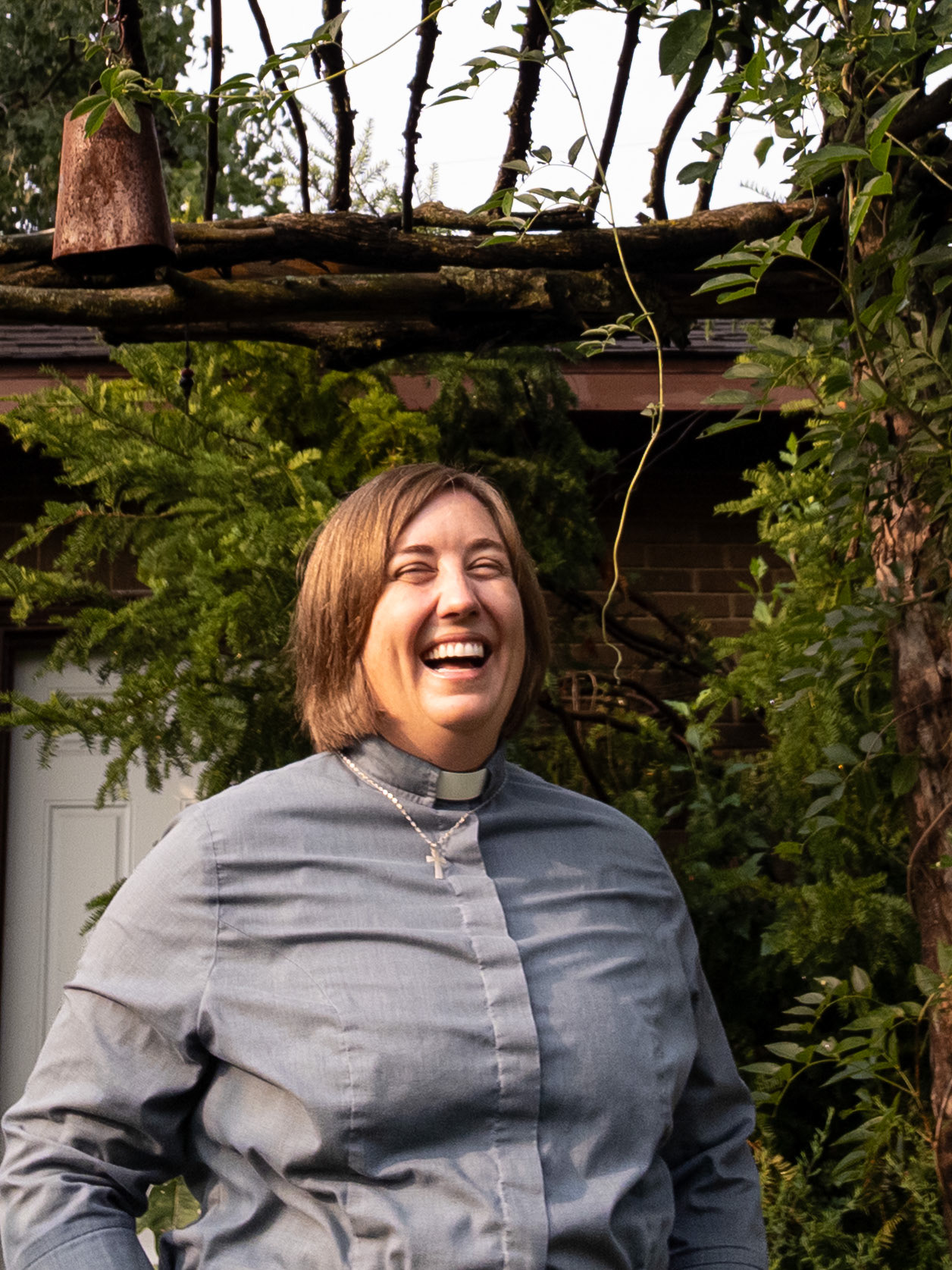
Regardless of how high up in leadership we might think women should serve, we can all grow in our ability to authentically welcome and celebrate and support the flourishing of women in our churches. And so I think again, all of us need to do that work, men and women.
Follow, listen for the voice of the Good Shepherd and then trust Him if He does call you into something that's hard or unfamiliar or uncomfortable, or maybe that takes a long time.
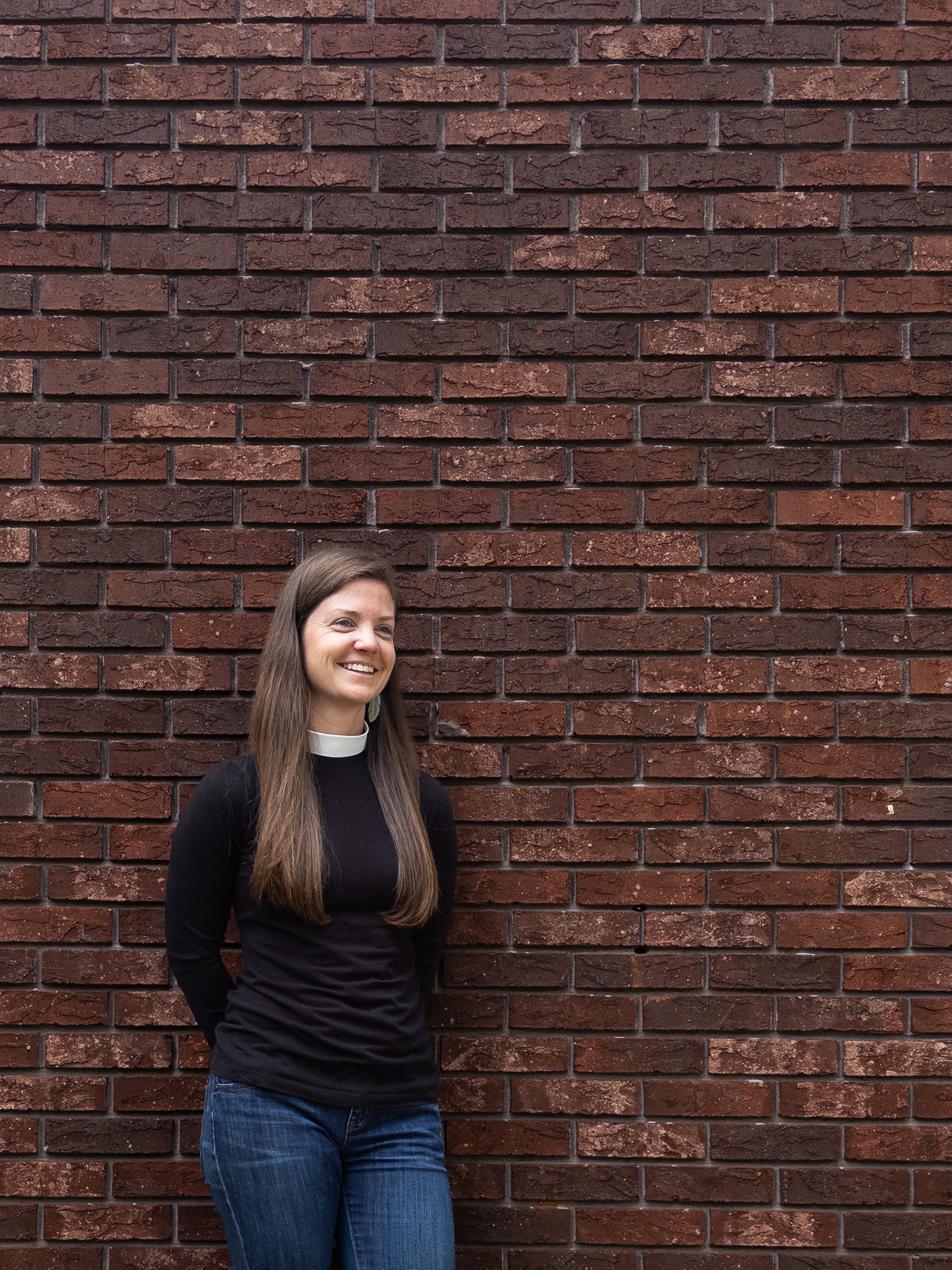
hannah & juliet
Recorded: July 2026
Transcript
Juliet SNdB
Hi everyone and welcome to Call in Response, a storytelling project where we hear the stories of women and their call to ministry. I'm joined today by Hannah. Hannah, will you introduce yourself?
Hannah
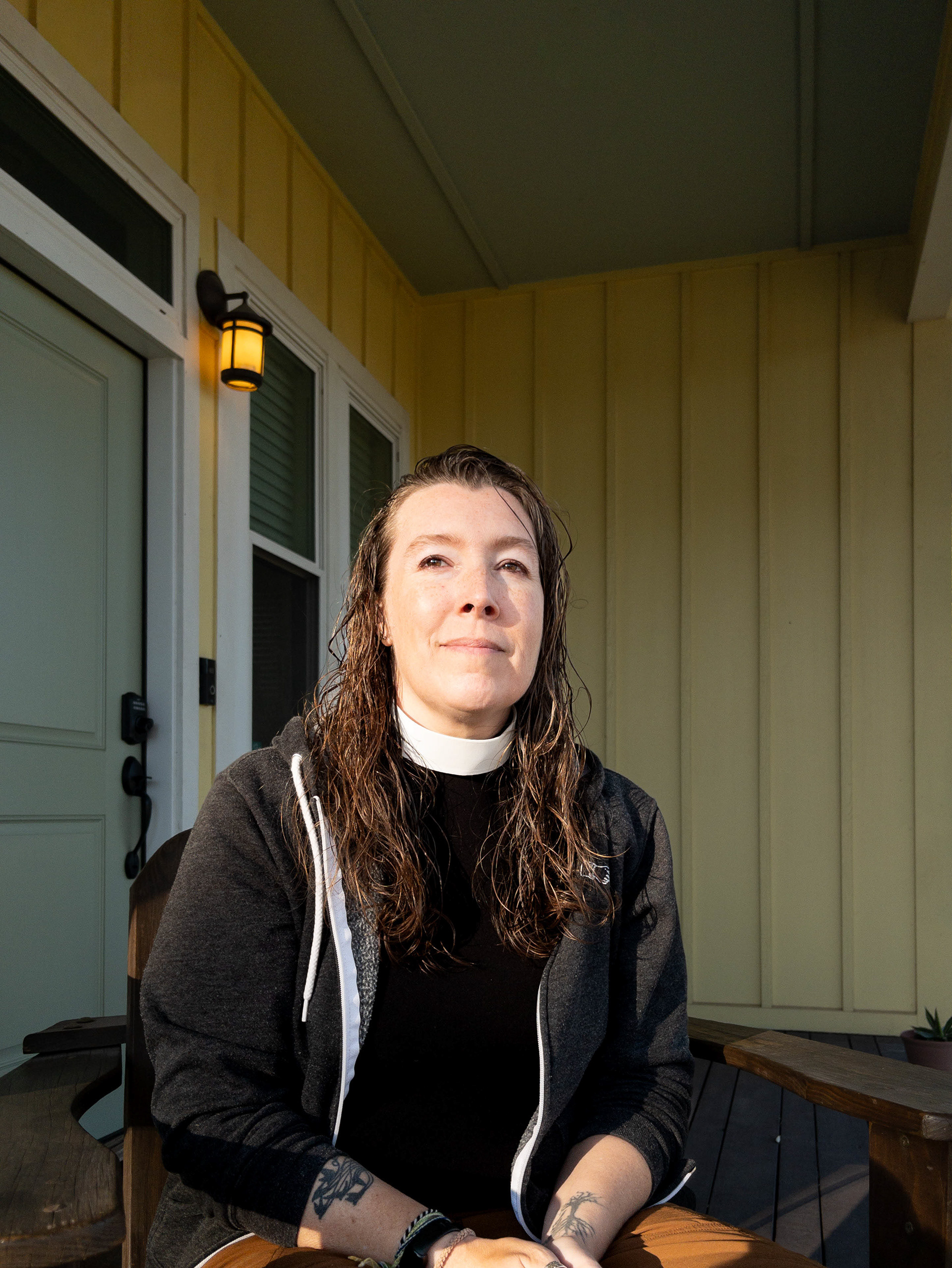
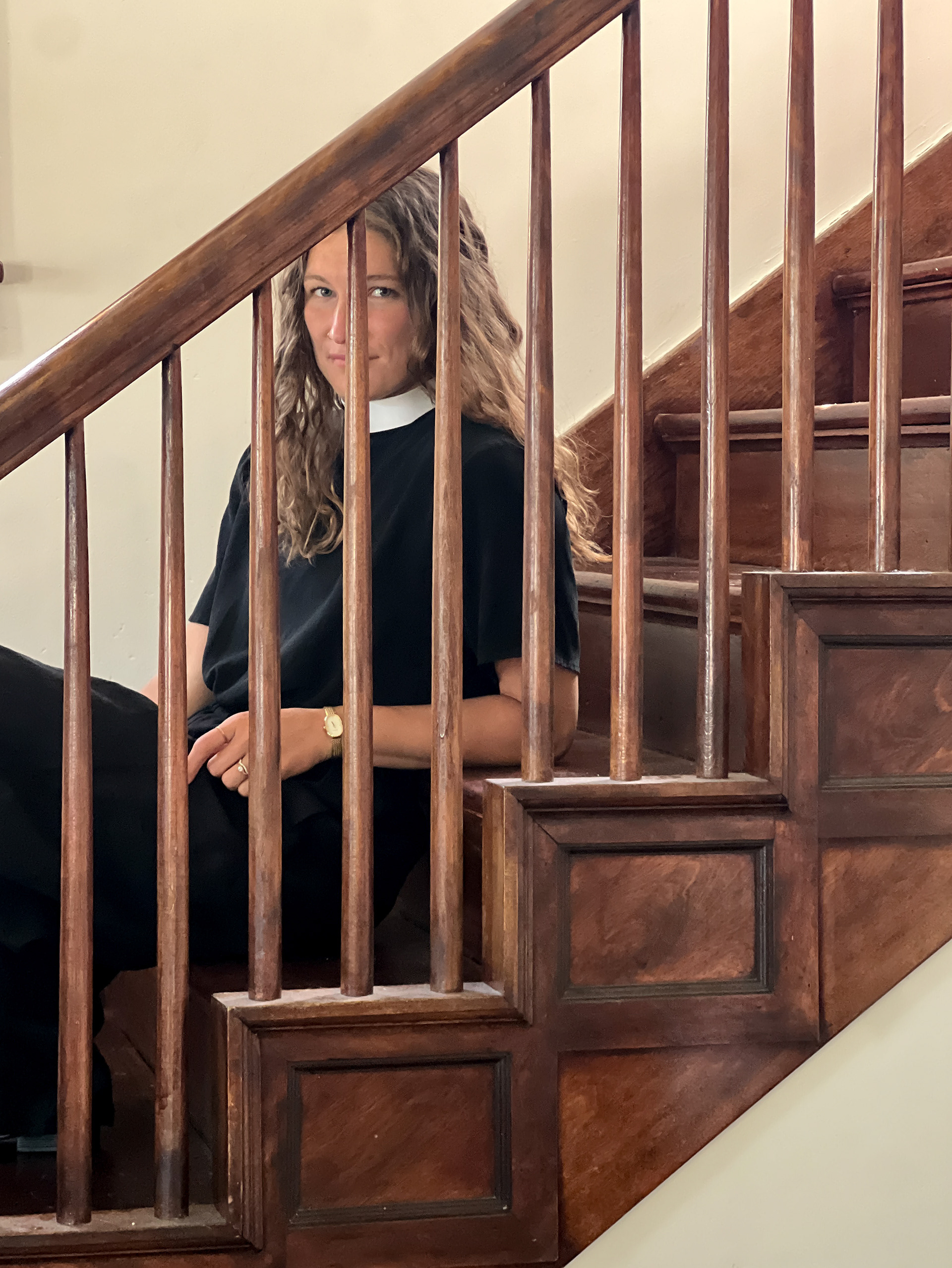
Yes, my name is Hannah, and I am a priest.
Juliet SNdB
Wonderful. We'll just jump straight into that first question, Hannah. What is the story of your call to ministry?
Hannah
Well, it's a long story because I did not grow up in a tradition where anyone was a priest, especially not women. I was born and raised Southern Baptist, but I felt a very clear sense of call to ministry
Really in early elementary school, and you know, as a homeschooled Southern Baptist girl, what that meant to me was a call to foreign missions because I, you know, grew up reading about Gladys Aylward and Lottie Moon and these women who served in other countries. And that's really the only image that I had of women who were sort of in vocational ministry.
And so I was really committed to that, you know, vision for my life all the way up through into college. But in college, I attended a like secular music conservatory in a very progressive part of the country. And so it was the first time I really stepped out of my evangelical Christian bubble. And that was actually quite wonderful for me. I loved interacting with people who had different backgrounds and, you know, who did not profess faith in Jesus Christ or maybe who were even antagonistic towards the church.
And what I realized during my college years, you know, as a campus ministry participant was, missions doesn't only happen “overseas” but it happens everywhere and it really can happen in the local church. And that's so beautiful to see people of all different ages coming to faith and coming like growing up in the faith as a family.
And so in college is when my sort of vision for my call to ministry began to expand a little bit. Then in seminary where my husband and I were studying, we took a vision trip to South Sudan because I still was thinking, well, missions can happen anywhere, but for me, it's gonna happen in Africa. And you know, we were totally open to that, looking kind of on that trip for the writing in the clouds, so to speak, like come back here after you graduate.
But we both left with a real sense that God was not opening that door for us to explore ministry overseas, but that he was calling us to ministry together. And so we came back to the US and we were thinking, okay, well, what does it look like for men and women to serve in ministry together in North America?
And, you know, church planting was sort of the place that we felt God was leading us because that's again where you know where mission can really happen holistically is the local church. And then we had to deal with the whole women in ministry topic because you know I I was from a very complementarian background.
And actually my husband was not. He grew up in a a mainline church. So we kind of joke about how I used my influence and leadership gifts to talk him out of supporting women in ministry. And then we sort of found our way back to that place through a period of prolonged study while we were in seminary. and I feel really grateful to have attended a fairly conservative seminary where I really trusted.
My professors, you know, I knew were good conservatives and they were very serious about the Bible. And yet some of them were saying, Hey, I really think you should look into ordination or, you know, these topics are more complicated than a lot of us have been led to believe. and so they, yeah, they encouraged me in my journey of study and I got to the place where I said, okay, on paper I think women could serve in ordained ministry in the local church. but I still wasn't quite ready to like put myself out there. Like you know, some women can do it, but not I'm not gonna do that.
But as I continued to pray about what God did want for me, I began to feel pretty confident that He is asking me to at least formally ask the question. Like, and I I appreciated how the discernment process in the Anglican tradition is so slow and long and inefficient because I thought, well, I don't want to just change my mind about something and then make an impulsive decision in my early 20s. You know, I want to really go slowly with this.
And so we were hired by a church that actually broached the topic and said if if Hannah wants to pursue ordination, we would support that. So I entered the process with them about a year after coming on staff, just serving in a church. And I think three or four years after that, I was ordained. And by that point, it had taken me so long to get there. And you know, we'd done such a thorough discernment that I felt ready. And I felt like even though this is different than what I imagined my call to ministry as a child would be, it it very much feels like the culmination of what I've kind of sensed and known my whole life.
So that's the nutshell version. The long nutshell version.
Juliet SNdB
During that discernment process, did you take time to discern between the diaconate and the diaconate and the priesthood or did you feel like it was the priesthood kind of as soon as you entered that process?
Hannah
I did spend some time thinking about that up front, because you know, you have to declare sort of at the beginning of your process in the Anglican church what you're discerning. And I remember, because this is back in the day when I didn't know many ordained women, and I was like googling them and tracking down their information and cold calling people and saying, Can you tell me about your journey? So I think this is a really beautiful gift that you'll be giving to other women. And anyway, one woman that I spoke with, I don't even remember her name now, but I was kind of just like a dog on a bone about this deacon versus priest thing. And she finally was like, Look, the priesthood is about word and sacrament, so if that's what you feel like you have to do, that's the priesthood. And she got kind of direct. I mean, I think she was kind of irritated. But that was the clarity that I needed. And I think that's what I have always felt a draw to or a sense of passion about is word and sacrament. And so, you know, every person in ordained ministry is called to be a deacon. So it's not like we're saying no thanks to servanthood, having a foot into the world, like everyone should be excited about the diaconate, but you know, priests are called to word and sacrament. And so that that's really why I thought I need to at least discern the possibility of the priesthood.
Juliet SNdB
Yes, thank you so much for sharing all of that. We'll we'll go to the next question just because it it can also expand on your story of your call to ministry. But what struggles and barriers did you encounter during your journey towards ordination and since being ordained as a woman?
Hannah
Well, I'll start by circling back to the deaconate question because I think one of my biggest struggles has been fear of making waves or fear of upsetting people. And near my priestly ordination, I kind of revisited the deaconate question and was like, maybe I should just stay a deacon because that'll be less controversial.
And, you know, it will upset less people, what have you. And I actually spoke to my bishop about it and I'm really grateful for how he responded because he looked me right in the eyes and he said, Hannah, I do not see that for you. And I really I really want you to embrace what God is giving you, even though it might be uncomfortable at times. And I think that was a very important moment for me of someone with authority, you know, encouraging me and sort of well encouraging, giving courage to me.
So yeah, I would say fear of con of upsetting people has been one of my biggest struggles. and I think related to that is the self evaluation kind of that just can go on forever and ever where you're like maybe I'm just being prideful. Maybe I'm just seeking glory for myself. You know, this kind of, you know, people say we, you know, that if a woman wants to be in leadership, that's very presumptuous and it's a pride problem. And so I think I I self-reflected a lot and realized that sometimes God does call people to public roles and all of those people also have to contend with pride and presumptuousness. but that doesn't mean he's not also calling them.
So I've just sought to be, you know, perpetually putting myself on the altar, so to speak, but getting out from under the well, the only possible motivation that a woman could have is selfishness.
Juliet SNdB
Yes, you know this is I think maybe the fifteenth or the sixteenth interview I've done. And I'm actually kind of amazed how often that thought process has come up with women of all different personalities, right? It's just this the first one of the first fears a number of us encounter is am I being selfish or am I being arrogant?
And I am so grateful for the way that our discernment process is laid out. So it's about a community discerning alongside you, right? So you had like you've already talked about that in your story, with like a bishop speaking to you, right? Speaking truth. Because as we encounter these fears, we really do need the community around us, and especially those with authority, to say, like, nope, that is that is not what is happening here, right? this is a true call from the Holy Spirit.
Hannah
Yeah, yeah, it is interesting. I think in seminary I noticed a lot of my, you know, male colleagues were like, We would probably do better to be more aggressively self-reflective about our motives, but like nobody Nobody challenges us in that direction, or at least not nearly as much. So again, I think it is is good to interrogate that, but I think everyone needs to do that.
Juliet SNdB
Mm-hmm. Yes. Yeah, absolutely. can you tell me a little bit more about what struggles and barriers you've encountered since being ordained, if you feel like that is something that is part of your story?
Hannah
Yeah, I had to think about this one for a little bit. I would say two things come to mind. One is just context and circumstance. So depending on where I've been serving, I've maybe been serving in places where there were more more limits to what I could do.
Then I felt like matched my gifts. And so that's just a reality. but I would say the bigger issue that I have experienced as a woman in ministry is even in contexts where people say, we want you, or we celebrate women in leadership, there's still kind of an underlying ambivalence that may not even be conscious, but you know, it's like with one hand they're saying, come here, and with another hand they're saying stay away. or like we we want to elevate you, but also we don't really want to give you too much authority. Kind of like, you know the church trope about like we need to get more young families so we're gonna hire a young associate pastor to help lead us but then we're not really gonna let him do anything like he's just eye candy. I I think sometimes I have felt a little bit like eye candy like look we have women aren't we so great but you know behind the curtain it can be a little more complex than that.
But I actually had the opportunity to share that with a bishop once who asked me, what is it like to serve as a woman in my diocese? Or or what it, you know, what would you want me to know about the experiences of women serving in our diocese? And I shared with him ambivalence was the word that came to mind. And he said, I can see that, and I really appreciate you telling me. So, you know, I I think there are people who want to be self-reflective and aware of, yeah, just what what kind of latent maybe misogyny or sexism might be operation be operating in our churches. and how can we be more honest about that? And
And grow, you know, again, what regardless of how high up in leadership we might think women should serve, we can all grow in our ability to authentically welcome and celebrate and support the flourishing of women in our churches. And so I think again, all of us need to do that work, men and women.
Juliet SNdB
Yes, yes, absolutely.
It's one of the things that like when I think of what it means to be true dual integrities province, that like people on both sides, and I really believe this is possible, can care and deeply love both the Lord and the work that the Lord is calling us all to do, regardless of where they land with their theological standing. Right. Like I can respect truly people who do not believe women should be priests. and I also like hope that that respect and care and like charity that we can both is strive for. So that wherever we're at we can say like well, “Lord, am I loving them well right despite of where they stand or not in spite but like even if we hold those differences together? Are we are we acting in charity towards one another? Ilove that your bishop asked that question and was listening to you with that.
Hannah
Yes. Yeah, yeah. And just to agree with you on that, you know, some of my most respected colleagues in the diocese where I serve now who don't, you know, think women should be ordained. And yet I feel very respected by them. They treat me like a human being. I think women in their churches are doing great, you know, so I agree, I think there's more to the conversation than just what do you believe about women's orders?
Juliet SNdB
Yes, absolutely. and I love hearing that because I think we need to hear more stories of that 'cause obviously it's especially within an online world that thrives off of like dissension. that we need to hear more stories of people who do disagree on this. It is an important issue. I'm not trying to say that it's not important, but that to say that actually the the larger call from God is for us to love God and to love our neighbor as ourselves. and that we can move towards that love.
And our last question is what would you say to a woman who's thinking about ordination?
Hannah
I would say follow Jesus and related to that I would say trust Jesus. I think when you're discerning it can be really easy to I mean you're gonna hear so many different voices, like you're gonna hear the voice of your fear or your pride or your grandma or you know the people in your life who might disagree or people who are just trying to push their agenda on you, you know, who want to make this about their ideology and not about God's call. and so I think just
Hannah
Following, listening for the voice of the good shepherd and then trusting him if he does call you into something that's hard or unfamiliar or uncomfortable, or maybe that takes a long time. You know, I've spoken with women whose journey to ordination has taken a lot longer than they expected. And and yet, you know, if we believe God is leading us, then we have to believe
He's also sovereign over the length of the process. the other thing I would say is, you know, for people considering ordination, again, men or women, to remember that the call to orders is a cruciform call. And I think at least on the you know, outside looking in, it can be like, it'll be so great to be ordained, or like
ministry is so glamorous, but then you get in it and you're like, this feels like a cross. And that's because it is. And that's actually what you're signing up for. so yeah, I mean, and I think for women specifically in our context right now, you can expect criticism, you can expect some hatred. but to me all of that goes with the vows that I made, you know, to give my life away and to not necessarily be understood or appreciated. But that's part of our fellowship with Christ in his sufferings, in giving what he's given us to give. it may not, it may not always feel good.
Juliet SNdB
Yes. Thank you. No, I just I have another question that it's not it wasn't on the list of questions. So if it takes you a bit to think of an answer, that's fine. But what are some moments that you're like, this is and you just feel like the pleasure and delight of the Holy Spirit. And you're like, this is what I was called to do. Like as you're acting as a priest.
Hannah
Well, word and sacrament. I mean, there are times when I have to read my sermons aloud in my room because I know I'm gonna cry too much the first time. You know, or where when I'll write something and I'll just be like, This is so beautiful. Not my words, but like this story, I believe it is true and it is captivating and I feel God's pleasure in taking the time to put it into words for other people, you know, in hopes that it will come to life more in their lives. And I would say the second thing is, you know, when I'm celebrating the Eucharist, there are times when I don't know that I would say I feel God's pleasure, but I would say I really feel God's love for the people on the other side of the table.
And that's been a time when I've gotten a glimpse of just how profound his delight is in them, you know, the gifts of God for the people of God. And, you know, I I do think that's that's part of the calling of a priest is to to participate in a small way in God's heart for his people. And I really feel that when I'm celebrating the Eucharist.
Juliet SNdB
I love that so much. And I resonate with both of those. My my husband's a priest. and I'm a deacon right now, moving towards the priesthood. But when I was trying to tell him that like I have to run through this sermon because I'm gonna cry too much, we're just such opposite personalities. He's like, that is not that is not a thing I struggle with. I'm like, no, that is something that has to get out because I don't want to be a blubbering mess while I'm talking about this story.
Hannah
Right. That's right.
Juliet SNdB
Yes, you really do. And it's one of those beautiful things that like when I have been sermon prep, I'm like, this is the Holy Spirit speaking to me, right? This is an act of the Holy Spirit ministering to me and that I can offer these words to the people. and and similarly when again like I'm a deacon, so I've not consecrated Eucharist, but I have stood by Ryan's side, right, holding the chalice and saying, You know, this is the blood of Christ given for you and again each time I'm like holding back tears because it really is this like, no, each one of these people, Jesus loves them you just feel this deep deep love that is so outside of me right that it's such like you said it's a glimpse of God's love for them. Beautiful
Hannah
Yeah. And I do think, you know, that is a good for people listening who are discerning, that's a good breadcrumb, so to speak, of the Echinate or priesthood, because, you know, if you are just like, I have to give the bread to people, you know, which is which is how I felt before I even had a sacramental framework. I was a college student in a very low church non-denominational setting and they would volunteers would just walk around with bread and I was like, I want to be one of those people. And I just felt such a strong emotion around communion. But then I have another friend who's a vocational deacon and she said that her whole life she has felt like God was saying to her, set the table. And that was again before she had a sacramental framework. But that was just how she conceived of what God had put it inside of her to do was to set the table for others to come. Yeah. And so then when she began exploring ordination in the Anglican tradition, she was like, my goodness, I think I think it's the deaconate.
Juliet SNdB
I love that. Absolutely. When I was discerning between or not between, but just thinking of the diaconate and the priesthood. I was still in a diocese that only ordained women to the diaconate. But I remember we had our small group that was like our church plant meeting in our living room and my husband had just started sabbatical. So it was my first time kind of leading a group on a weekly basis and we were just, you know, praying together, reading the Bible. And at the end of every single one, I was like, No, I just want to give them Eucharist. Like I felt - not empty - but knowing that what these people need is the body and blood of Jesus and I want to give it to them. And it was such a clear, clarifying moment for me, right? Like that is what priests do. That is not a diaconate role. And it was it was it was so affirming of my call at that time. for me to think like, no, this is this is what I I am feeling drawn to. and also a gift to have, I think, such an affirmation of the calling 'cause it's taken me a while to be ordained to the diaconate and it's gonna take me a bit before I get to the priesthood, which is totally fine.
I actually love resting in this, like I am not in control of this timeline. but the call is so it it feels so weighty in my hands. and like no, this is what God has given me and the call is to faithfulness to that. regardless of how the timeline looks.
Hannah
And I don't know if you've done your story yet, Juliet, but since you just told me about how, you know, you and your husband are now in a different diocese that, you know, will ordain you, that's similar to my story as well. We started in a church where the diaconate was my only option. And I had two meetings in the same day with clergy from that church, okay, this deacon only church. And the first guy was like, Sorry, we d the you know, this is all we can do, and this is what we believe is in congruence with the historic church. And then the next guy I met with 30 minutes later was like, My advice to you is just to get into a church that will ordain you as a priest and get there as fast as possible. And you know, I was like, okay, two different clergy on the same staff with very different perspectives. And then, you know, the the church that ended up hiring us when we graduated was a church that would ordain us. So I think just trusting that God opens those doors at the right time, even if yeah, even if it's a long time to trust that He will provide for what He's calling you to do.
Juliet SNdB
I love hearing that and what a beautiful story. And so to close us out, would you pick your favorite collect of the BCP to you pray?
Hannah
I will, you know, I remembered you asked me that and then I forgot, but I have I actually have a 1979 BCP right here. Which is a little bit vintage. But my favorite collect from the BCP is the first Sunday of Advent. So we're not in in Advent, but I will pray this prayer.
Hannah
Almighty God, give us grace to cast away the works of darkness and put on the armor of light, now in the time of this mortal life in which your Son Jesus Christ came to visit us in great humility, that in the last day, when he shall come again in his glorious majesty to judge both the living and the dead, we may rise to the life eternal, through him who lives and reigns with you and the Holy Spirit, one God, now and forever. Amen.