Juliet San Nicolas de Bradley
Welcome everyone. This is Call and Response, the storytelling project where we hear the story of women and their call to holy orders. Today, April is joining me. April, would you introduce yourself?
April
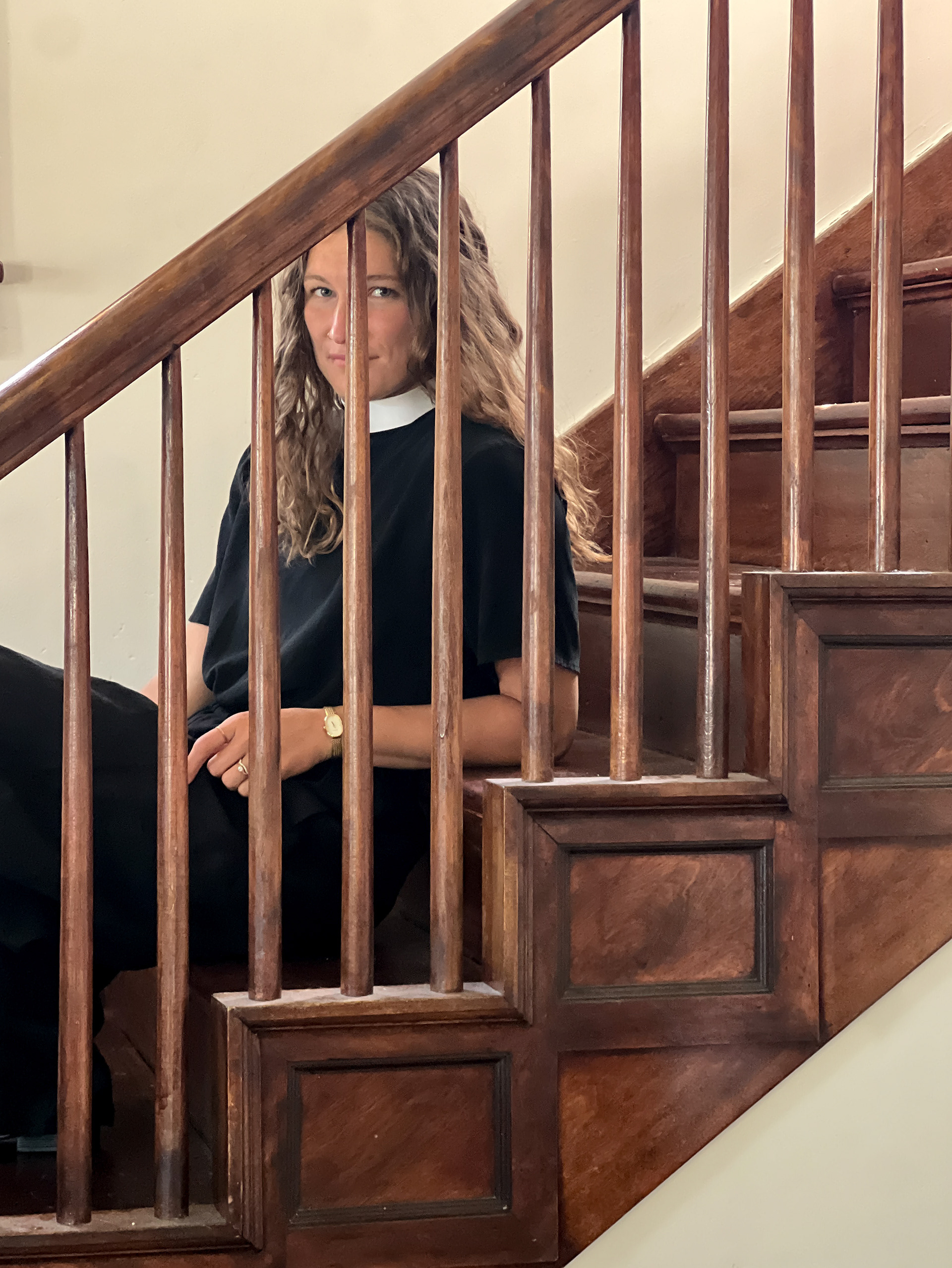
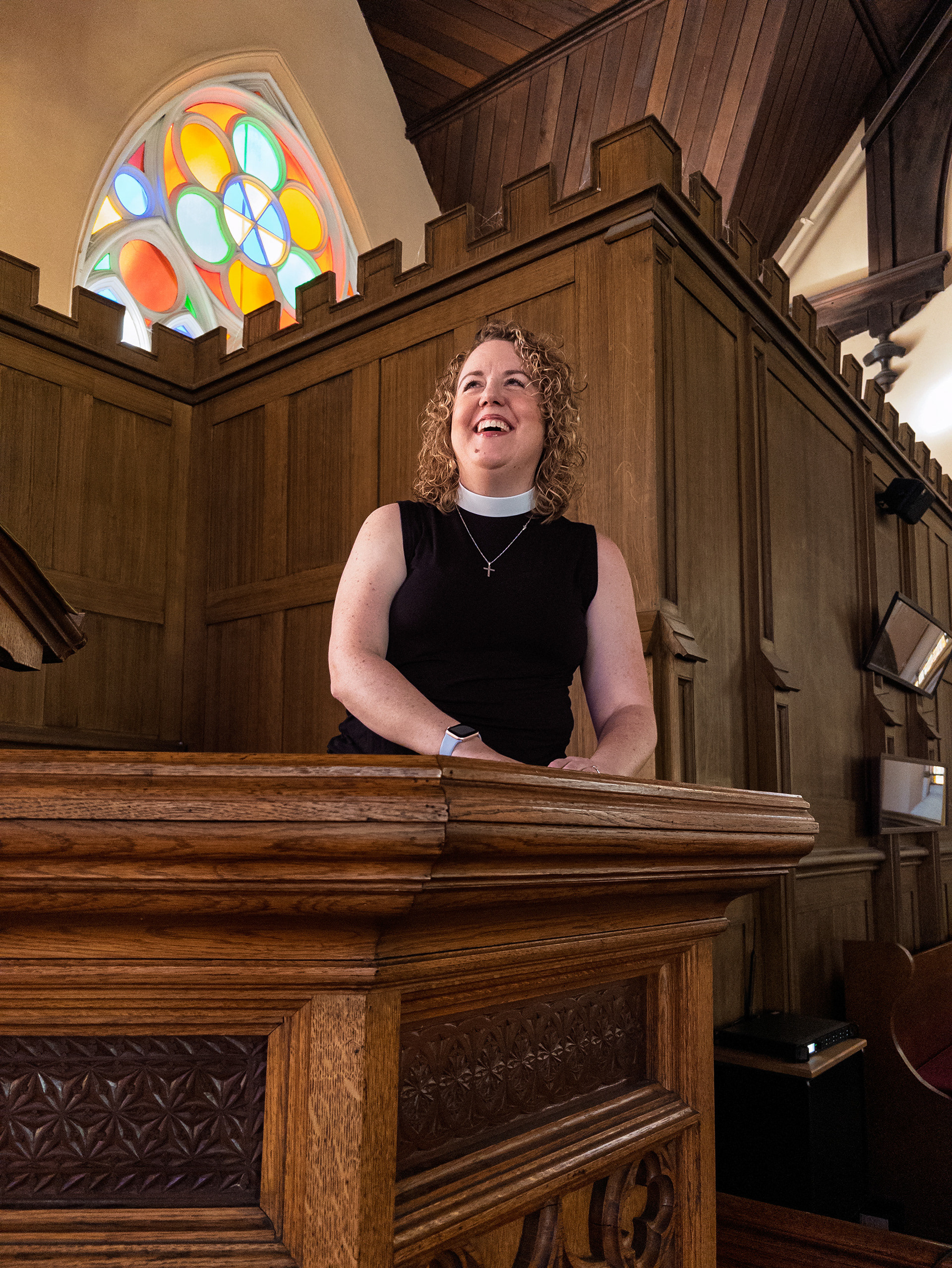
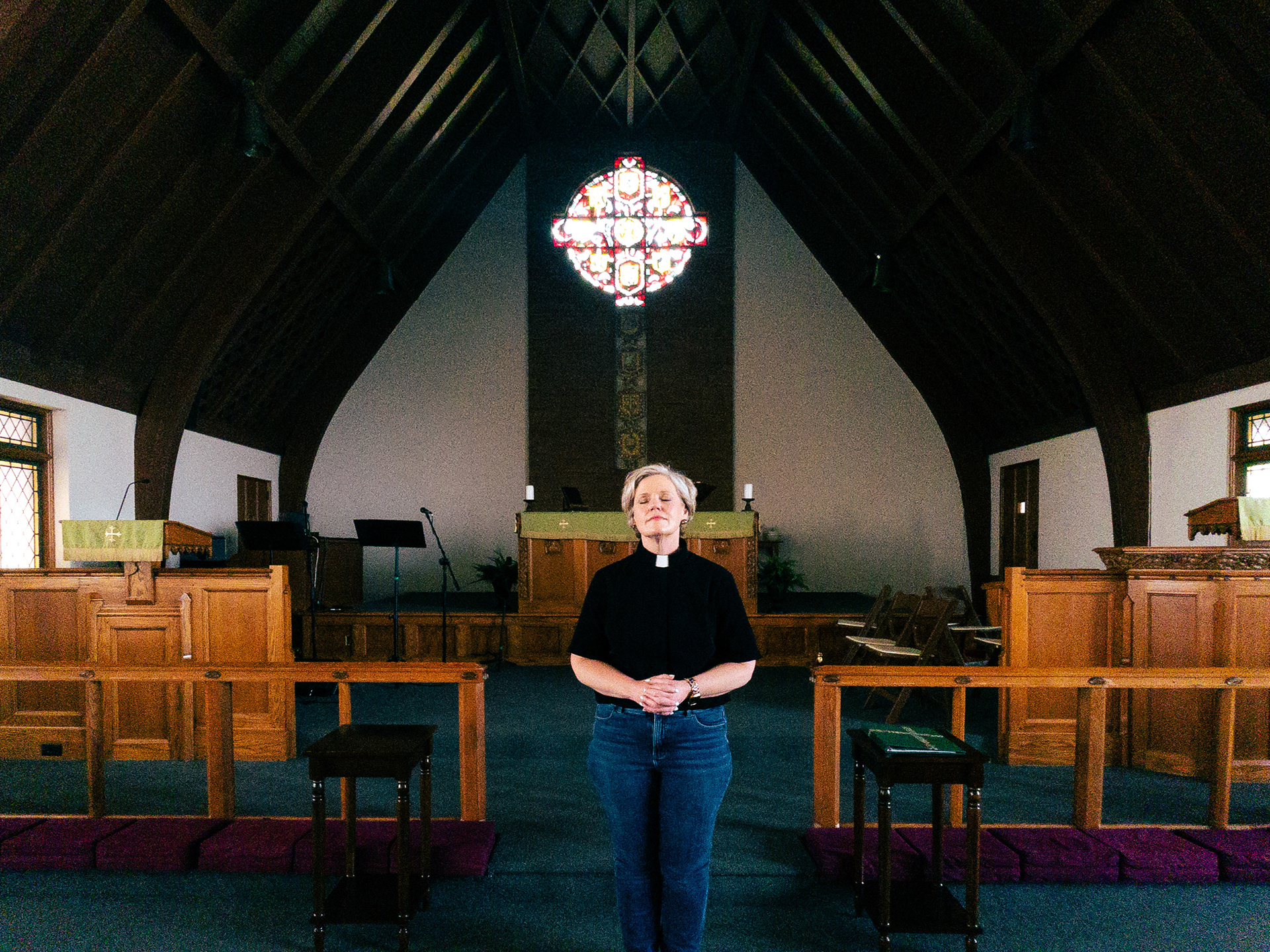
Yes, thank you for having me, Juliet. It's so lovely to be here. I am April, and I am an associate rector at a church and I am a mother of three young adult children and two of their spouses; married to my husband for thirty almost thirty-one years; and I am just so grateful to be to be called to be a follower of Jesus but also to nurture, pastor, equip and support others in their life with with Christ.
Juliet San Nicolas de Bradley
I love that. We'll jump straight into it. April, will you tell us the story of your call to ministry?
April
You know, I'm just learning to talk about this, and I've never spoken of it publicly actually. So I don't have it well formulated yet, but I appreciate the invitation because it's a gift to get to tell it. And I know in telling it, it will become more formulated over time.
In some ways it has always been a part of my story, and I can look back now and say that, but I wouldn't have been able to say that in the moment. I was blessed to have been raised in a church, and from an early age I formed an attachment to Jesus, and I've always known I was loved by God, and I've always delighted in the things of God. I've always delighted in scripture, delighted in his people and in the church.
And I was actually always seen and noticed for my delight in those things, and - even though I would say it now, I couldn't have said it then - [noticed for] my gifting in those areas and and what even was leadership in those areas. And so it's interesting to look back because I have been in these spaces my entire life; every church I've ever been in would have said women cannot be called to ordained ministry.
I'm a product of Christian education from kindergarten. Even now I'm doing a doctorate, and every one of my degrees - I have two master's degrees and now I'm working on a doctorate - have all been in Christian spaces. And it wasn't until my master's and doctorate degree that I was in a space that - and I'll actually talk about that - started to let me start to ask questions about [women’s ordination].
And it's sweet to look back over those spaces. Because they loved the Lord and loved Scripture, they nurtured my life with God and ultimately inadvertently nurtured my call to ministry. And so while in some ways I wish I could have had the imagination to go to seminary and things like that earlier, at the same time I'm so struck by how God held me, and and held both the way He's created me and I think called and gifted me, even in spaces that maybe not wouldn't have been able to explicitly acknowledge it. with that.
So I ended up using those gifts in a kind of - I don't want to say subversive because that sounds manipulative and I don't mean it that way - but in the ways that you can use them. Where are the places you can use your gifts? And so, for me, that ended up being primarily in Christian education. I was leading Bible studies, women Bible studies, I became a trained precept leader early on and those kinds of things. I even took - this is really funny - I even took seminary classes when my children were really, really young.
But I audited them and I didn't do it for credit because - why would I spend money on something that I couldn't ever use professionally? I mean, I laugh now at that. But the places I was at always really treated me with dignity and invited me in ways to use my gifts that I could in the spaces I was at, and I was just always so grateful to get to do that. And so I ended up primarily teaching in churches with women Bible studies. Later I got to teach men. But then I primarily got to teach in the Bible and theology department at a really wonderful Christian school in our community. And it was in those spaces that I think so much of my formation happened. And actually, even yeah, my longing and desire to ultimately be in full-time ministry you know was nurtured in those spaces.
The church I was at for the last I mean, I guess 20 years, like pretty much adulthood, as well as the school I was teaching in. They were both thinking really, really well about Christian spiritual formation. And I'm in a really academic community, and so it was just really a rich place to be formed as a teacher, as a parent, as a woman who loves scripture, loves theology. And yet I was watching adults, but also primarily students not necessarily come out with a robust faith despite so much intentionality. In both again this the church and the school that I was at.
And so, in 2019 I just started asking the questions. And I was also ready for something else. And so I started looking at PhDs and I was like, ooh, I don't know if I'm up for that. And I would look at an MDiv and I would be like, I don't want more Greek, I don't need Greek. Those are not the questions I'm asking. And again, because I'm in an academic community that is highly theological, I'd had a really pretty robust informal theological training. I don't want to equate it with an MDiv, but considering I didn't have an MDiv, it was pretty robust. And so I just started looking around and one of the most important theologians and philosophers for me is Dallas Willard, for my own personal formation. He has this wonderful blend of practicality with profound philosophical insights and robust theology. But I think for me, he always took Jesus really seriously, as if he was real and we were intended to interact with him. So he's just always been a hero of mine. I got to be at a four-day conference with him in 2010. And then he passed away in 2013. And I just thought, I wonder what his people are up to? And I knew who his people were, if you will, and I researched them. And James Bryan Smith had just begun a master's program and a master's in Christian spiritual formation and leadership. And so I knew that was what I was supposed to do. It was one of those moments, even in my interview, I acted as if I was in. I had to backpedal and say, I realize you haven't admitted me and I'm so sorry. I just know that I'm supposed to be doing this. And I'm good friends now with the director of the program and we laugh about that.
But so I went off in 2019 and started doing this master's program and I wasn't prepared for what the Lord was going to do in me. And the primary thing He did in me was reawaken my relational connection with Him, including the fact that I know His voice. And I actually was pretty attuned to His voice as a child. And then I think about the communities I was in, for which I'm so grateful - but because they were so much in the head and so intellectual, sometimes they would minimize the third person of the Trinity, the Holy Spirit.
So that was an eye-opening experience for me and the Lord started waking me up to His voice in ways that have always been there but were really powerful. And the other thing that was happening is I was encountering really solid theology and then these people actually thought women could be ordained ministers and I was like pastors and I was like, wait a minute, I had been told that if you thought women could be ordained, you also, it was just a slippery slope. You wouldn't believe the resurrection was real. Tthere would be no sexual ethic. You know, you just men and women are the same. You know, I mean, you name it. That was what had always been told to me. And so, you know, I am literally at my first residency in my master's program, I'm sitting, I'm having breakfast with Scott McKnight, right? He’s a New Testament theologian, and he is talking about women being in ministry as if it's totally acceptable and fine. And I am just shocked.
And that for me began, I think, kind of starting to open up to this idea that this wasn't a crazy thing and it wasn't only for people who didn't have a high view of scripture. And I had such a high view of scripture and I so wanted to be in obedience to Jesus and to that I just never questioned it. And there was never an opportunity to question it for me.
And so that became the beginning of the Lord ultimately calling me into ordained ministry. I thought I was gonna go back into administration at the school I was at. I actually had a job offer there. I was being very drawn to the church, which didn't surprise me because I love the church. But it was confusing because I was also realizing I really have leadership skills and again I just wasn't really developed as a leader as a woman.
So I graduated. This is super interesting. And well, let me back up a sec. I'm going through this master's program, loving it. It's changing my life. I'm studying, you know, Lesslie Newbigin, it was just so great. And I'm thinking, I'm saying to the Lord, this is amazing. Could a church really be this way? And I'm, you know, and I'm encountering new ways of encountering God through Lectio Divinia and things like that. And I'm like, my goodness, the church needs this. And then someone from a Bible study would be like, Would you teach us that? And the Lord just kept inviting me into ways to use what I was learning. But also my imagination for what a church could be that was very focused on helping people live a with-God life, with Jesus as their ever present teacher and obedience to him, to become like him, just was becoming very I mean, it was becoming a call.
And I have these funny little notes. I look back when I think about my call to ministry. It's kind of like a puzzle or a mosaic where I would be handed one piece at a time from the Lord and I would know it mattered. It's almost as if it would come in a really beautifully gift wrapped box and all the gift wrapping I knew was the kind that the Lord used if the Lord used gift wrapping. I would know it was from Him. I would know it was His voice or I would know it was whatever, but I wouldn't know what to do with it. And it wasn't until the end that it kind of came together. You know, whereas my discernment committee, they said, that's such a clear call. And I went, “It is?” You know, because it didn't feel clear. It felt piecemeal and confusing. And it was two years in this two years in the Mr. Master's program not knowing what I was going to do.
And some of those [moments] were I mean, I have a couple, I had a professor speaking over me that I was a leader and I would be invited into leadership places and I needed to enter them confidently and boldly and I just sobbed because that was not the case. I have in my journal “Anglican church plant” with question marks and I remember telling the Lord, “I know this is your voice, but this doesn't make sense.”
Now, Anglican makes sense. I've always had a deep respect for the Anglican tradition and theology, especially because I'm a Christian spiritual formation person. So if you want to talk formation, like let's go. And the church, even that I was at, was a PCA church, but it actually had imported a lot of Anglican liturgy and and and practices. So that made sense to me, but I was not gonna leave the church I was at, I told the Lord. And I did not want to plant a church. I had helped plant a church before, but that was not what I thought in my cards. And I have other things, some of which are just too precious to probably share you know, publicly like this. But I have all these kinds of collected pieces, if you will, in these mosaics and I know they matter and some of them I'm starting to see how they fit, but I still don't quite know what to do with them all. I just know I'm supposed to treasure them.
And I graduate and I meet with my pastor and mind you, this is at a PCA church. And I say to him, I've graduated with this degree. I love the church. and I thought I was gonna go back into Christian education. And also I think I have leadership gifts and I don't know what to do with that because I'm a woman. And this PCA pastor looks at me and says, I want you to talk to this canon for church planting who's going to be planting in our area. And I go and meet with this canon and he says you need to think about getting ordained. and and so it's at that point, I then had to wrestle with how these pieces were coming together. And so actually, I mean, I was in shock because it really is like being told your whole life that this thing doesn't exist. And then all of a sudden you're called to be it. And I had never seen a woman minister. I mean, as I was processing this, I have a dear friend who is just a wonderful ministry lay leader right now with us at our church. And we were having a glass of wine and she said, Have you ever seen a woman priest? And I was like, No. And she picks up the phone and she calls, she knows like three or four of them, and she calls them and they gather and me and another woman who also was on a similar journey, we go up and spent the night with them and it was just kind of like, my gosh, you exist in the wild. It was just a whole new paradigm shift and a whole new imagination required.
And then I had to study what I thought about women's ordination. And so I spent the semester studying all of it. I needed to know the Protestant arguments, I needed to know the Catholic arguments, I needed to know the Orthodox arguments. I needed to know that this was scripturally sound and theologically defensible and not just wishful thinking on my part or some sort of theological sloppiness, or any of the things I've been told it was. And what I came away with at the end was that I think it's actually scripturally very sound. I think it's actually the way the Lord designed it in the garden when he put male and female to tend the garden together as priests. You know, there's all that temple imagery in the garden of Eden and the man and the women are placed there to co-lead in that and be co-priests in that garden. And then in my context, it was helpful and necessary. So there had been a a sexual assault case by a deacon on a minor at our church. We're again, we're in an academic community, and so you know, we have women parishioners at the church I was at that were, you know, judges and attorneys and law professors and doctors. And then they would come into church and their voices would not ever be invited into any sort of meaningful conversations. Although the men were always respectful, I want to say that, the polity just wouldn't allow it. and so I had to work through all of that.
There are so many beautiful arguments out there that I had not even been exposed to that I actually feel that are more compelling than the arguments against it, when you study scripture and when you study how Christ treated women and frankly, even Paul. So that was fascinating. And then the rubber hit the road, where I had to decide what I was gonna do. And I just remember sitting with Jesus and I just felt like He said, “Do you want to do this?” And I was scared and I also kind of couldn't believe it, and I didn't even know what I was saying yes to, really, but I didn't want to miss out on whatever He had for me. I said yes. And what I ended up saying yes to was the invitation to co plant our church with my now good friend and co pastor Robert. I said yes early on in January of 2022 and then we launched in October 2022 and then have gotten to learn how to co-lead and how to co plant and co-build this church and it has been one of the greatest gifts of my life and I'm so glad I didn't miss out on it. I'm so glad I didn't miss out on it and so anyways that's how I have arrived where I am right now.
Juliet San Nicolas de Bradley
Thank you for sharing. I have yet to make it through one of these podcasts without just crying my eyes out. There's so many similarities and actually so many of our stories, but particularly the fact that the category of woman as ordained minister didn't exist, right? Like that we loved Jesus and in our churches they just, [ordained women] didn't exist. And then to go from there to hearing that you planted a church and are a rector, that is the work of the Holy Spirit, right? To call you and [also shows] your faithfulness and persevering. And one of the things I love about the Anglican discernment process is that it's also a community naming that call for you, right? Which for me was one of the most powerful things as I was going through my discernment. Because those doubts are real. And so I was putting those pieces together while people were saying, “You are called to this.” I'm very similar in that I wanted to make sure it was scripturally sound because so much of my life I heard it was not. But I also undeniably knew the voice of God was calling me to the priesthood. And I was struggling to reconcile those pieces. And then God helped, and they are reconciled now.
April
Right. And isn't He kind in how He does it, Juliet? And like, I mean, this is where I'd love to hear more of your story, but for me, I think He knew I needed male theologians and male pastors to say it to me. Do you know what I mean? And to actually be invited to co plant with Robert, I would never have planted on my own. I would have never. I mean, there's just so much there where I look back now and the Lord and his guidance put the people around me that I needed to to give me the courage and the confidence, right? And the courage to keep going. I was asking, “Really? This is it, Lord? You want me to do this?” And these men in particular saying, Yep, yep. And then for the women to embody it when I did get to see some women pastors, I in my community I'm one of the first. And so I in some ways didn't have anyone ahead of me, but I now have so many I'm walking with or who are a little bit further and behind but yeah, yeah. Our stories are so similar. There’re similar threads, I know, in all of them.
Juliet San Nicolas de Bradley
That's why I'm so excited for this project. LI have been editing podcasts every night and I’m come out a weeping mess. The Holy Spirit is present, but there is this strong theme of loneliness in all of our stories. Right. Whether it's loneliness that we're feeling now, even if we are in spaces that are super affirming, right? There's a sense of loneliness, because I think the landscape of just say the American church. I'm just in awe, honestly, of how God calls us, the gentleness that God has with us.
And this is the way that God is making God's church, right? That is why we have these positions. I am talking to all of you because you are ordained. Because we have - “made it” isn't even the term - God has made it so that we've come to the fruition of who God is calling us to be. There's so much in that.
April
Yes, that's so good. And Juliet, you've hinted at this a couple of times. I had a female canon in our diocese who made it real clear that ordination is not the beginning of a call. It's the culmination of one in some ways. Or maybe we should say a commencement might be a better term for it, but you know, and that it really is affirming what the Lord has already been doing in and through us as women. And so I'm so tickled with how you kind of can't, you know, you can't stop the spirit. I mean, and you can in some ways, right? Like we can grieve the spirit, we can work against the spirit, we cannot participate with the spirit. And we see that in the powers and principalities that I believe are seeking to keep women from their full callings. But ultimately you can't. And I'm yeah, I'm so grateful to not have missed seeing this, like in my own life, but also in my sisters.
Juliet San Nicolas de Bradley
Yes, absolutely. And that leads actually straight into that next question - what are some of the struggles and barriers that you have encountered towards ordination or since being ordained?
April
Yeah, I have a handful of them. I'm glad you asked that question and I'm gonna share several just because I think as we've alluded to, we have similar themes in our stories. I was shocked when I started walking with women who were a little bit further behind me in the process and then they would have experiences similar to mine and I would be like, okay, there's some commonality. Each of our stories is particular and unique, right? Yet there are some common themes. I think, for me, imposter syndrome is a big one. because I didn't grow up with an imagination for this. And I'm fifty two now. I started this, you know, graduate school when I was forty-five. You know, and so my call came late in life and it's a whole different while also a continuation of what God has been doing in my life and in my ministry and seeking to follow him, it was a pretty severe pivot. And I didn't know how to be a pastor and I you know, just all of that. and so I think like coming to understand that when God calls you, He's calling you. He's calling a person who is in relationship with him, who he has created and he has who he wants to be on mission, you know, invite on mission with him.
And so I think along with that this idea of I had to grow in my confidence to lead as a woman, to be a pastor as a woman because the only models I had were men. And so I would have instincts to do things differently. But in my community, we'd only seen men pastor. And and to have to navigate what is it, what is a pastor, or what is a male pastor versus a female pastor, or what is preaching by a male that could be different from preaching from a female when all I'd ever heard men preaching and so I think like the those go together for me because it's a continual question of confidence, question of who am I, who is God calling to me. Am I free to be myself in this role or am I supposed to try to be like someone else? And ultimately I think this is part of the gift of midlife is I can't be anyone else and I don't want to be. So just coming to peace with saying, no, You've called me and You're sufficient. What I'm what I bring is sufficient. You will meet me. And there's such a gift in surrendering to that, right? And letting Him work.
And then the other ones that I would just name is when my pastor told me I should think about being ordained, he also told me that I needed to be really comfortable being misunderstood, and he was very right. The church that I ended up coming out of to plant this church, within a year the narrative became that it split over women's issues, and that is not the case at all. We left to plant, but because some people came with us, it then became narrated that way. And I remember hearing that for about a year after we planted, and I was like, What? And then I remember thinking, my gosh, I'm that woman. And that grieves me because I would never want to be divisive and that was just the simplest narrative. I don't think it was even malicious. You know what I mean? It just became the simplest narrative over time.
Because most of the church in America is primarily male dominated, because men and women really are different, I think women are continually misunderstood in these spaces. And I've had a desire for co-leading be misrepresented as ambition and wanting more authority as opposed, you know, and sometimes we don't understand what we don't know. And so to be okay with that.
And then along with that a little bit is being okay being a disruption. And so in my community, because there's not many women clergy, my existence is just disruptive. I think particularly within the ACNA, women priests can be really disruptive. Not because we're trying to, but because we exist.
And so where we planted, we have overlapping geographical and affinity diocese, which I know is also just true for C4SO and some others. And so within where I planted, I mean there are one, two, there's three ACNA churches, but there's even other Anglican communion churches, and we're the only ones that ordained women to the priesthood. And so those priests, the men at those other churches started to have conversations that they didn't want to have with their parishioners just because I existed. You know what I mean? I wasn't stoking any of it, but just because I was a pastor, you know, they were now having to answer questions of, “Why don't you do that?” And nobody likes that. And so I would walk into rooms in spaces and be the only female clergy and like men who I had taught with, some of whom I even mentored as teachers, men who used my curriculums I wrote to teach classes. I mean, you know, people that I have that respect me and I have relationships with, who taught my children and who I know their children, they couldn't look at me. And we're working through that. and I am so grateful for their willingness to keep working through that.
But for me, I had been really respected in my community because of being a teacher for so long. I knew so many families. And then I was just really respected even in the church community I was in. And so to go into spaces and to make people uncomfortable was really sad for me and hard. And so I have had to become really comfortable with just being a disruption and being misunderstood.
And so I joke with other women clergy that we are disruptive, but we're plausibility structures. And so and so when we walk into places and they're like, what is that? Well, you know what, we're not crazy. And if they dialogue with us, they may enjoy us and they may realize we have a high view of scripture and we love Jesus. And you know, I didn't have any plausibility structures of women clergies and and now I have three year olds at my church, both boys and girls, pretending to serve the Eucharist and saying they're like Pastor April.
And so there's I look out at - we have so many children in our church - I look out and I think, wow, you're gonna grow up thinking this is normal. I mean, and I can only begin to imagine the tiniest, tiniest tip of the iceberg of what the Spirit is doing with that. And so I've tried to receive the disruptions and the misunderstandings as places where I can trust the Spirit will work. And my job is to just show up and be present. And then there's two other quick ones. I believe in the spiritual world deeply. I know that they're spiritual attacks. I think I underestimated how much Satan hates women in ministry and how he will go after us tooth and nail. And again, I always want to be careful talking about this because, you know, there's that old kind of adage of like, maybe you're not under spiritual attack. Maybe you're just a jerk. And so no one likes you. You know, or like, or maybe you made your own misery. Or, you know, like I mean, so I always want to be really careful, but it took me a little too long to identify the ways that I really do think that Satan was coming after me and after women in general. And it makes sense, right? Like evil lacks any creativity. Like this it's the same playbook, right?
And I think that's why some of our stories are similar, Juliet. Evil is not creative. It has one playbook. And so it's gonna try the same things with everyone. And the primary one is like, let's divide men and women, because he did that from the very beginning. Let's not trust each other. Let's assume bad, you know, and so I just watch that play out and out and out. And I more and more just think that our struggle is not against flesh and blood. Men are not the enemy. Satan is going after us. And so I think to know that, to have the prayer support, to be aware of that and to pray in the name of Jesus, you know, speak his power over that. And then this is another one that I think is similarly related actually, and that is just the powers and principalities of patriarchal systems. and I want to be really careful here when I speak of this because I actually really want to live in the ACNA with dual integrity. I want to honor my brothers who don't share the conviction. I think that they need to follow their conscience and I want them to.
And I do think patriarchy and maybe I shouldn't use that word. I know some people think there could be, but I think sexism and patriarchy and the things that come with that are part of the powers and principalities. I don't think it's how God created things to be. And yeah, you know, powers and principalities and systems, they're impersonal, right? And so they have a staying power and a rigidity that is just really hard to come up against. And I was naive about that. I think because I was coming from traditions that didn't ordain women at all, I didn't understand how much the ACNA was not settled on that.
I'm really comfortable being with men who don't think I'm supposed to be ordained, but I wasn't prepared for how uncomfortable I would make men who didn't think I should be ordained. You know what I mean? I know how to be in those spaces. I've done that my whole life. And so I just continue to find that a challenge. And I'm surprised by that. I didn't come in looking for that, if that makes sense. I didn't, so I continue to be surprised by that and I think naming the cognitive dissonance of living in that is actually a really important way to un-mask it and take away some of its power and shine some light of truth in it.
Juliet San Nicolas de Bradley
Yes, absolutely. It's one of the things that has actually come up in the last four conversations I've had in the last two weeks, about true dual integrity. And again, we're here in this space that is a dual integrity province, which means I want to love and care and actually respect those who disagree with me because we're trying to be in communion with one another. And that we ask for that also back, right? It's supposed to be this reciprocal care of loving God and loving our neighbor. The theological position is coming out of people trying to seek and love God well. And we can have differing theological positions, but the vitriol that is directed at us [women clergy] for existing is not of God. That is not of God.
April
That's beautiful. That's well said. Keep that one in. That's good.
Juliet San Nicolas de Bradley
For the next question - I just added it and I'm really glad that I added it - what are some of those moments where you felt the joy or delight of the Holy Spirit with you as an ordained woman?
April
There are so many. The gift of getting to sit in scripture and prepare a sermon or teaching, both because I encounter the living word of Christ in it, but also it's just such a complete honor and privilege to invite others to experience Christ through scripture. I've had the privilege of baptizing three young women who grew up in families that were unchurched completely and they all bought themselves Bibles and went to TikTok to learn how to read them and then the Lord brought them to our church and I got to baptize them and they're separate. It’s happened once every year.
And I know, you know, there's a lot of research happening right now about how many women are leaving the church and the gender gap is actually shrinking in the church. It's always been way more women. And so to see the women, the young women, the college students, the young professionals, the medical students, the nurses coming here and being discipled, and you know, baptized into the training life with God. So that was a huge one. Serving communion. To have someone stretch out their hands and to give them a tangible real presence of Christ in their outstretched hands and look them in the eyes and say, “This is the bread of heaven and the cup of salvation given for you.”
But I have to say some of my greatest joys, it's happened twice. and it's significant to me because the first time it happened I told the Lord, “I want more of this. This is amazing.” And it is getting to preach at women's ordination to the priesthood.
I've been asked to preach at two women ordinations to the priesthood and our bishop has let me. And to one to walk with them and to see their courage and to have the gift and the privilege of encouraging them, helping build up their courage, build up my courage. and then to to get to sit in a passage as I prepare to preach for them and to see how the Lord has created them and gifted them and called them and is weaving their story into his story of redemption and to get to proclaim that at, you know, these significant events of ordination to me has just been one of the greatest joys. And it's yeah, that was the first thing that came to mind when you asked the question.
Juliet San Nicolas de Bradley
It's so beautiful. I'm crying over here. At my ordination, there was a woman [priest] who was preaching, Sarah. And I, again, I just haven't, especially since like even since being ordained, because my husband's a priest and I'm a deacon and we're church planting. It's not like I get to see a woman preaching, right? We're the ones doing the work. So to see a woman there on the day of my ordination was just so powerful. and such a beautiful lived out expression, right, of what we believe. I love that.
What would you say to a woman who is thinking about ordination, April?
April
You need to be certain of Jesus' call. And so do the work to do that. Meaning your call is going to be contested all the time. I think both by humans and by the powers and principalities. And so just keep in dialogue with Jesus about that and be certain of it because ultimately that's what it comes down to. and I don't mean certainty as if we always know all things, but do the work of that relational conversation with Jesus, of making sure so that when you have to stand and be misunderstood or there's just so many assaults of the evil one that come at you, and so to to be so grounded in that. And then and then I think secondly to find the people around you who will pray for you and encourage you and listen and help you sort through what is reality and what is noise. I have on my wall a copy of a painting by Botticelli of the virtue of fortitude as a woman and I gave it to one of these women who I preached her ordination and and Lady Fortitude is clothed in the armor of God from Ephesians 6 and she is leaning against the throne of God; so she's got that both the armor of God but also the strong support to lean upon knowing that it's not on her own strength she can resist the attacks of the evil one.
But here's my favorite part. She has bags under her eyes because she's tired. And so I think that speaks so much at the end of the day, right? To know Jesus has called you, to know that He dignified you like He like God dignified Mary with an invitation and a real choice to say yes. And that your yes matters. And then to have people around you that will hold you up and pray for you and remind you that you have the armor of God and you have spirit within you and and he will also tell you to go take a nap because you're tired or to you know, all those all those things. So I just think- don't miss out. I'm so grateful I didn't miss this, right? It's been one of the hardest things I've ever done in my life and I'm so grateful I didn't miss it because participating with the Lord and the work he's doing in this world is everything. And I will be forever grateful.
Every time I place the bread and the wine, you know, in the outstretched hands of someone, it's just the most sacred work. So say yes, if you're called and then know that it's hard, but know that it's worth it. And you have people around you that will cheer you on and hold you up and pray for you. I think that is what I would say. And you're not crazy, when all that is happening to you, you're not crazy.
There is one who does not want women, you know, leading in the church. He's kept fifty percent of the church in silence.
And I think I would just say one more thing. I'm sorry, I'm all over place, but the church needs the mother heart of God, right? I feel very strongly that men and women are called to lead and pastor together. And for too long we've been single-parented in the church. And so and again back to what we talked about earlier, to show up as a woman is crucial. I believe women and men are so uniquely different, that we need both representations for people to see the mother heart and the father heart of God. And yeah, and I actually was talking with Kurt Thompson a couple days ago about my research for my doctorate program. And he was saying that he thinks that when you have men and women leading in the church, you give the congregants opportunities to have to gain earned secure attachment with either the mother or father figure from their journey. And you know, all of us have these narratives with which we look upon who God is. And none of them are fully true, right? They're all influenced by they're all influenced by being born into and and growing up in a broken world that is part of the fall. And some of those are impacted by our mothers and some by our fathers, even if they did the most wonderful job and loved us fully. and so there's something about the church having men and women leading together that allows some of those wounds to be healed. And that's what Jesus is all about, right? He came proclaiming the good news of the kingdom of heaven and healing those. And so I think the work for women being called into ministry is that it’s not about representation, it's not about equality, it's not about others, it's about something way more than that. And I think it's the healing of souls that Jesus loves to do and delights to do and is longing to do through people.
Juliet San Nicolas de Bradley
Amen. Yes. That is so beautiful. to close us out, do you have a favorite colleague from the BCP?
April
You know, it's interesting. I wouldn't say this is my favorite, but I just keep coming back to it, especially in light of I think talking with you and I think in light of just my dear parishioners and so many people who are holding unimaginable griefs and and so it's I'm just going to read the the collect from the second Sunday in Lent.
Almighty God, you know that we have no power in ourselves to help ourselves. Keep us both outwardly in our bodies and inwardly in our souls, that we may be defended from all adversities that may happen to the body and from all evil thoughts that may assault and hurt the soul. Through Jesus Christ our Lord, who lives and reigns with you and the Holy Spirit, one God, forever and ever. Amen.