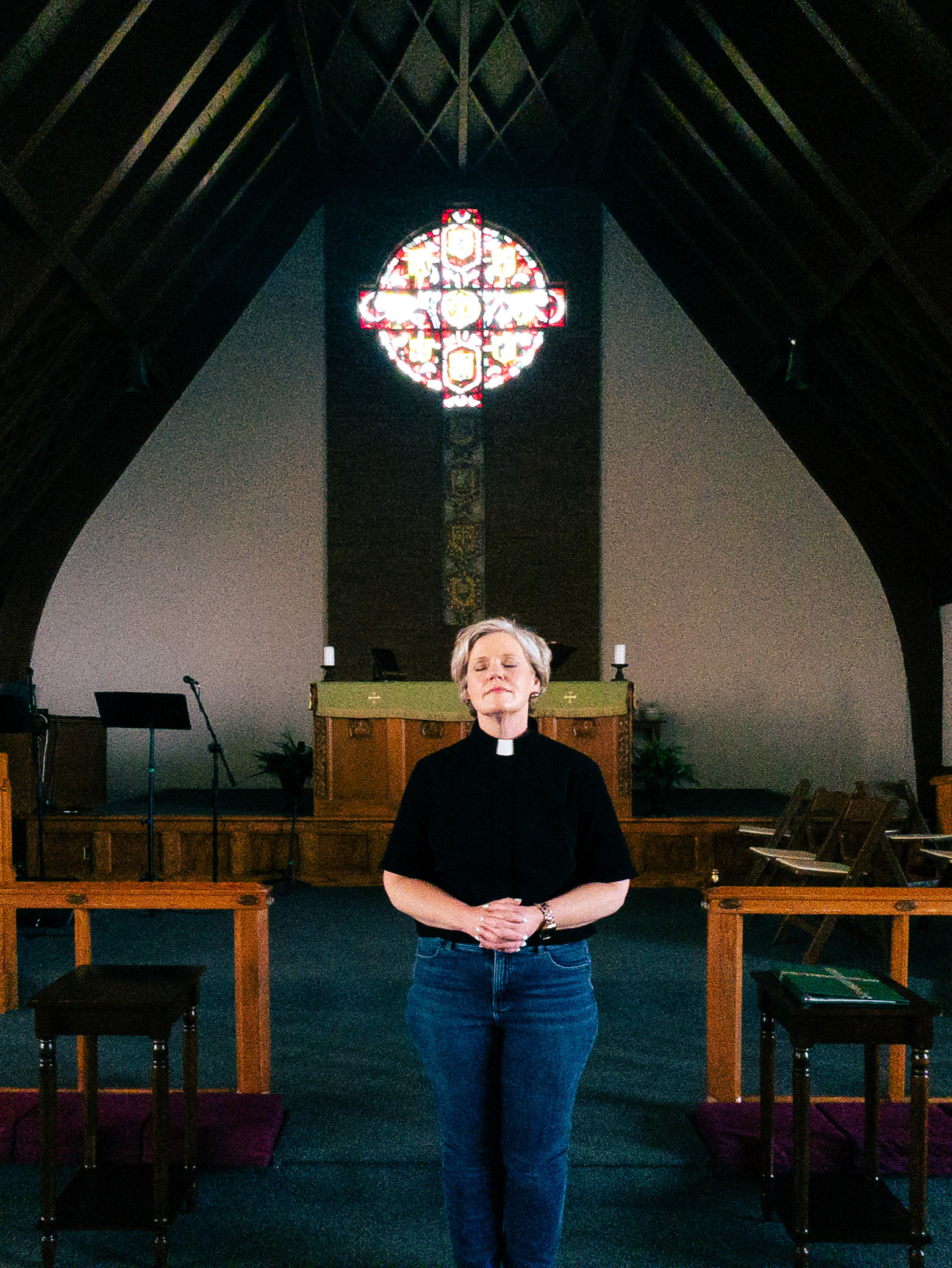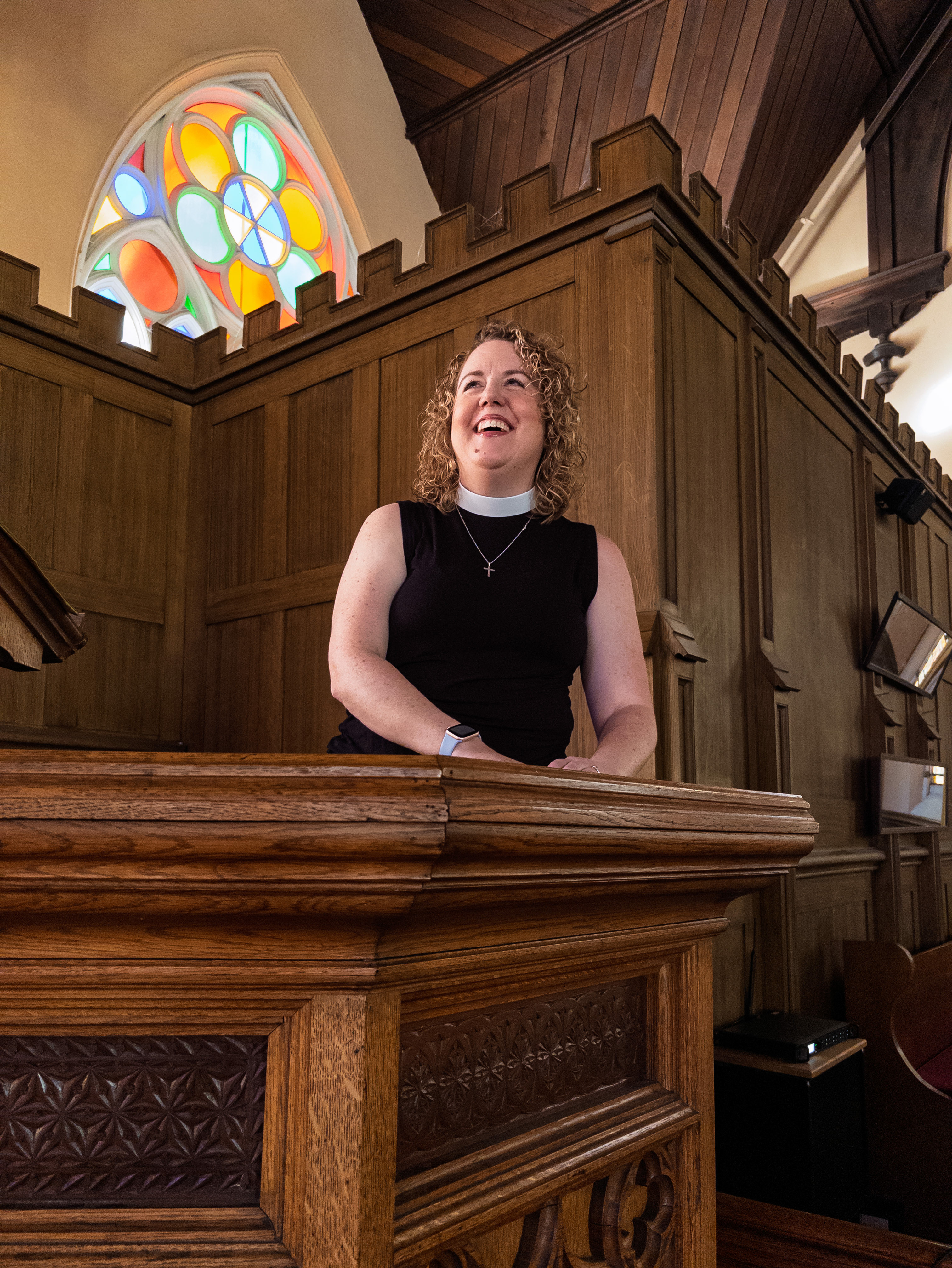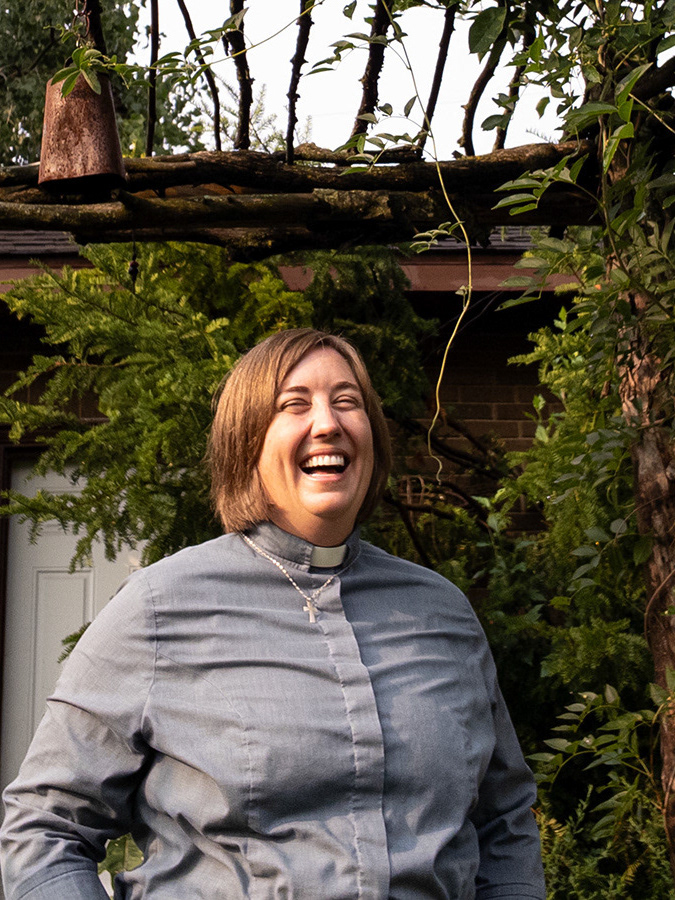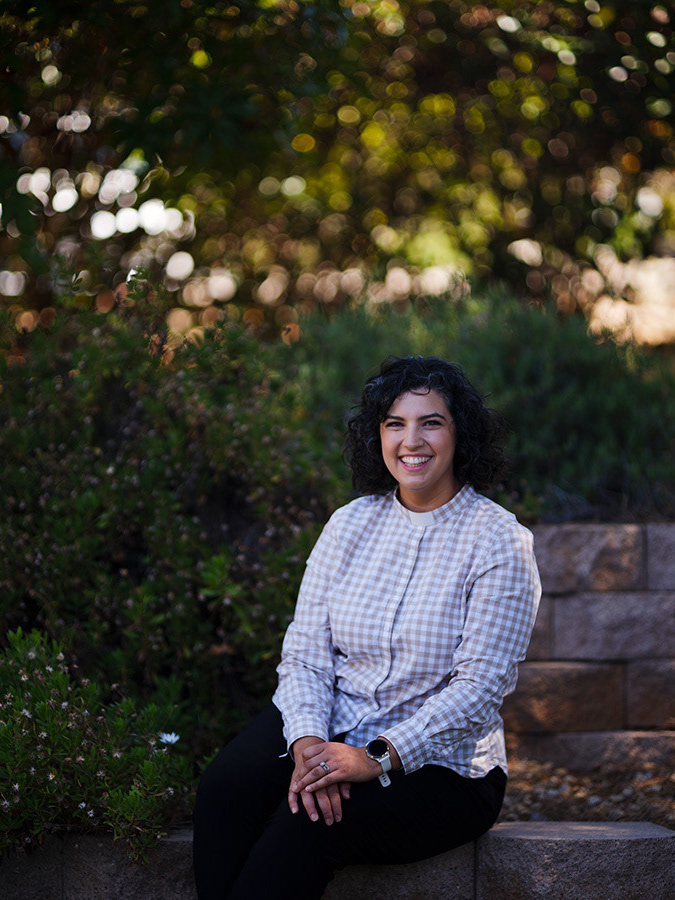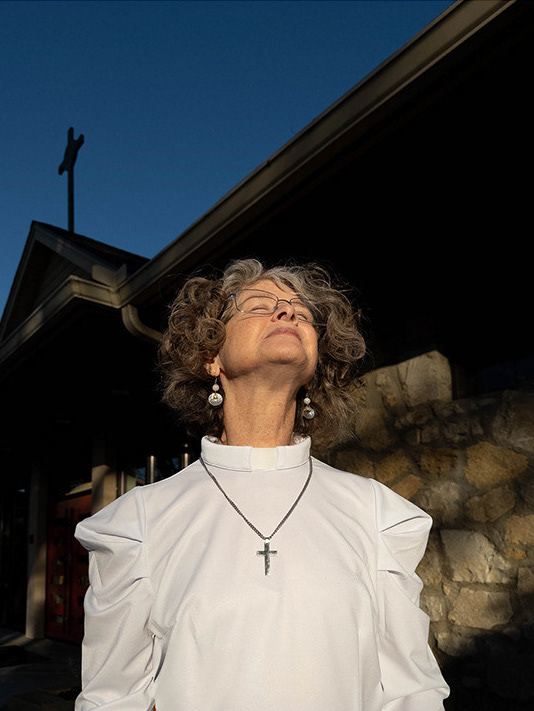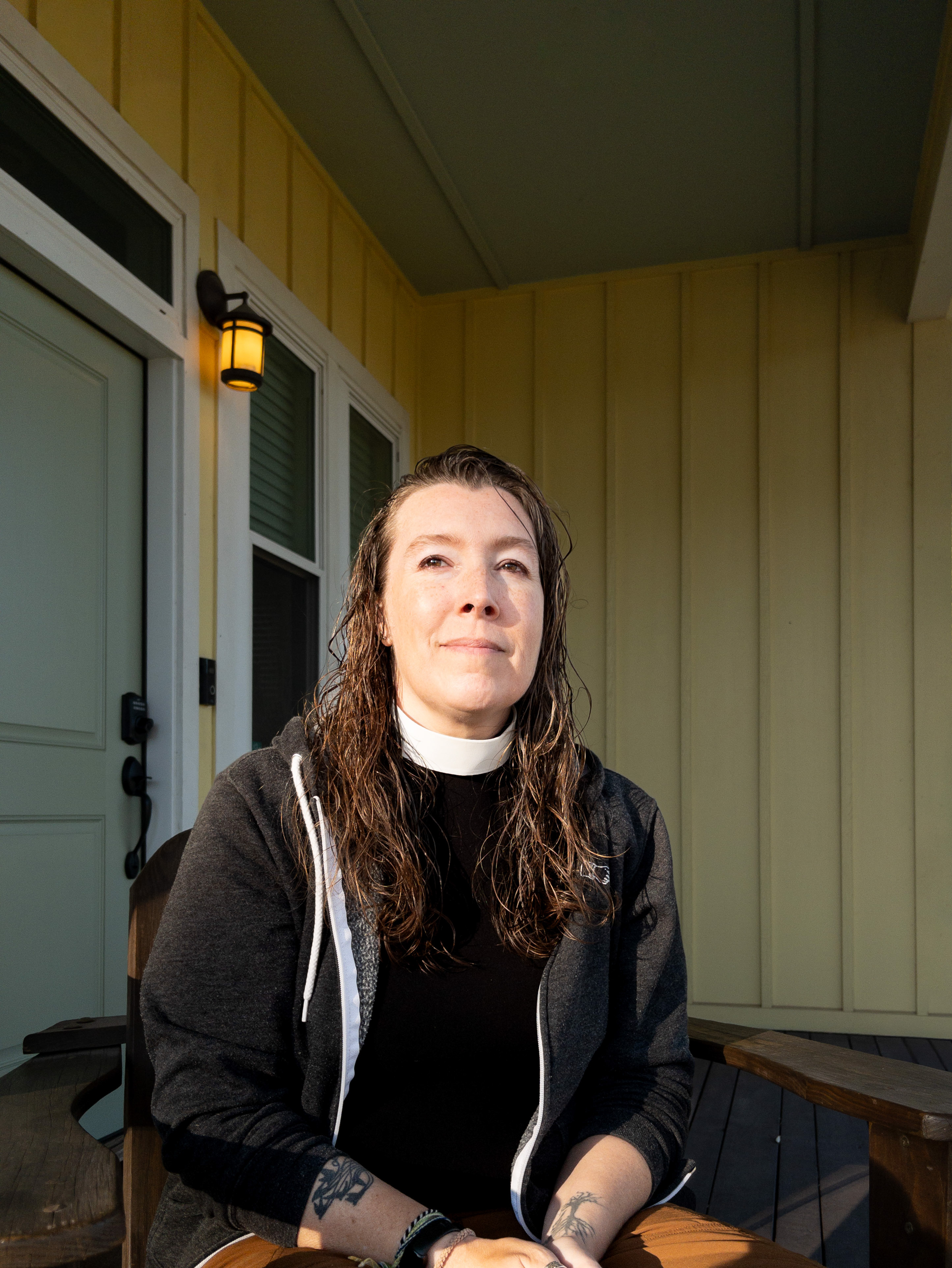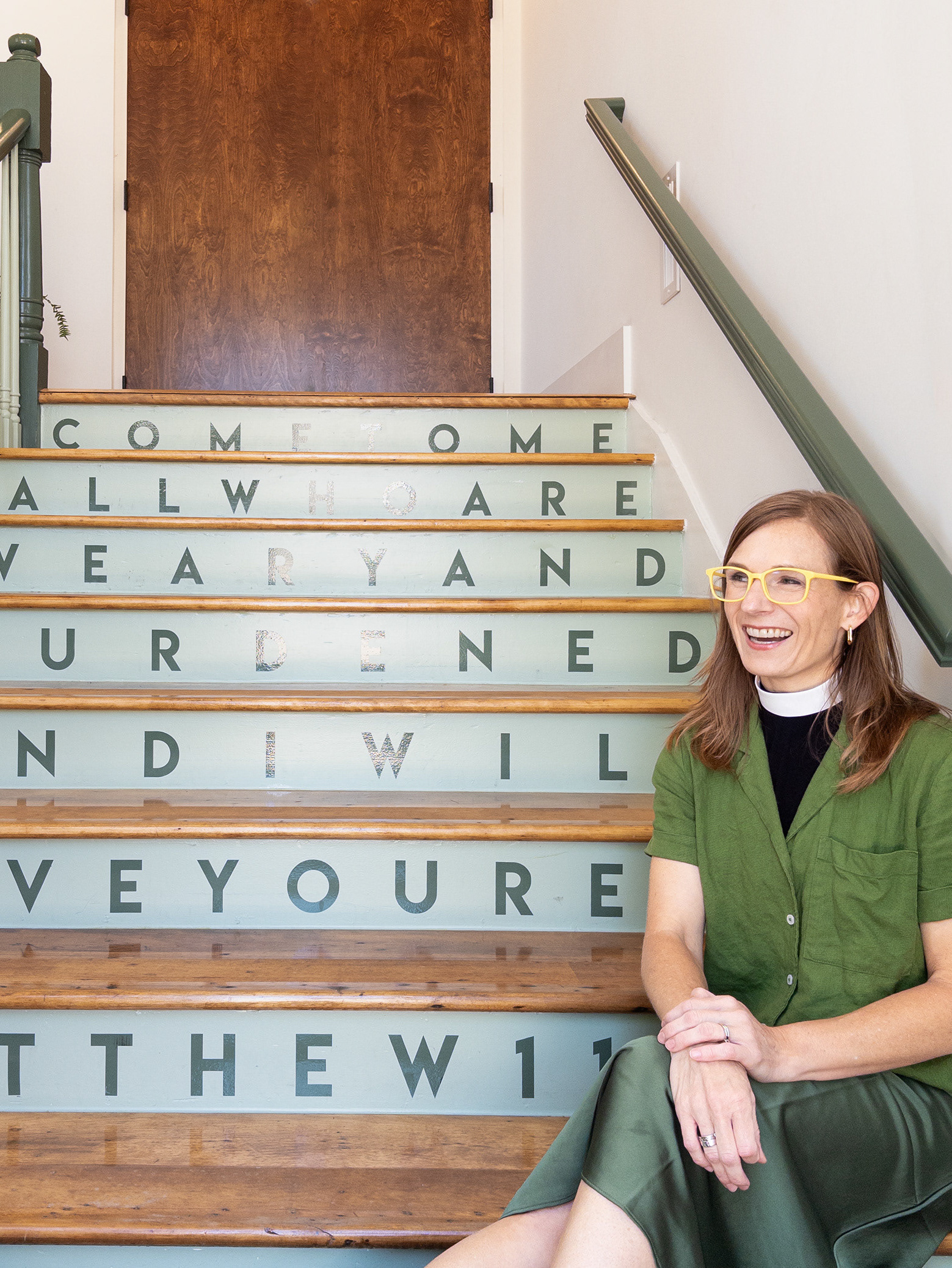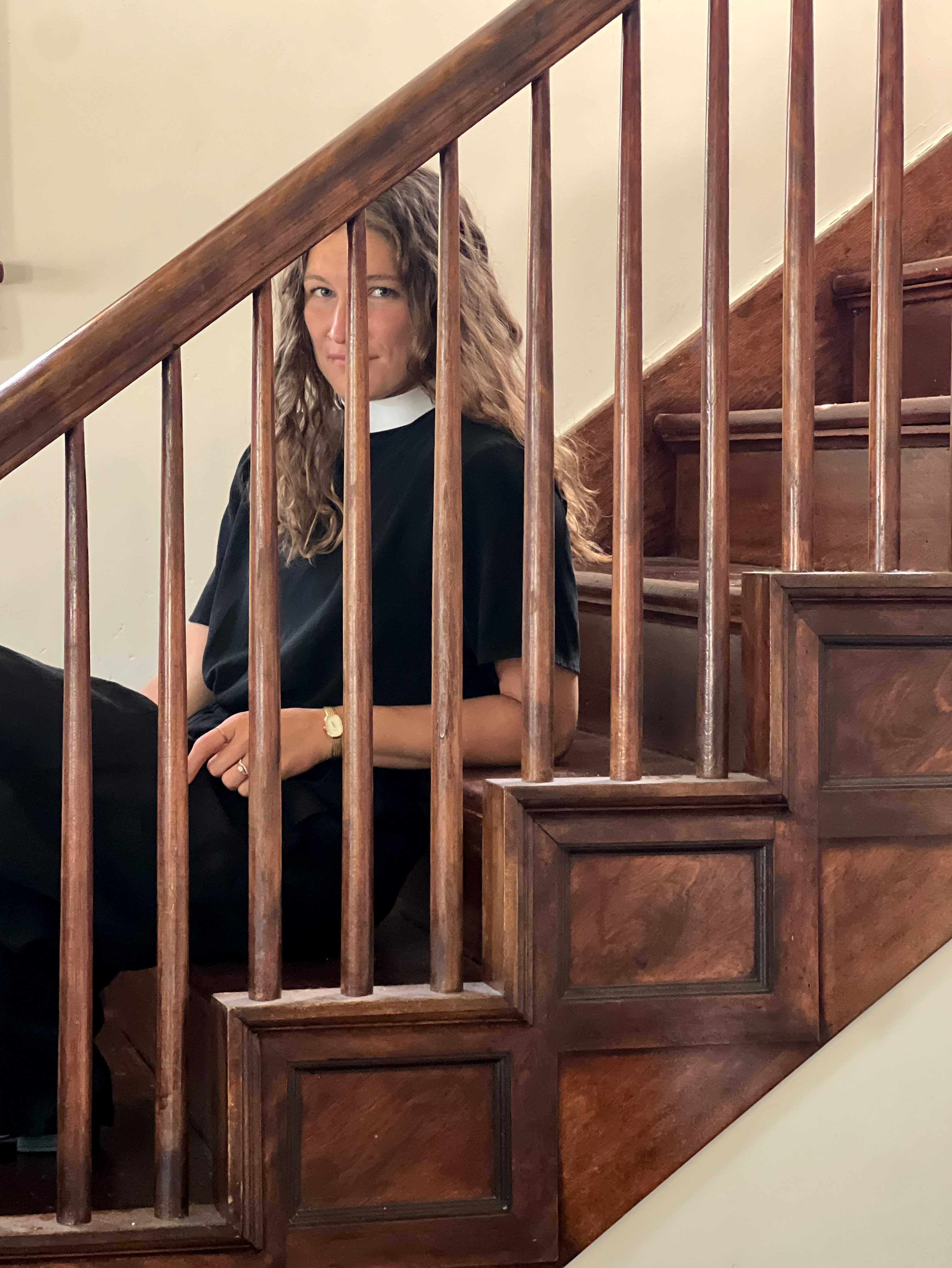
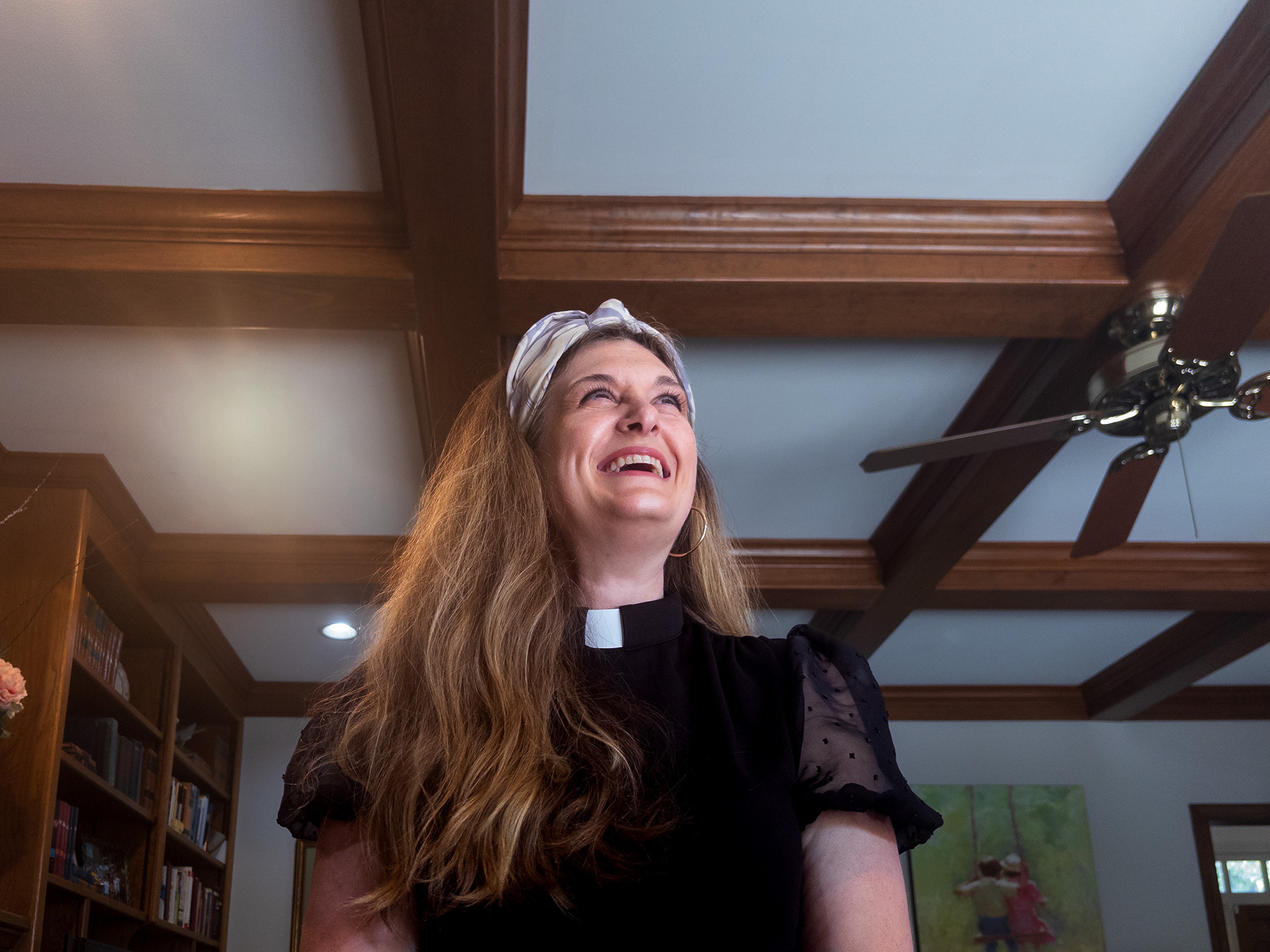
What helped me stay on that path was this real clear voice from the Lord that said, 'No, you listen to my voice first and foremost. You are called to this. And I'm with you. And I'm holding you. I'm supporting you. And this is about being faithful to me.'
virginia & juliet
Transcript
Juliet San Nicolas de Bradley
Hello and welcome to Call and Response, the storytelling project where we hear the story of women and their call to holy orders. This is Juliet San Nicolas de Bradley, and I'm joined today by Virginia. Virginia, do you want to introduce yourself?
Virginia
Hi Juliet. Yes, my name is Virginia and I am a deacon.
Juliet San Nicolas de Bradley
Virginia, would you tell us some of the story of your call to ministry?
Virginia
Absolutely. You know, I never imagined myself being ordained, Juliet. I'm from Little Rock, Arkansas, I grew up in a pretty legalistic Christian environment. And even though I had parents who loved Jesus and loved me, they subscribed to this version of Christianity that was very limiting in terms of what women could and could not do. in the way that they saw God and scripture and leadership.
It was just shaped by this really narrow way of viewing the world. And so I was homeschooled all throughout my schooling years. I was isolated from a lot of just like normal kids' experiences. was raised in the ideology of institute and basic life principles under Gothard, which had a really strong, like dominant view of authority.
And women were to be under men at all times, and so looking back, I realized that I always loved Jesus very deeply, but I often didn't know how to distinguish God's voice from the human authorities in my own life. But over time, as God does, my world and my worldview began to expand. I moved to North Carolina in my late twenties and began attending an Anglican church as a single woman, an AMIA church at the time. and through the faithful teachers of being in that community, through the richness of the Anglican tradition, and just meeting friends who are sort of outside that bubble.
I learned that following Jesus wasn't about legalism or getting everything right or having the right answer, that it was about following him and becoming like him and even though I had served in ministry capacities under that sort of umbrella ministry, before I moved to North Carolina and became Anglican, I had just done it through this very restrictive kind of interpretation because I was a woman.
And so my call to ministry, my call to ordination happened really slowly. And it wasn't this one dramatic moment, but looking back, I think it was like a series of invitations from the Lord to serve and to listen and to teach and to care for others, opportunities that I was given as I began to flourish as a single woman in this community, in this church.
And I got my first job at a Christian school and, you know, was raised never to have a job, never to go to college. I went to college and got a job eventually was just, you know, God's miracle to me. So I was working with children daily, but began to realize that I just had this passion and this joy when I would minister to adults.
So I found myself really caring for the parents and when I would show up and volunteer on Sundays at church, I found myself just really being drawn into these ministry relationships of giving and stepping up and serving in the singles ministry and leading the women's ministry, just all these spaces naturally over time that were kind of a surprise to me.
And so when my rector came to me and said, hey, like I think God might have a calling on your life to become a deacon, I was just really surprised because I had never considered that ever. Even though these were natural parts of who God had made me to be, I didn't see that in myself. And I initially wanted to say, no, no, no, that's not for me. But this voice inside the Holy Spirit was like, just say yes to him. Say yes, you'll pray about it. And I was like, okay, rector, pastor. Okay, I'll pray about
And so I did, and when I prayed, I just got this green light from God. Like, yes, go through the process of discernment. And so I did that and every step of the way, Juliet, I thought, Well, these people who are discerning with me are obviously gonna see something wrong with me. Like they're gonna say, no, you know, your rector got this wrong. What are you doing here? You're an imposter. Because I just didn't have confidence in myself as a woman. But every step of the way, they're like, No, we see this calling in you, we see these gifts in you, we are affirming this in you. and so green light after green light, the Lord provided people in that community who spoke truth into my life. And
But that was difficult because I had, you know, the culture that I came from, the family that I came from could not support that theologically. And so that was probably one of the hardest things for me was to live into that call and step into that call, even though that really couldn't be supported by the people that I loved most dearly in my life. But what helped me stay on that path was just this real clear voice from the Lord that said, "No, you listen to my voice first and foremost. You are called to this. And I'm with you. And I'm holding you. I'm supporting you. And this is about being faithful to me." That's almost 15 years ago now. It's hard to believe.
Juliet San Nicolas de Bradley
I love hearing that so much. We do have a lot of similarities in our story. I consider myself growing up cult-adjacent because I grew up close to the Doug Wilson cult. But so much of what you say is [familiar] Going from a space where women had no power, right? [They] had no place truly in the church, right? - other than to be under men - to this space of liberation to hear the Holy Spirit call you and to have the community continue to affirm that call along the way. I love that.
What struggles and barriers would you say that you encountered during your journey towards ordination and since being ordained?
Virginia
Mm-hmm. Well, one of the biggest struggles initially and still I would say to this day has been internal. I think because of the messages that I had growing up about being a woman, the way that I was raised. I just carried this belief that like, you know, I don't have as much to give as a man does. or I have to really mind what I say or how I use my voice.
Also this fear of getting things wrong, which was kind of another part of my upbringing. like I have to interpret this passage the right way, I have to have the right answer to this question when I approach the scriptures. It's just this very legalistic way of approaching the Lord. There was just such an emphasis on performance, you know, like this pressure to perform the right way and dress the right way.
So that's been a constant struggle in my journey but when I sit with the Lord, his invitation to me is just to abide with him and that I don't have to do anything. I don't have to have, you know, the checklist of spiritual practices. Like even if I'm not in God's word or praying a single day, I'm still so beloved. And just knowing that, it has really changed my perspective, but I have to intentionally choose to hear that from the Lord every day. There are also moments kind of throughout that journey of ordination and still now where I question myself and you know, I question my or compare my journey with someone else's journey.
And I'm like, well, hey, like my journey had all these ups and downs and internal barriers and external barriers and like but that person's journey was really, you know, a straight shot. Like maybe I'm not doing the right thing, but it's again, the voice of God saying, No, no, you are. And you the way that I've created you, you are living out your calling in the way that I've created you. But more recently, I think, you know, just some of the challenges for me have been serving within this culture within the church where there's a lot of conflict and voices that are wanting to limit women and women's ministry. And that's just really been painful personally and just also from a ministry perspective because I was raised to really respect people who are in authority and so when people who are in authority say things about women it just really is painful and it does make me question.
But it hurts more for the other women who I know are called and who are serving and just their desire is to use their gifts. and that's really what motivates me to continue on, even though it's challenging. but not only the voices in the church that I feel like you know just disagree theologically about women serving in ordained roles, but it's also what I see across the board and this growing distrust of women's voices in general, not believing women when they come forward and report stories of abuse, like just pain of that cause and the distrust that that cause.
So that's been something that's really grievous to me, as someone who serves, you know, within the institution of the church, because I know that's not the way of Jesus. and Jesus' invitation is to us to be, you know, transparent and be accountable as leaders to be accountable, and take care of those who've been wounded and hurt. So yeah, the institution, the church at large, it is broken and it's beautiful at the same time and
My prayer is that it continues to just be a reflection of who Jesus is.
Juliet San Nicolas de Bradley
Thank you so much for sharing that. I resonate with so many parts of that. But I think it wasn't until hearing you articulate our common background and the way that women's voices are silenced through abuse. And I'm like, yes, like there's a reason why this hits so deeply, right? Because I feel grateful to have kind of emerged from those church spaces without a significant abuse story. And it was hard, right? But like I have enough friends who have deeply traumatic stories. I'm like, no, of course this hits hard because for us that's like, no, we know what those church spaces are like, those voices that say your voice doesn't matter, right? Like your voice does not matter. and it is heartbreaking to know that the church is doing that.
Virginia
And I think that you know, that is our misunderstanding of God being reflected. And men and women, right? Like the scriptures tell us that God created them, male male and female, He created them. And so this theological idea of Imago Dei, both women and men together reflect the image of God. And so if we only have one reflection of men as being the only voice for God, we are missing out who God is.
To me, that is so clear, right? Women are just a reflection that what we need to understand truly who God is. There's so much in scriptures of God kind of being this maternal, kind of compassionate, nurturing God that we, you know, often associate with women and the nature of that God created us in. And so we need the voices and the gifts of women. And whether or not we're called into ordain ministry, we're all called into serve in different ways, but in ourselves showing up using our gifts, we help the church better understand the whole image of who God is.
Juliet San Nicolas de Bradley
And that theological truth holds for both those who believe women should be ordained to holy orders and those who shouldn't, right? Like that is actually one of those truths that we should agree upon. And it's one of the things I continue thinking of like my prayer for a dual, a true dual integrity's province, right? Is one where that we believe this, right? What does it look like to love God and to love our neighbors? And built into both of those commandments is recognizing this image of God, then it means that we respect both men and women, right? We can have a theological disagreement. agreement and I'm not trying to make light of it, but I do think there's a way to move forward in community and charity and love if we actually hold to this very important theological truth.
Virginia
That's so true. Because as you're saying, if we can both stay at the table and respect each other. Okay, you have a different theological position on women's orders, that's fine, but I still respect you as an image bearer, and I can still hear from you and learn from you, even if I'm not gonna support you know this theological position. And we're richer for it because we learn from each other, and so there are ways, even in dioceses who don't have female clergy, there are ways still to uplift women's voices and experiences and their rich lay leadership spaces where women can serve. and so I hope that churches can be more kind of upfront and say this is, you know, we're we're church, we don't have women and women clergy, but these are the ways that we do want women to serve. And you know, giving women those ways that they can use their gifts, use their voices.
Juliet San Nicolas de Bradley
Yes, absolutely yes. And that is like a really easy transition to the next question, which is something that I just added, my last conversation I was talking with Hannah. I want to hear a moment where you were serving in your ministry and felt like this is what God has called me to do.
Virginia
I don't know that I can look back and say there's like one moment in time, but I would say that I often feel God's pleasure or God smiling on me when I am administering holy communion. I I've had the privilege now of serving in five different Anglican churches and at each one, I think this the high point for me when I just feel the most the most myself is when I'm looking into the eyes of parishioners and placing the bread in their hands or, you know, serving them the cup because it feels like such an honor. I know that each person who's coming forward is coming with their own story, right? Their own hopes and grief and joys, their own doubts, perhaps. And yet they're all welcome to come experience Jesus at the table in this really profound and sacramental way. And it's such an honor to be a part of that. And to remind them of God's goodness, to remind them of God's grace, meeting Him at the table, whether it's little ones or people who are, you know, at the end of their life, those who are unborn, like it's just such an honor to see the vastness of the body of Christ coming forward to the table. And so I often just feel like God's smiling on me in those moments of serving communion.
There have been moments also in preaching which - it's always a struggle for me to write a sermon, I hate to admit that, but it's true - but once the sermon's crafted, and once I'm delivering it, and once I'm up there, that's also a moment when I'm like, God is like, see, you're doing what you're supposed to be doing. And I've chosen you for this moment to speak this word because of the Holy Spirit, not because of you, not because of your guests, but because you are supposed to be here at this moment. So preaching and serving communion are exclamation points, I feel like God is saying, This is what you're called to do. This is the way that you're serving me and honoring me. And then another joy, I would say, is just watching other women discover what God has entrusted them with. It's like opening a present. It's amazing to me over the course of my ministry the women that God has brought to me, even before my work with Women's Leadership Network, but just the women that God has brought into my life, women who are discerning, young women, middle aged women, older women, just discerning a call to ordained ministry and the ways I've gotten to sit with them and hear wrestle.
And the common refrain from them is like, I just don't know. Is - God, really do I really have what it takes? Is God really calling me? And I often tell them, Well, just the fact that you're asking that question is telling me that God has stirred something within you and God is inviting you into that and to attune to that and to water that and explore there's something inside otherwise you wouldn't be wrestling and discerning. There's something that God has given you. Whether or not it leads to ordination, I don't know, but there's something that God is saying. I want you to pay attention to this. And so that I would say has just been such a joy to me to pour into women, to listen to women's stories, to allow the Holy Spirit to speak through me to speak into their life words of truth, because I have been there and I was on the other side. And I wish I had more women who were able to speak into my life. I had a few and I thank God for them. But just how important it is to have those mentors, people we can look up to. But that's been such a joy. And it's crystallized for me, Juliet. It crystallized my mission in the church. And it is really to uplift women and to empower women and to speak on behalf of women, speak to women, speak for women, and to be one of those voices that God uses who say, Yes, I see this in you. Yes, God does call women, God is calling you. I'm here to support you and to pray for you. So I would say that also kind of just across the board as I look back, that that's been just this joyful part of serving God in this way.
Juliet San Nicolas de Bradley
I love hearing that. that reminds me I had forgotten to ask you the question, about the discernment between the diaconate and the priesthood. What did that look like for you? did he spend much time with it or for you was it pretty clear that it was the diaconate?
Virginia
Well, so I was ordained in the Anglican Mission in the Americas. This was before the ACNA was formed, or it had been, I think ACNA started in [2009] and I was ordained in [2011]. So we were still AMIA at the time. And in a MIA women were not allowed to be priests. Yeah. And so it was just the diaconate that I was sort of allowed to discern. And I, you know, have thought on and off over the years, like maybe God is calling me to be a priest. I don't know, but for now it's where God called me and it's been this rich and beautiful space. Because I feel at the end of the day God has called me to shepherd and pastor. And right now that is as a deacon in the church. But who knows, perhaps down the road God will tap me on the shoulder and, “Okay, I want you to start the priesthood discernment” because that's definitely a conversation I've had, you know, just him and me over the years.
Juliet San Nicolas de Bradley
And I actually love this is one of the reasons why I love hearing people's stories. that I think we need a little bit more space for the diaconate for us to be deacons first and spend time there, whether or not we are moving to the priesthood and the diaconate or not. But what a gift it is to live into the calling of the diaconate, right? and that maybe yes, you would be called to discern the priesthood and maybe that is a yes. and maybe no, right? Like yeah, I have the I was or I was ordained last year. and it is gonna be quite some time before I'm ordained to the priesthood because I started my MDiv a month before my children came to me. my children came through foster care. They're now adopted into the family. But like, you know, I started the MDiv process. I thought it'd be like, you know, two years. I also work full time as a speech therapist, but now working full time, being a new mom and also planting this church with my husband, it's gonna be more like a five, six year period. But I'm deeply grateful for the opportunity to really live into my diaconal calling 'cause it will be the diaconate and the priesthood, right? It's not like I stop becoming a deacon, when I'm ordained to the priesthood and
And yeah, I think that there needs to be a little bit more space for like you can and it might be a gift actually to sit with your diaconal calling for more than like the six months or the year that they have between the two ordinations.
Virginia
Yes, I agree. And one thing that my rector told me, when I was ordained, he said, you know, we're deacons first. You know, everyone who's ordained, whether they become a priest or they have a calling, you know, eventually they're consecrated as a bishop. Like we're we're all called to be servants. And which is what diaconos means, we are serving the church and we're this bridge between the church and the world and it is a beautiful calling. And one thing I love about the calling of a deacon is that each deacon's call within and without the church looks different, right? It doesn't look as you know, depending on what your ministry is and what your population is, you're called to, it's going to look different. and celebrating that it's not a hierarchical well, you're less than, your ministry is less than. It's a different call, it's a different office. And a beautiful call. And the way that you are ministering as a deacon in all those fears that you just named is all part of your call too. As a foster mom, as a speech therapist, you know, it's all all there.
Juliet San Nicolas de Bradley
I love that for our last question, and I know that you probably have much to say about this because it sounds like it's part of your calling, but what would you say or what do you say to a woman who would come to you thinking about ordination?
Virginia
Yeah, I would say don't ask the question, am I qualified enough or do I have what it takes? Instead ask yourself, “Am I faithfully responding to God's invitation? Whatever has been stirred up in my spirit to even begin this conversation, am I responding to that invitation?” Because it's God who gives us the gifts. Discern with the community of people who you love and you trust and ask them to tell you the ways that they have seen your gifts manifested because you may not be able to see them yourself, right? But they are that mirror that they can help you see what you can't always affirm in yourself. But over time that will become clear as you gather, that's what the whole discernment process is about. Like even if you're not quite sure as you begin that process
It will become clear over time as your discernment team comes together, as they speak into your life, as they hear more of your story and your journey. What feels opaque now will become clear because that's who God is. Even if there are seeming barriers that you can't get over, right? Because er you I don't know any woman's ordination store that doesn't have barriers, right? Or discouraging voices along the way. That's just part of it.
But stay rooted in your relationship with Jesus and in prayer. Stay connected to the wise mothers, the women that God has placed in your life to remind you on your darkest days when you doubt yourself not to doubt Jesus because it's not about yourself or what you bring to the table. It is those things and the way God has made you, but ultimately it's about God revealing himself through you in the way that he's created you. And also just for us as women, because you know, sometimes we exhibit the world with anxiety, but just to remember that it's not about having all the answers or being the most theologically astute person in the room, because I definitely am not, right? But it's about faithfully pointing people to Jesus and that God needs your voice, your mission statement, your gifts in the church, in the community that you've been called to to help people to experience Jesus in God in a fuller way. And you saying yes to that, wherever you are in the process, that you saying yes to that, is going to help people in your community experience Jesus in a fuller way toward healing, toward reconciliation, toward fullness, all the things.
Juliet San Nicolas de Bradley
Yes. I love that so much. and so to close out our time, would you pray one of your favorite collects from the Book of Common Prayer?
Virginia
Yes. So one of my all-time favorites comes from Compline, which is really my favorite service. It's on page sixty-four of the twenty nineteen BCP. I'm sure you're familiar with it, but to me this just encompasses so much of the people that I care for and long for Jesus to meet. summarizes it so beautifully.
Keep watch, dear Lord, with those who work or watch or weep this night, give your angels charge over those who sleep, tend the sick, Lord Christ, give rest to the weary, bless the dying, soothe the suffering, pity the afflicted, shield the joyous, and all for your love's sake. Amen.