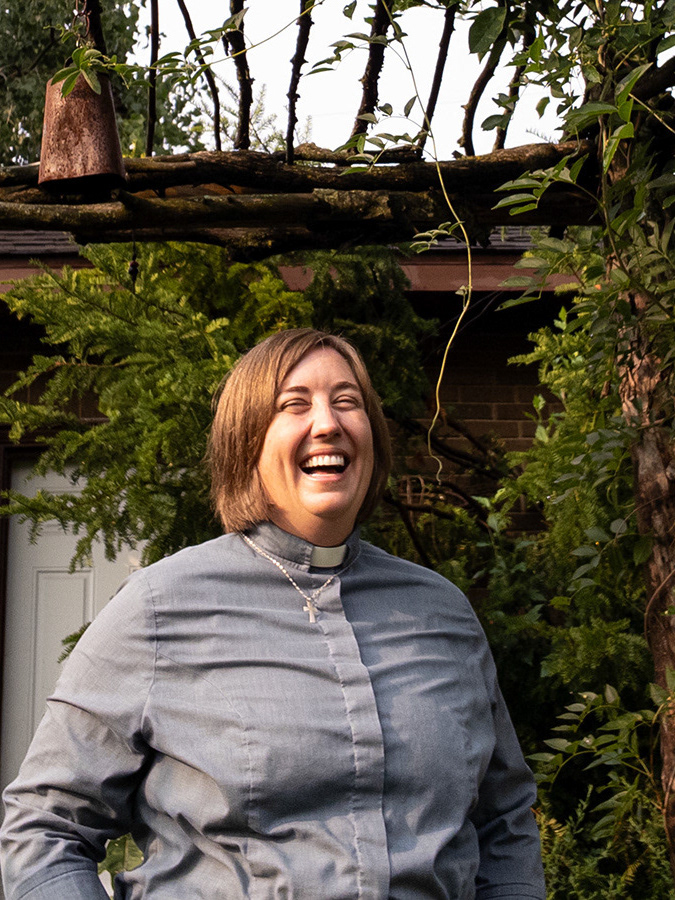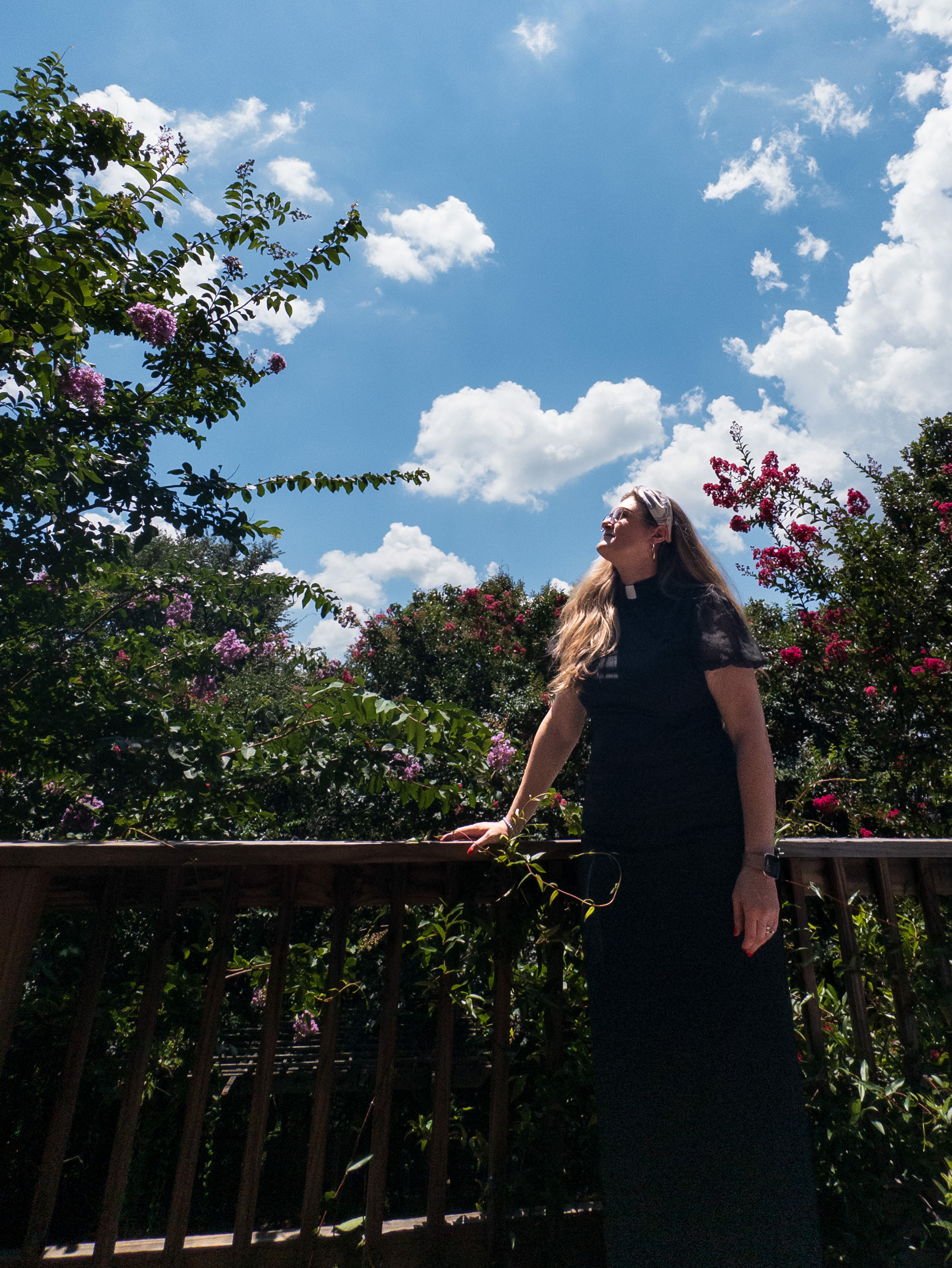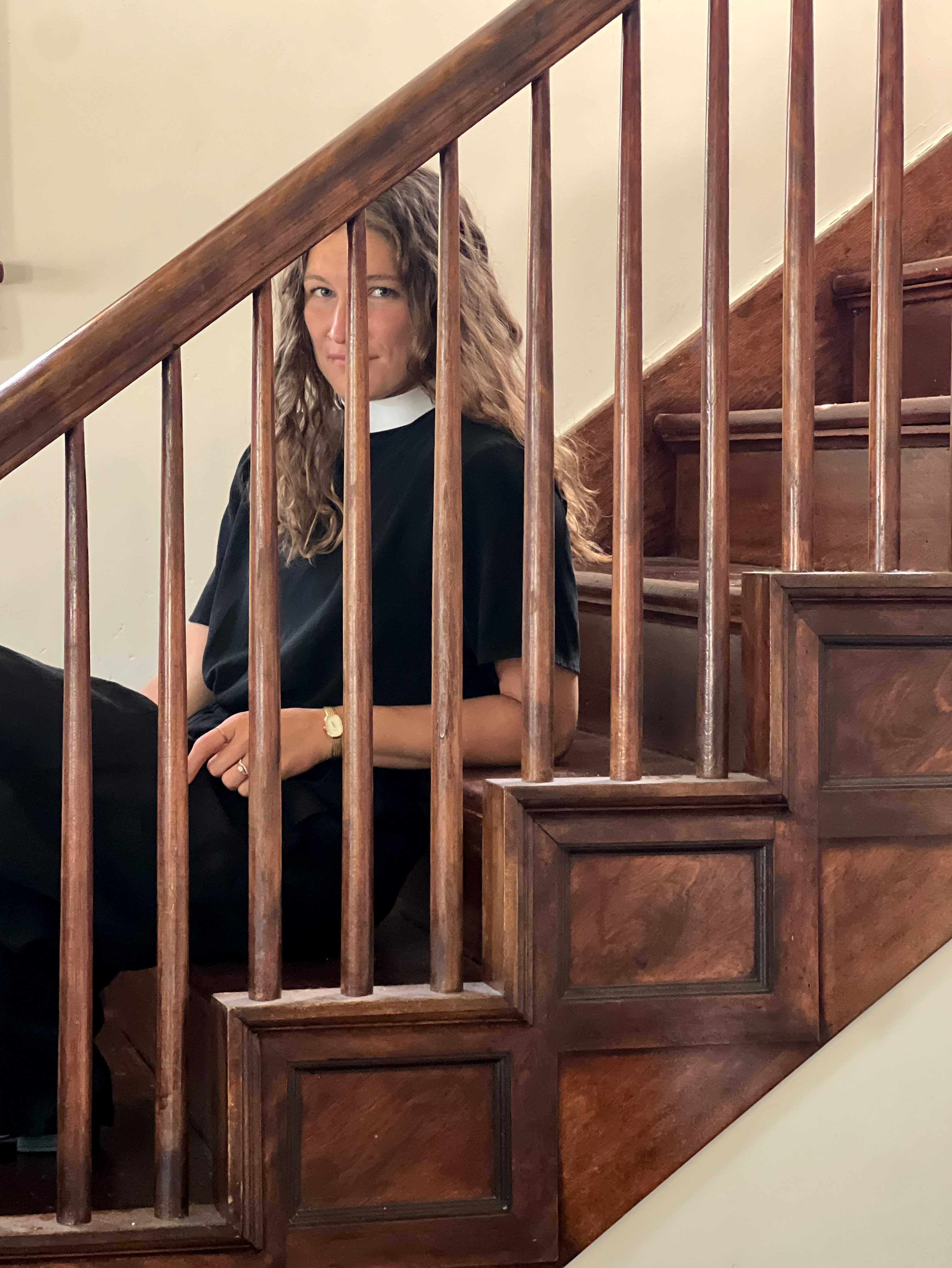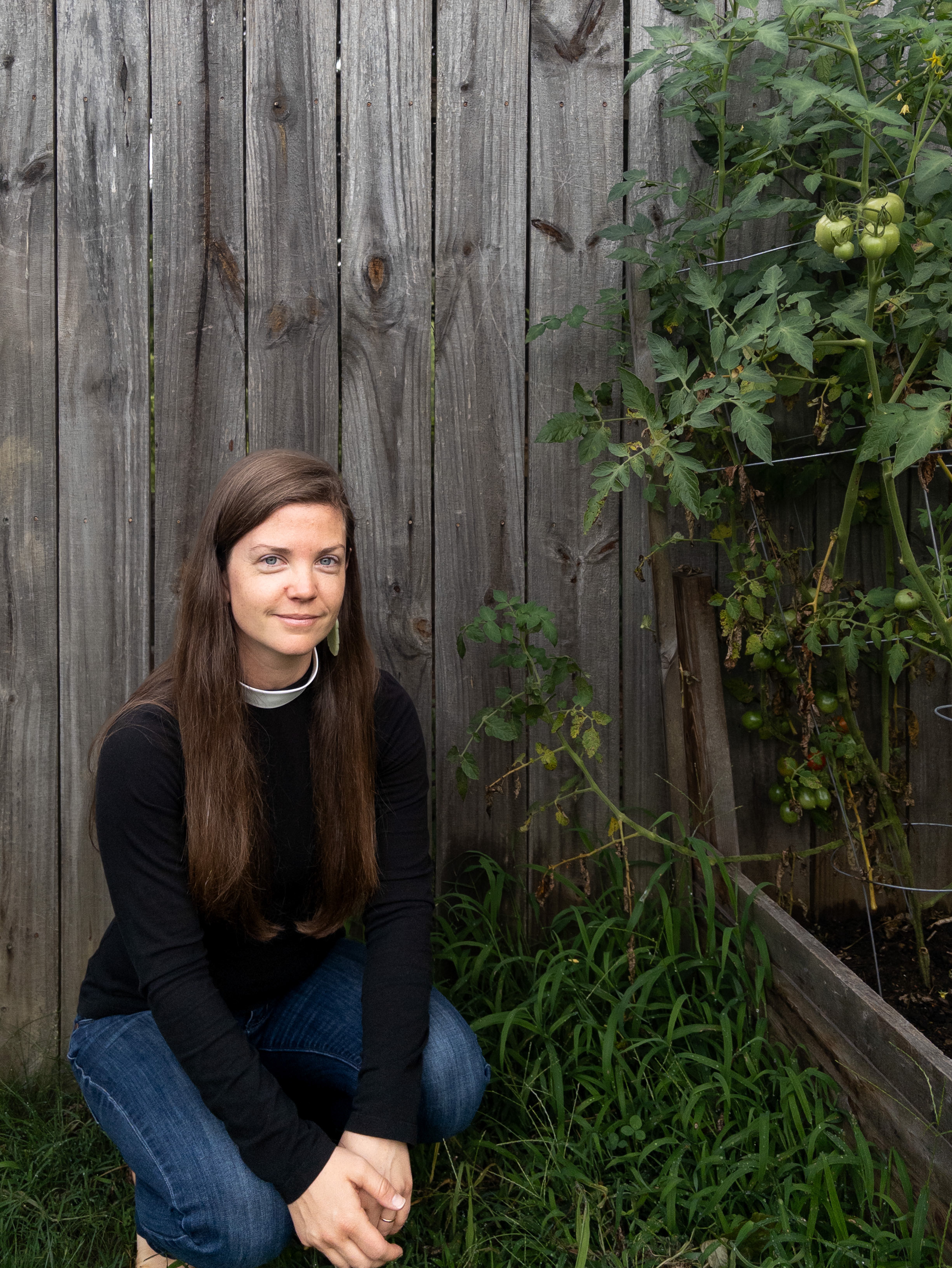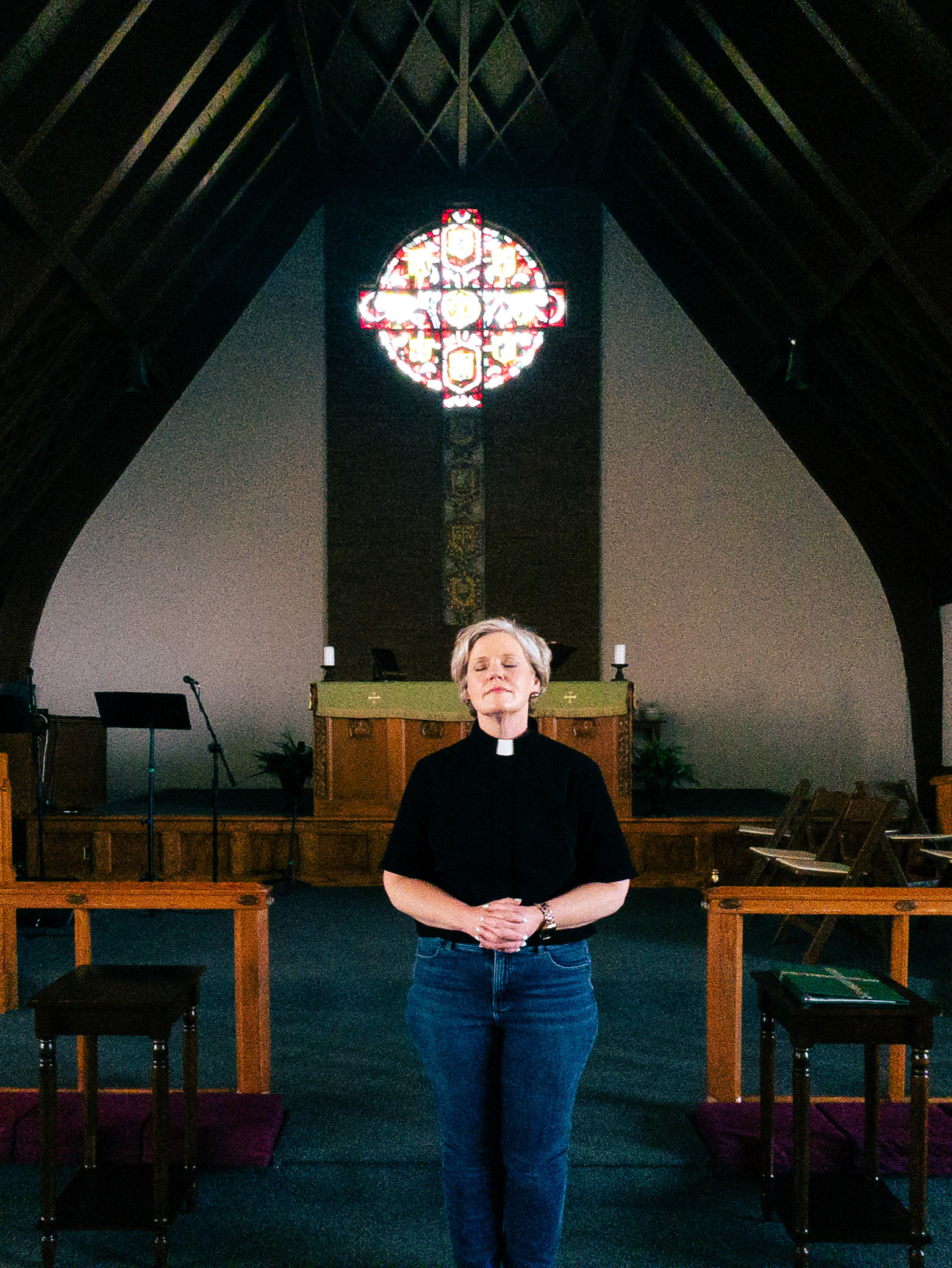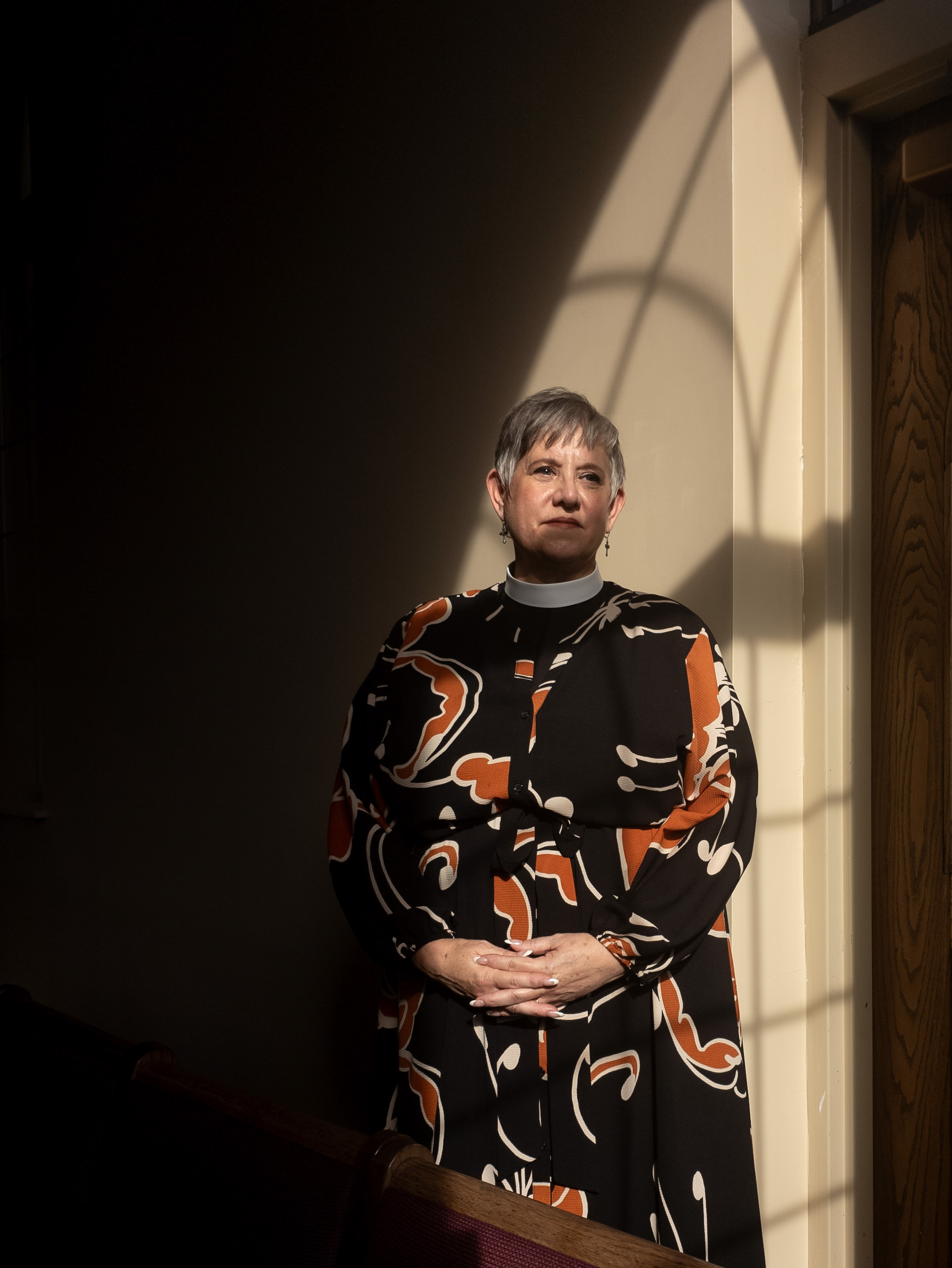
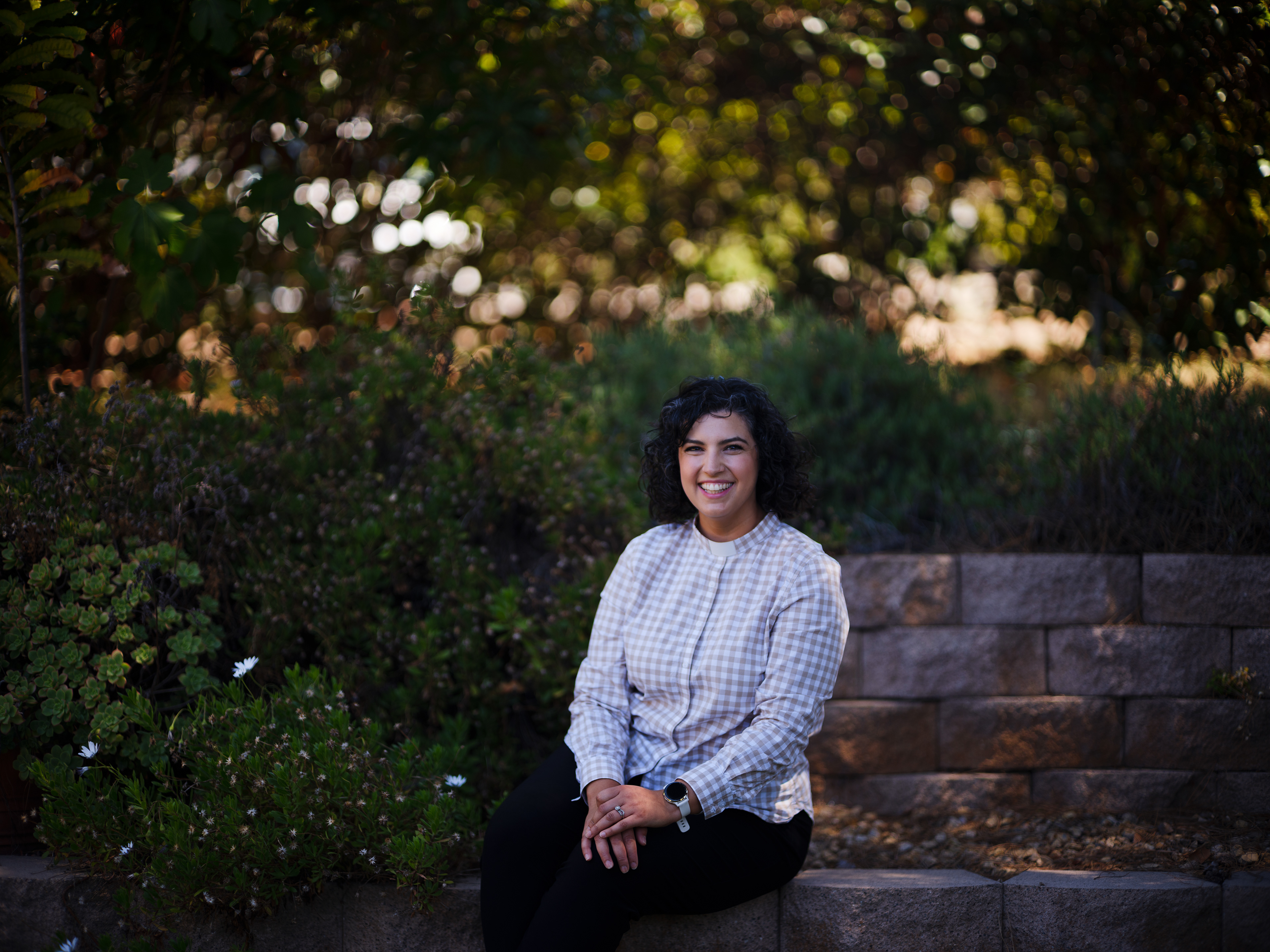
The call to vocational ministry is beautiful and hard...you get to see the ugly, but you also get to see the beautiful and the holy.
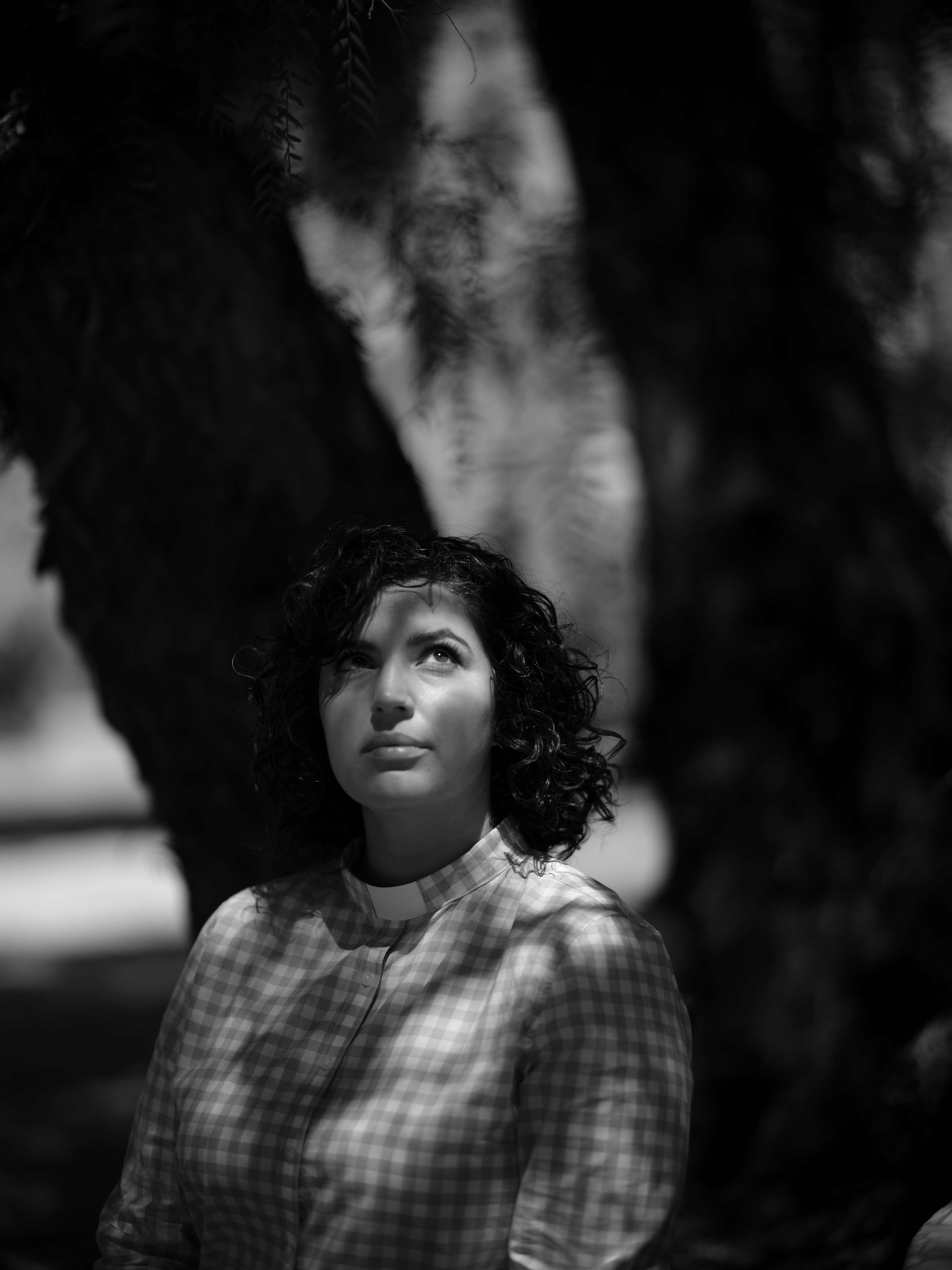
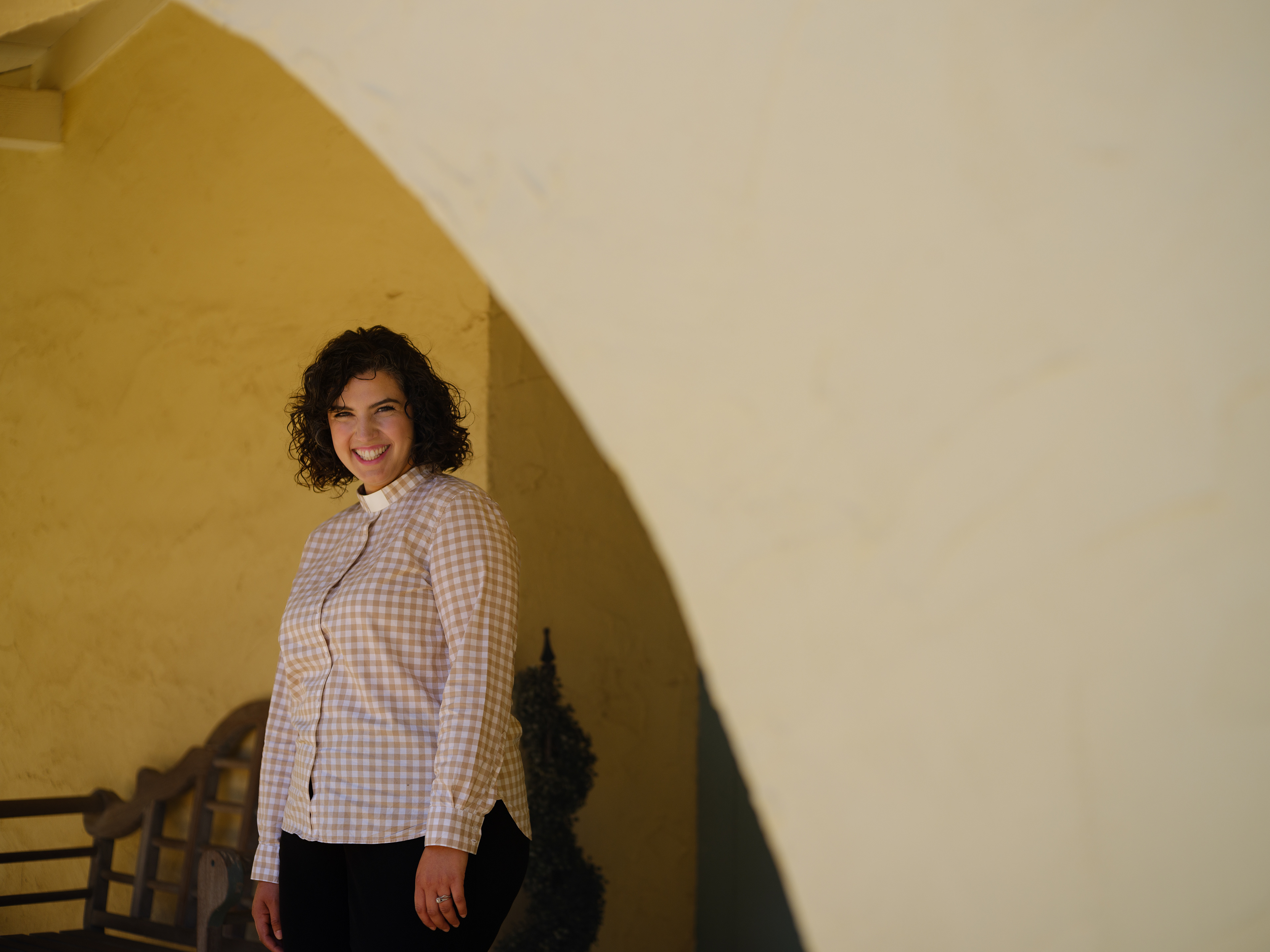
It's so easy to turn our role into a political statement. That's not what it is. This is a role to serve the Lord. First, to serve God's people, and then to serve the world in general.
vania & juliet
Transcript
Juliet San Nicolas de Bradley
Welcome everyone to Call and Response, the storytelling project of women and their call to holy orders. I'm joined today by Vania. Vania, would you introduce yourself?
Vania
I am Vania. I am a transitional deacon. I am married to my wonderful husband, Isaac, and I have two kiddos who are wonderful and keep me busy and on my toes, and I love them so much.
Juliet San Nicolas de Bradley
I think we'll just jump straight into it. Why don't you tell us the story of your call to Holy Orders?
Vania
Yes, my call to holy orders has been weird and strange and long. I don't think that is uncommon. I am the fourth generation in ministry. My great-grandfather was ordained. My grandfather and my grandmother were ordained, and then both of my parents are ordained. So all of my life, I knew I did not want to be in ministry. That's probably not what you expected me to say, but being so involved in all of it, I thought, “God, I do not want that.” So, my prayer was always, “God, I do not want to marry a pastor. Whatever happens Lord, please help me not marry a pastor!” The Lord was so good to me, and I did not marry a pastor. My husband is not a pastor at all. But I kept hearing the small voice of the Lord, a nudge from the Spirit, a call for the local church and the global church. I had done short-term missions. I had always been “volun-told” to serve in different parts of the church. And there was such joy when I was doing all the things, but I kept denying it. I kept saying, “no, that's not what I'm supposed to do.” I kept declaring different majors in college that had nothing to do with ministry because that is not what I wanted for myself. That is not what I wanted for my children. I didn’t want that experience at all.
There were several things that happened. I kept finding myself in ministry, specifically in church ministry. I finally ended up formally applying for a position in the church that my parents were pastoring, and I ended up getting it. As I was doing the work, I kept thinking, “I need to get serious about this. I can't just be working in this field without being ordained, without doing all of the things.” But, I kept pushing that feeling aside and aside and aside. In my prayer life, I kept saying, “God, thank you for helping me not marry a pastor.” Oblivious to the fact that I was not only actively being called, but also actively working within the ministry, and within what was supposed to be ordained ministry. So it was a long, long journey and an emotional process for me to come to terms with the fact that I was actually doing what He was calling me to.
My parents stepped down from leadership at the church that they were at, and we moved to a different church. I ended up somehow, again, working on staff. When I was invited to work on staff at the new church, which is where we are now, I was given my title, and it was “pastor of early formation.”
I turned to Alex, who's one of the rectors, and I said, “Alex, I can't have this title because it says pastor and I'm not ordained. I don't really want to be ordained, so I can't have this title.” He turned around and said, “Vanya, you've been a pastor for a long time.”
I think that was the moment when everything clicked for me. I realized I had been pastoring for a long time. So, I realized that I needed to make this the real deal. I needed to get officially ordained. Mind you, I had already asked questions about what the ordination process would look like years before, and I had done that more than once. So it was something that was happening in my life, and the curiosity was active in my life. But I was finally ready to admit it to myself and not just say that it was “for research purposes” or “out of curiosity,” but rather recognize it as an actual call from the Lord to be under that ordination. I would call it the fellowship of ordained ministers. I was actually to do it officially.
Juliet San Nicolas de Bradley
Can you tell me a little bit more about the process to discern between a call to the vocational diaconate versus a call to the priesthood, or was it clear once you accepted that you were called to ordination that it was a call to the priesthood?
Vania
It felt really clear that it was a call to the priesthood. There is such a longing in my heart to have different people serve the Eucharist, in different languages, and for it to be something that's so visible in the church that no one can deny that it's a longing of God's people. So one thing that I kept saying during the official discernment process for ordination was that I'm happy to have other people do this role, but I don't see other people like me stepping up to the plate. For me, it felt like I had to continue to the priesthood.
There is a wonderful calling for vocational deacons and there is a big need for that, but I kept feeling that nudge of the Lord. When I was asked in some of my discernment meetings, “why the priesthood?” I kept thinking, “Because there need to be people that look like me in the priesthood.” By that I mean a woman. I mean a Latina. I mean a young mother. I might not be a young mother by the time I get ordained into the priesthood, but I think we need more people. If I can help another little girl or little boy see themselves in this role, then what a beautiful privilege. That answer might be controversial. I understand that. But to answer your question, for me it felt really obvious even though I still did formally go through the process of investigating whether it was actually of the Lord or if it was just my feeling and my sense.
Juliet San Nicolas de Bradley
I understand that so much, at a heart level. When I was in my discernment process, my big “aha moment” for the priesthood was whenever I told people that I had never seen a woman of color in a place of leadership in a church, and that I was wondering if maybe I was called to that. As soon as I said that, there would be this big light that would come in their eyes and they would say, “yes, you are called to this.”
It's not necessarily about you as Vanya or me as Juliet. There are not many of us right now. I was doing it specifically for young women of color. I think about what it would have been like for young Juliet to see a woman of color in a position of leadership at the church. That would have been life-changing, honestly. So I totally resonate with that.
Vania
Yes, and it's a little different for me because I did have the privilege of seeing women of color ordained as a young child. My grandmother was ordained. My mother is ordained. My cousin, who's my same age, is ordained and leading a big church. But those were in different contexts. They were in contexts where it is a little bit more common. So, for me, this was normal. This was something that happens all the time. Then I turn around, and I look at the world around me, specifically the Anglican church in the United States (because globally it's super diverse), and I'm like, “wow.”
Why should I hide behind the idea that it is already happening, so I don't need to do it, when I'm feeling this deep pull and call? I agree with you, how beautiful it is for someone to be able to see that from a young age and have the privilege that I had as a child.
Juliet San Nicolas de Bradley
Can you tell me what that ordination process was like you were called to the priesthood?
Vania
It was long. The first time I inquired, it was really intimidating. This was around 2015. It has changed a lot in 10 years, for the better. It is a lot more streamlined. First, I talked to the leadership at my local church. I was already on staff at a C4SO church, so I was able to express it to them. One of my mentors, Tony Barron, has been part of my discernment process for 10 years. So, that initial conversation was really easy for me to have within my local church. I expressed, “I think I'm doing this, guys. I think I'm finally gonna do what you all have been seeing and asking me to do for a while.” After that, it was entering into an intentional discernment process. Telling my story was a big part of my discernment process. My call to ministry, talking about my journey, and my resistance were all part of the process as I wrote my spiritual autobiography. It was difficult for to send all that out without knowing who it was going to. That was a really vulnerable process for me to work through and fight through because I didn't know how it was going to be used. I was introduced to the different discernment teams, first the parish discernment committee and then the ordination preparation team. I don't know why, but I was surprised that my story was received as a gift as opposed to something to be scrutinized.
It was really great experiencing people’s curiosity about my story as they tried to encourage me rather than nitpick. It wasn’t, “You said this, did you really mean that?” I don't know why I expected something like that, but it was a process. It was hard. I was asked hard questions. I was asked questions that I was surprised by but everything had an encouraging tone to me. I won't speak for all Latina women, but one thing I did find difficult was to say, “Hey, did you guys forget about me?” I had to advocate for myself in the process. There is so much going on within [the diocese] that as well intentioned as everybody is on the team, sometimes things fall through the cracks.
I'm so thankful for people like Trish Nelson, and Amy [Rozco] also helped streamline so much of the process. I was provided booklets and checklists and next steps. I had the marriage assessments and all of the paperwork that had to be done. It was really nice to have all of that in one place. I'm so thankful for the people who listened and encouraged me to keep going. I don't mean to name drop, but I'm just so thankful for these people. Jin Cho, who said, “No, we need people like you. We need to have more people of color.” Kerry [Crockett], who encouraged me to, “Drive your own bus. In ordination, you have to drive your own bus.” It's true, there are all these systems in place to help you go through the process, but you have to put in the work. The dean and your rectors or whoever is in the process have so many other things going on, you have to offer that grace and reminders of, “I'm still here. Is there anything else you need from me, or is this just something I need to wait on?” That was a big part of the process. I think it's good hearing it because if you don't hear it, at least for me, if I wouldn't have heard that from other people, I would have said “they don't want me. No one wants me in this role.” And that's not the truth. There is so much goodness that comes from having a variety of people ordained. I know it is something that Bishop Todd and Bishop Jeff want to have, this goodness and diversity. It is not that you're not wanted, it's that you need to make sure to continue following up because everybody is busy. It's just the reality of our society and the life that we live.
Juliet San Nicolas de Bradley
This leads straight to the next question. I know you talked a little bit about this, but what would you say are barriers that you encountered towards ordination, either within yourself or outside?
Vania
One of the biggest barriers for me was I didn't really want to do this. I kept telling myself, “there has to be something else for you to do.” For me, denying the fact that I was already doing church ministry work was a huge barrier for me. Another barrier was setting aside the time to prepare. There is preparation that happens even before the ordination exams. There are things that you need to prepare and set aside time for and take it seriously. That was a big thing and a barrier for me.
Another big barrier was waiting for other people. I think that's also a huge learning process, because that's what life in ministry, and life in general, is like. You often need to wait for other people. You're not in this process alone. There are so many other people that are involved in the process. As helpful as everybody was trying to be, it's also a barrier to have to rely and wait on other people. In the moment, as I was waiting for people to answer sometimes, weeks or days or months or whatever that looked like, and it was disappointing. I think we should talk about this more. A lot of the process is waiting for other people and having to nudge people. We have to remind them that we’re still here, still in the process. Asking, “is there anything else I need to do?” I appreciate you doing this, Juliet, for the people that are joining afterwards to hear that it’s hard. There's lots of waiting, but that's normal. It’s actually good, and there's space for you to learn and grow during that time.
Juliet San Nicolas de Bradley
Yes, my husband went through the process of ordination in one diocese and then was part of two others. So he's seen the ordination process in three different dioceses, and he always talks about the person who is waiting, who is asking, “Is this the Holy Spirit telling me to be patient or did they forget about me?” That seems universal.
Vania
Yes, and it's probably a combination of the two things, quite frankly.
Juliet San Nicolas de Bradley
To be transparent about that timeline, from that first conversation with your rector to your ordination to the diaconate, how long did that take?
Vania
It took close to two years for me.
Juliet San Nicolas de Bradley
Because everyone's educational journey is different, what education did you do or are you working on towards the priesthood?
Vania
I grew up Anglican. My father is an ordained Anglican priest. So I do have an advantage there with some of the Anglican tradition things. I have an undergraduate degree in Christian leadership, and I am very slowly working through my MDiv, which is one of the reasons I will probably be in the transitional diaconate for a while. In my personal context, there's no huge rush. I'm not planting a church. I'm not trying to apply for a job as a rector. Right now, there's no rush for me to request an exemption. I've appreciated the flexibility, if there is a need for you to be ordained, you're not going to be held back because something doesn't match exactly the way it needs to be. Your experience, your context, the things that you've already done, are all taken into consideration. That's something that I really appreciate.
Juliet San Nicolas de Bradley
Yes, absolutely. Can you tell me about what it was like for you at your ordination service to the diaconate?
Vania
My ordination was great. A few weeks prior, I was asked if I would be willing to have Jin Cho installed as canon for Revelation 7:9 [at the same service]. That was so cool because it meant that there were more things happening beyond our local church. I think that was such a gift for our church, for our new Anglicans. We had this glimpse into a wider experience of the Anglican community that was really cool. Bishop Brian did my ordination, and I had just been working for him as his assistant for two years. It was really special to have him know me in a different context and then come in and be the one that's ordaining me. There was so much preparation that had to happen and it was so beautiful to see all of the people at the church chip in in so many different ways. Everyone was so excited to have an ordination happen. It was musicians saying, “here are some songs that I'm learning, and I think this would fit at this part of the ordination,” and other people saying, “we want to decorate with flowers.” It really showed the personality of our church community to have my ordination be at the local church. I think it would have been equally as special if my ordination was like yours, Juliet. It was so beautiful to have it at the convention and have so many people who are in the same process commit to supporting you. It is a completely different beauty. I'll let you talk about your own beauty. Having my family and friends come from all over to be there for me in that special moment felt like a giant celebration, like a party and a wedding. I don't know how to better describe it. It was really special.
Our local parish is pretty low church. The difference let people experience something special. Once it was announced, kids at the church would come up to me weeks before. One little girl would say,
“Miss Vanya, I can't wait for your coronation!” Because I had been the pastor of early formation for servarl years, it was also really important for me to have the children play a role in the service. We had all sorts of people there. My dad was able to process as a priest. He's with [the Diocese of ]Western Anglicans. My godmother is a deacon with [the Diocese of] Rocky Mountains, and she was also able to join. It was just such a beautiful combination of my family, my community, my parish community, and the wider Anglican context all brought into one moment.
Juliet San Nicolas de Bradley
That sounds absolutely stunning. I love hearing stories of ordination. They're my favorite. “Wedding” is exactly the word that I use when I try to explain my ordination. It was like a wedding. It’s not getting married to Jesus, but we don't have another cultural rite of passage that matches in the same way, other than a wedding. It’s the level of the community’s joy and engagement. That is beautiful. So beautiful.
Vania
One big thing I forgot to share about [the ordination service] just brought me to tears. All of the women in the church gifted me two stoles. I’m getting emotional talking about it. They wrote me this note, this beautiful card, speaking blessing and affirmation into my life, hoping that these stoles would be a reminder of the women in my church community. That was just such an unexpected and beautiful gift to have as part of the ordination.
Juliet San Nicolas de Bradley
That is beautiful. I'm tearing up just hearing about that.
Vania
If you ever see me with my green or my blue stoles, those were gifts from the women at the church.
Juliet San Nicolas de Bradley
I love that so much. It’s a perfect transition for the last question, which is, what would you say to a woman who is thinking about ordination at this time?
Vania
I would say this first part to whoever [is seeking ordination]. It is beautiful and hard. The call to vocational ministry is beautiful and hard. I'm going to quote what my grandfather used to say, “I've seen enough things in the church to stop me from believing in God, but I've seen enough things in the church that I cannot help but believe in God.” I think that's a beautiful summary of what vocational ministry is. You get to see the ugly, but you get to see the beautiful and the holy. So, if you're thinking about entering into this process, I think that's such an important thing to keep close to your heart. There are very, very, very difficult moments, but there are very, very, beautiful and holy moments in this role and in this job.
I would encourage any woman that's thinking about going into this process to not want to prove anything to anybody except to the Lord, because it's so easy to say, “People say I can't do this, but look at me doing it now.” It's so easy to turn our role into a political statement. That's not what it is. This is a role to serve the Lord. First, to serve God's people, and then to serve the world in general. My mentor Tony Baron says, “Turn your life and make it for the applause of one.” It's so important to keep a level head. This role isn't to prove something to anybody or to shut anybody up. Rather, it is so that my life, what I do, and who I serve all give glory to God.
Juliet San Nicolas de Bradley
That's beautiful. Thank you so much for sharing. Would you share a favorite collect to close us out?
Vania
Almighty God, who created us in your own image: Grant us grace fearlessly to contend against evil and to make no peace with oppression; and, that we may reverently use our freedom, help us to employ it in the maintenance of justice in our communities and among the nations, to the glory of your holy Name; through Jesus Christ our Lord, who lives and reigns with you and the Holy Spirit, one God, now and for ever. Amen.