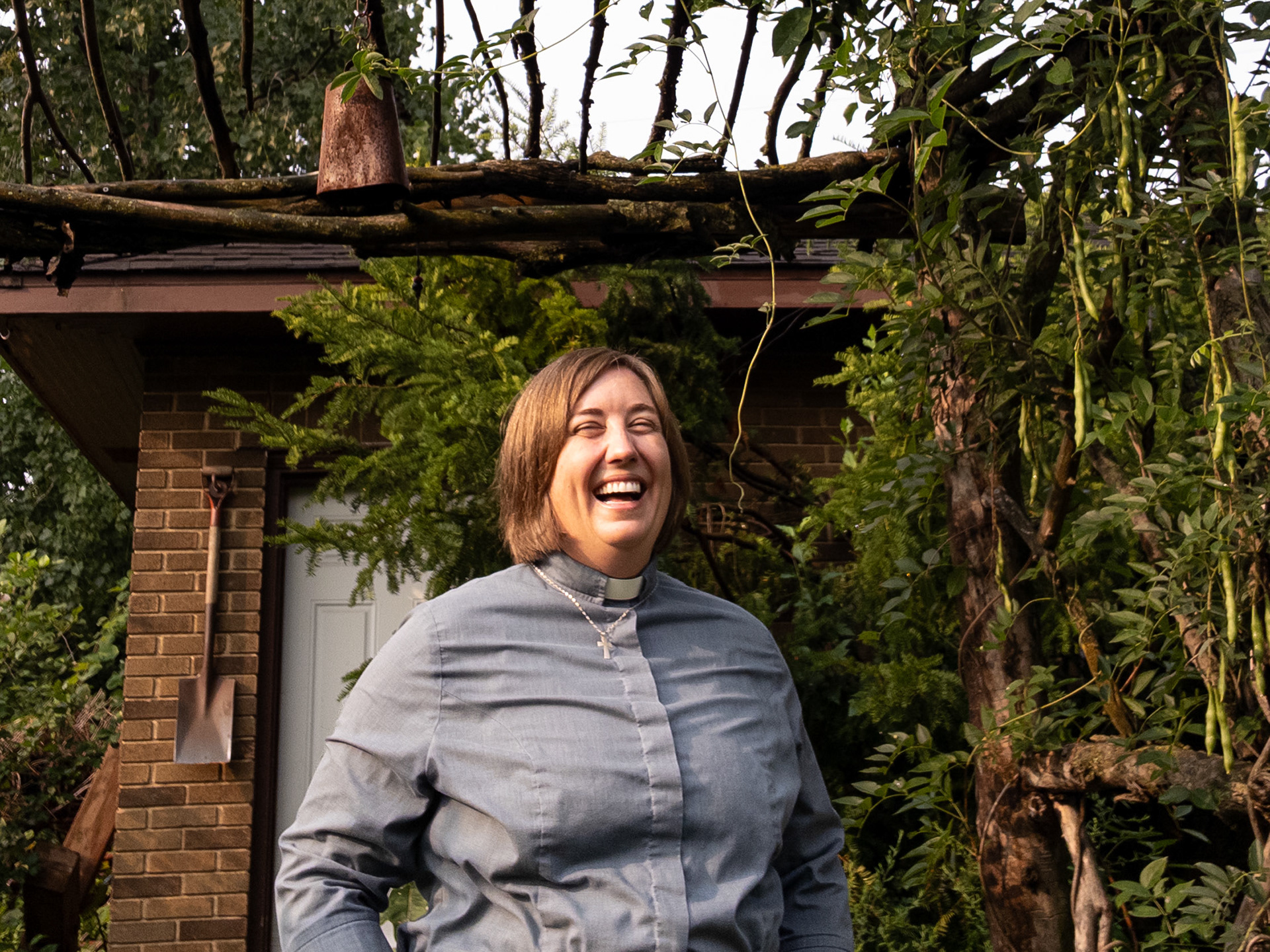
The kingdom of God is often full of small true things that grow - mustard seeds that grow into a bush that all the birds of the air can nest in and all the different kinds. It's not a cedar tree that you can build a cathedral out of. It's a little bush in your garden that's feeding people and that's actually Jesus' vision.
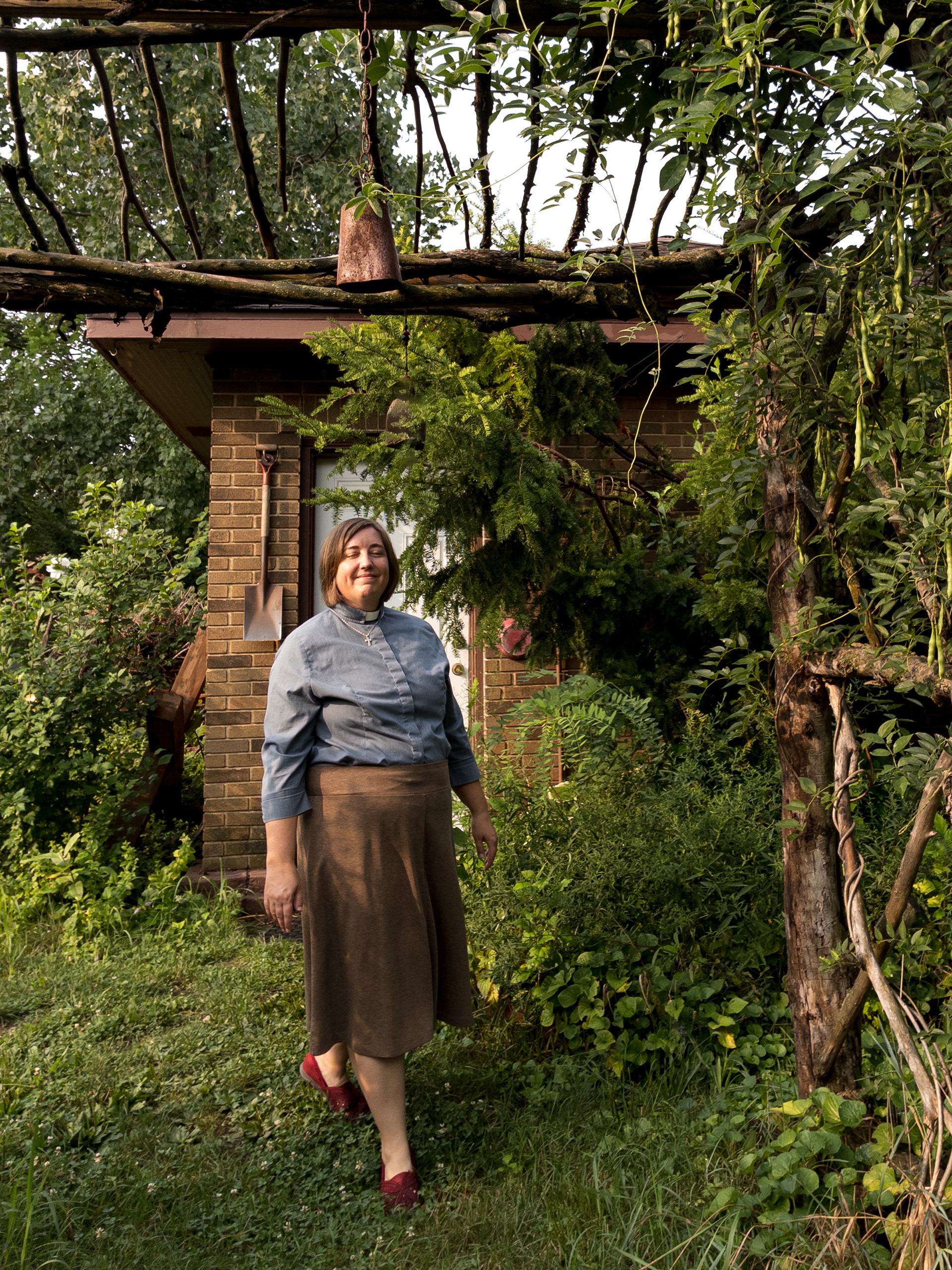
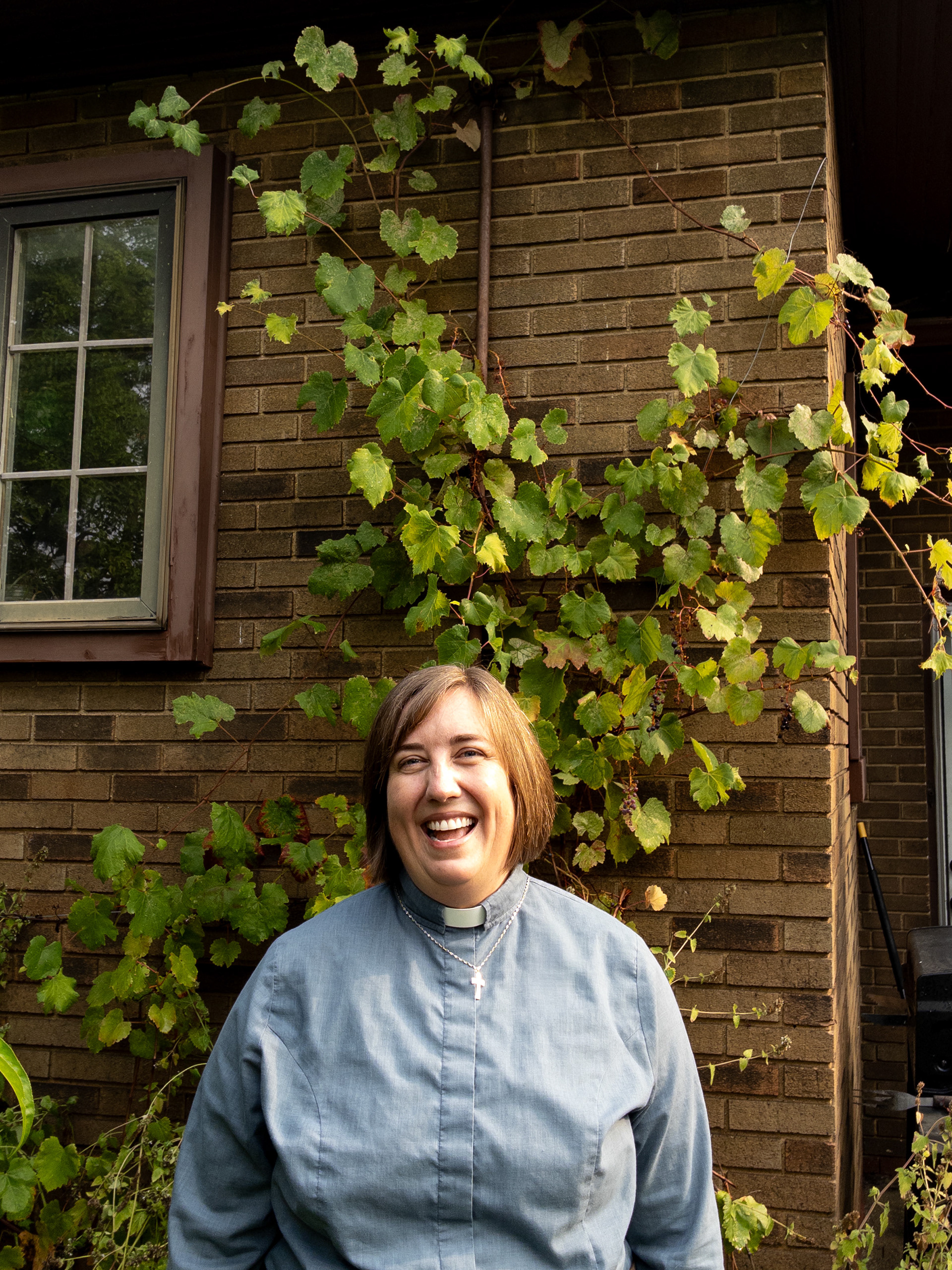
Make sure that you keep your relationship with God very clear and present because, and this is true for women and men, but it happens a little more frequently for women clergy, not every person is listening to the Lord. Learning to discern the voices that are the Lord and [knowing that] there are wolves in sheep's clothing as you pastor is really important.
heather & juliet
Transcript
Juliet San Nicolas de Bradley
Hi everyone and welcome to Call and Response, the storytelling project where we hear the stories of women and their call to holy orders. Today I'm joined by Heather. Will you introduce yourself?
Heather
Hi, my name is Heather, and I have been ordained for about sixteen years. I serve in the Midwest.
Juliet San Nicolas de Bradley
Wonderful. We're going to just jump straight into it. Can you tell us the story of your call to ministry?
Heather
I grew up as a pastor's kid, and I thought that that pastoral ministry sounded really boring, to be honest: lots of committee meetings and people with the same complaints over and over again who weren't really doing very much. I thought it would probably be a pretty terrible life. But I also grew up in a church that was in the PCUSA, and women in ministry was never a question in our church. I knew women pastors, so that was not really a question. In college I became Anglican through a long discernment of wanting to be more open to the Holy Spirit and also being connected to the historical church. I was still not thinking of being a pastor. I had thought about doing international missions, which I have done, and also being a professor or a writer, which I also do. Pastor wasn't really on my radar.
One summer, I think after my junior year of college, I had been planning to take a mission team to a Western Chinese province near Tibet. It happened to be the year that SARS broke out, and so the whole thing was canceled. I wound up doing urban ministry in Vancouver with a group called Urban Promise. I think that particular ministry has shut down now, but there's still a chapter in Camden, New Jersey. They worked with local churches to provide basically free daycare that was heavily Christian-based. Then they had teenagers who'd gone through the program, as well as volunteer college students, help facilitate it. They worked with churches, and these churches were not just hosting Urban Promise, but also hosting homeless ministries. My husband and I were dating then, but he also did it with me. We were placed in this church that was doing all kinds of amazing things to impact their highly international, diverse, and low-income neighborhood. They had all kinds of different people at that church, and it was the first time I saw a church doing mission together and looking like the kingdom of God. That was really inspiring.
During that summer, I had a quiet time where I was reading the end of the Gospel of John when Jesus says to Peter, “if you love me, feed my sheep.” I felt like the Lord was speaking directly to me and saying, “I want you to feed my sheep.” I had this call to help churches at the time. I think this is actually a common sentiment now, but at the time I had not heard it. It was a call to help churches do what parachurch organizations had been doing, to help churches actually do mission together. Even then I was still thinking, “Okay, I'll think about that.”
A few years later, I was married, and I was doing work in an East Asian country. It was difficult to find the sacraments, and in that particular context the Chinese nationals were barred from participating in the sacraments. I felt a stronger call to the priesthood., I also love writing. I'm pretty intellectual, but I also love all kinds of ages.I was encouraged to get a PhD and do the academic route, but the thought of being stuck with just one age group and the thought of the forever rotating community of students sounded really hollow. I wanted to make sure that people had access to the sacraments who might not usually have it. That's been a big mark of my ministry going forward. I don't know what a typical ACNA church is, but I definitely know ours is not very typical. I've been able to bring the sacraments to people that normally wouldn't participate in them. Those are the beginnings, and then there's a long story about leaving the Episcopal Church, but it's less interesting. So we'll skip it. I wound up in the ACNA.
Juliet San Nicolas de Bradley
I love that you had that experience of being in a church that looked like the kingdom of God. I'm a woman of color, so it's particularly significant to me. Within the ACNA, there are not a lot of diverse congregations. Because we're in the middle of church planting, we don't have a consistent service right now. So we get to visit other ACNA churches, which is really fun for my family. A few months ago we visited Vintage Pasadena, and I walked in, and I had this full body weeping moment. It was the first time I walked into a church where there were people like me. It wasn’t only that there were people of color. There were mixed race people and mixed race couples. There were children running up and down there. I had never experienced that in the ACNA. It was this Holy Spirit moment of what the church could be. This is what the church could be.
Heather
That's beautiful. I'm glad to hear about that. I hadn't visited that church before, so that's wonderful to hear that.
Juliet San Nicolas de Bradley
I loved it. It's what my husband and I are hoping for with our church plant. I love that you had that experience so early. You walked into a church, and you saw not just a diverse congregation, but one that is actually trying to meet the needs of their community and doing the mission of God.
Heather
Yes, it was a huge blessing. Now that I've ended up serving for twenty years, mostly in North America, I know not every community has diversity. It feels like such an essential part of actually living out the gospel, specially in communities that do, to not acquiesce to historical injustice and division. It's hard work, and it's slow growth. I was a church planner too. I think I graduated from being a “church planter,” but I'm still at the same church. It's hard work. It's not a vision everyone catches, but when it happens, it's absolutely a miracle, and you can't deny that the kingdom's at work.
Juliet San Nicolas de Bradley
I love that. I needed to hear that.
Heather
Well you probably know this, but Peter Wagner was at Fuller as kind of a church history mission guru guy. He invented the term “third wave,” for example. He did a lot of the framing of church history. He popularized it, and wrote a lot of popular books. He's a mixed bag. One of the really unfortunate things that he propagated, was really common in the eighties and nineties. I've run into it a bunch because our church is also multiethnic, and it always has been. He studied missions in the context of India, which has a deep caste system. The missionaries found that if they planted caste-specific congregations, they grew faster than if they planted diverse congregations. So he took that idea back to the US and said that because we're a racially fragmented culture, instead of trying to get everyone together, churches grow faster when they're racially and economically monolithic. That idea became really entrenched. Even when I was planting [our church], I had a lot of well-meaning people just say, “That isn't gonna work. You know that people aren't going to want to go.”
It is true that there are a lot of people from every background that won't do it. You have to have a certain kind of a heart to be uncomfortable. We always joke that everyone at our church is a little bit uncomfortable, and no one is totally getting what they want. That is actually a sign of the kingdom, and it's formational for all of us that we don't get to have church the way we want it because we're actually looking out for the needs of one another. It’s James chapter two. We're not showing preference to anyone, and that means that we don't scratch anyone's perfect cultural itch, and we have to take turns, and that is formational. It isn't fast growth at least not in Indiana. Maybe in California? I don't know, but here it's definitely not a fast growth model. But it's right, and the kingdom of God is often full of small true things that grow, like on Sunday's lectionary. [The mustard seed] grows into a bush that all the birds of the air can nest in. All the different kinds. It's not a cedar tree that you can build a cathedral out of. It's a little bush in your garden that's feeding people, and that's actually Jesus' vision.
Juliet San Nicolas de Bradley
I love that. Could you talk about what struggles and barriers you've encountered on your journey to ordination or since being ordained?
Heather
I received a sense of the Holy Spirit leading me there around 2003. I was ordained the first time in 2009. and that is right when the ACNA was forming, and the whole blow up of the Episcopal Church was happening.
My main struggle with ordination was figuring out where I belonged. I went through three different dioceses in the Episcopal Church. In each one, my local congregation said they’d love to put me forward for ordination, but no one from their congregation could get through the ordination process. In the last one, it was “if you won't agree to perform same sex marriages,” then you won't get through the ordination process here. I think at the time it might have been blessing same sex unions, depending on the state. Then I went to Yale Divinity School. There were many great things, but I also began to taste a different approach to Christianity that was more of a reference to cultural history without real belief. A “cross your fingers during the Nicene Creed” kind of thing. There was a lot of what's also plaguing even people in the ACNA now: a sense that you can disconnect your ministry and public life from your personal holiness. That was such a deep belief among many people, and unfortunately is not something we addressed well enough in leaving the Episcopal Church. I think we carried it with us. We often focus on the human sexuality issue, but there are the issues of racism and being the wealthiest per capita church in the world. I had a class on how to run an endowed parish, what to do if a senator loans you their yacht, and like things like that. There was a real expectation that we were being groomed to pastor the wealthiest people in the world. And that wasn't my calling. Then, consistently, there was an attitude that the people around the world, particularly regarding the Anglican communion, who wanted to continue living out biblical holiness were just uneducated, backward people who hadn't been enlightened and didn't understand science and things like that. It was not a real posture of mutual submission and listening, which is what attracted me initially to like a sacramental life.
I eventually wound up in the Diocese of Albany because they were at the time what was called a “network diocese.” They were affirming or supportive of historical Christianity while still in the Episcopal Church. The ACNA had not formed yet. That was out there at the time was the Anglican Mission in America. They did not ordain women to the priesthood. There was also something called CANA, which initially supported women in the priesthood, and then they switched. I definitely thought women should be able to be priests and senior pastors and preach sermons and do the sacraments. That's a non-negotiable for me.
I was willing at the time to be in fellowship with people that disagreed with that, but I knew really strongly that my identity in Christ was through my baptism. We represent Christ through our baptisms and through what Christ has done for us on the cross, not through the particularity of our bodies, because the Holy Spirit falls on all flesh. So, that was not something I was willing to part with, even as I was still in discernment. At that time, I was feeling pretty strongly that I was called to be ordained. I wasn't sure what my ministry would look like, but that was the next thing God was calling me to do.
Finally, I went to the Diocese of Albany, and they were actually also more culturally conservative. It turned out that although they technically had women priests, none of them were rectors, and they were mostly doing children's ministry at the time. I don't know what it's like now, but they were also Anglo Catholic, and I was not. I would say my view is something like receptionism [regarding the Eucharist]. I like to think of it as a mystery. I guess the Church of the East is more like my kind of approach to sacraments in that you don't define it too much. It's a mystery. Christ is there, and maybe someday we'll find out, but I doubt it. I don't think it's that kind of thing, on this or the other side of eternity, that Jesus say, “let me explain to you exactly how this works.” I don't think so.
I was a philosophy major, so I just thought of transubstantiation as a very particular historical moment, and I didn’t need to believe that. If that's how it works, great, but I'm not gonna die on that hill. Anyway, I got to the ordination interview in Albany, and my husband was also going through that process. He came from a Vineyard background. He didn't actually believe in the “real presence” in the sacraments, and he wasn't sure he really wanted to be ordained at all. He's actually a Bible scholar now, and he didn't get ordained. He was just exploring it. They interviewed him, and they asked why he wanted to get ordained. He said, “Well, I want people to know Jesus loves them, and I like helping people.” They were like, “Great, you pass.” Then I went in, and they asked, “What is your view on transubstantiation?”
I actually gave the Anglican answer. I said that [the Eucharist] is a mystery, and [transubstantiation] is contrary to the plain words of scripture, as it says in the thirty-nine articles, but I'm okay if it turns out to be the case. They said, “We don't think you're very educated about the sacraments because you don't believe in transubstantiation. So we'd like you to take more classes and you can come back in a year.” They were also concerned, citing a conversation I’d had with someone. They said that I had shared an opinion when I should have listened. It was just really, really sexist and really troubling. At that point, it was my fourth diocese in the Episcopal Church.
I had a dream like not very long before that, that I was on a ship. I was sharing Christ with some people that I met at Yale University, and they were from other places in the world, and they were non-Christians. I took them on the ship, and all of a sudden a storm came up. I looked around and there were different people that I knew from my time in the Episcopal Church. They didn't know how to steer the ship through the storm, and it started sinking.
I said to them, “I'm so sorry I've taken you on a sinking ship. We're gonna have to jump and swim.” I looked behind, and the cross was going down under the horizon.That dream stuck with me, but I wasn't prepared. I was just sitting on it, and then this happened, and I said I can't do it anymore. At the time, ACNA did not exist yet. So, I cast about for a while. Meanwhile the PCUSA church that I grew up with had become Evangelical Presbyterian Church. They were going through a similar kind of split, so I went to a conference with my dad. I thought, “well, at least they believe in Jesus. That's something, you know.”
I ended up getting ordained in the EPC, although it wasn't very Reformed. I never was able to get a call in the EPC because they had women pastors, but they didn't call them. They had children's pastors. Then I moved to South Bend, and I worked in a CRC church, which had pastor exchanges with this EPC. In the local presbytery, well, first of all, I should say that it ended up being a horrible situation. The pastor was really inappropriate, not only with me but with parishioners. I kept having to like to bring it up and ultimately he gaslit me and had me fired. He was later fired when some of his private activities became public. The church later apologized to me and did a reconciliation, which was really beautiful. So it ended up being a beautiful story, but in the midst it was quite awful.
I had to transfer from one presbytery to another, and because I wasn't a five-point Calvinist, they wouldn't take me. But it was also because they also weren't very excited about me being a woman pastor. So then I thought, “I don't fit anywhere. I don't know where I'm going or what I'm going to do.” I called my internship supervisor, who was an Anglican priest named Jeff Little. He had been in the Episcopal Church when I was there. He pastors a tiny multiethnic church in New Haven. His wife is Cuban, and he's white but was a missionary in Peru for a long time, and they have the most beautiful congregation. It was wonderful. We just loved them. Now it's called All Nations Anglican. When I was there, it was St. James Episcopal. Anyway, I called him, and he had left to join the ACNA by then. I said that I just didn’t think it was going to work out. Nobody wants a woman priest who's still committed to scripture. If I was not committed to scripture, I could probably do this easily, but that just defeats the point. I didn’t want to do that. I didn’t know what I was going to do. He said that I needed to join the ACNA. I thought, “I don't know. They're gonna find something wrong with me. They're going to reject me.”. He said, “no, I think you would fit there.” I doubted it. He said, “I'm looking at the website for your diocese, and it says, “Are you interested in church planting? Click here.” We were beginning to discern a call to either go back to the mission field or do church planting.” He's said, “I want you to get on there and click.” So I did. They said, “You have a degree in Anglican studies from Yale? When can we ordain you?”
By then, the Lord had made it clear that we were being called to plant a church in the neighborhood where we lived, which was highly multiethnic. The Lord had given me this dream, and He gave it to two other people. They came and told me my dream, in great detail, including the place and the people in it. In the dream, I was wearing a stole and alb, which Presbyterians don't wear. I followed up on the details of the dream, including the ACNA, and every detail came about within three months. God opened every door. It was so amazing. These other people had the same exact dream. It was this confirmation in the Spirit. So I was ordained in the ACNA somewhere around 2011-2013 for the diaconate and the priesthood. I've been here ever since.
As far as hard things about being a woman in ministry in the ACNA, [first] there's on the ground. There are people that find out that your church has a woman pastor, and they don't come. On the other hand, I think I have a very low drama church, despite having sometimes up to 14 different nations as part of the church and all these different economic backgrounds. We just don't have a lot of drama, and I think part of that is that people who need to be in control don't often go to churches with women pastors. There's something less powerful and controlling about it. So, in some ways, I feel like I've had a very easy road because being a multiethnic church with a woman pastor has weeded out a lot of people. I hear the things some of my friends go through as pastors, and I think that people like that have visited, but they never came back. So, in a way that's a blessing.
But it was painful. It'll be painful for you, I'm sure. Early on, it was painful. I've learned to just trust it. I was the moderator for the ACNA Facebook page for a while, and I got a lot of very serious vitriol. It was as much for standing up for multiethnicity and immigrants as for being a woman, but I had people send me videos of them shooting things and all kinds of threats. They just felt so entitled to say the most nasty things. I'm pretty tough, and I didn't internalize it, but it would make me angry. It would just take up my day with anger and disgust. Ultimately, I felt like it wasn't good for me to be there, and was happy to not do that anymore.
Juliet San Nicolas de Bradley
To close us out on a happy note, what is a moment where you felt joy or the delight of the Holy Spirit as an ordained clergywoman?
Heather
I've really had a lot. In fact almost every Sunday, no matter what, recently, I've been doing immigration legal aid in a very difficult era. And my husband runs a college in a prison. So, we come home and trade stories. We say, “Can you top that?” Who had the craziest day? But we often talk about how when we actually go to church and worship with our congregation, it is a sign of the kingdom. It encourages us, and we feel the Holy Spirit. I was thinking about your question and I thought, “how do I pick?”
I'll just tell you one that happened last week. Our church has always done outreach to youth in our neighborhood. We lost our building about 18 months ago because the new owner didn't like that we were helping immigrants. They kicked us out, so we're not in our neighborhood right now, which has been hard. We've always reached out to this neighborhood and all these youth. There's a family that we've been picking up and taking to youth group. Just ministering to them. About two Easters ago, three of the kids were baptized, but their older brother wasn't able to. Our diocese did a youth mission trip a couple of weeks ago with Anglican Relief and Development Fund and the two older brothers came. The oldest brother that hadn't been baptized really wanted to get baptized. His mom has just talked about how hard it is to be a single mom. I can tell that she believes in God, but maybe hasn't felt like she belonged [in church]. She grew up as a neighborhood kid who went to a church sometimes, but it was a really legalistic church, and she’s had a hard life. So, first I got to do this baptism, and it was so joyful. This kid was so excited to give his life to Jesus, and he wanted to be a leader to help his siblings. This is a kid who's gone through a lot.I asked him in baptism training, “What's something about the world that you want to change?” He said, "cussing.” I was really surprised. He said, “I want to stop cussing and teach my family that we don't have to speak to each other in anger when we have conflicts. I want them to learn that we can be kind, and that we could have a different way of being together.” Beautiful, right? That's his vision for his family. We did the baptism, which was wonderful. I love baptisms, they’re one of my favorite things. Then, it was time for the Eucharist. I'm serving the Eucharist, and the second son came through really quickly, right up front: “Give me the communion.”
His mom had not come to church very much. She's was just there for the baptisms, and then she'll meet with me at other times. All of a sudden the second son was back. I thought, “He's double dipping!” He had his mom with him. She came up and said, “I was baptized when I was a kid, but I've never had communion. Can I have communion?” And I said,” Yes.” And he said, “Mom, you put your hands out, and she's going to give you the bread.” So she did. I gave her the bread, and she just started crying. I could see that she was encountering Jesus' love for her specifically. She was being welcomed into the presence of the Lord, through the sacraments that her children have gone before her to take. That was really beautiful and an incredible privilege of being a priest. I think in a way, priests are the only ones that get to see those little moments. It's so beautiful and powerful.
Juliet San Nicolas de Bradley
That is so beautiful. I have cried every single interview. There is not a single interview that I have not cried at least once.
Heather
I love that you're a crier. I love that.
Juliet San Nicolas de Bradley
I would say your story shows the persistence of both your faithfulness to God's call and of the Holy Spirit. There were so many closed doors for you, but the Holy Spirit opened doors and helped you persevere through that, which is really incredible. In light of your story, what would you tell someone [thinking about ordination]?
Heather
I think that if the Lord calls you to ordained ministry, then the Lord will provide for you and give you the ministry that you're called to do. I think there's a tension about being a woman in ministry, at least in our denomination, in that all ordained people are ultimately subject to the will of God and the authority of Christ. But then we try to work in subjection with our leaders and our wider church. I think being a woman in ministry, you always have to hold that first thing really closely, and make sure you're checking in with the Lord. Make sure that you keep that relationship with God very clear and present. This is true for women and men, but it happens a little more frequently for women clergy, but not every person [you encounter] is listening to the Lord. Learning to discern the voices that are the Lord and [knowing that] there are wolves in sheep's clothing as you pastor is really important. I also think that it is important to invest in the wider church, but don't ever exchange that or lose focus or let it shift your focus from the souls right in front of you, because that's the main work.
We're not building the ACNA. We're building the kingdom of God. People may or may not continue to be Anglican, but we want them to be disciples of Jesus, who are citizens of the kingdom. I think keeping that really clear has been important for me. I think it's important for everyone, but for women in ministry where there's so many weird discouraging turns, I think that's the most important thing.
Juliet San Nicolas de Bradley
Thank you. To close us out, would you share a favorite collect? I know it's hard to choose one sometimes.
Heather
I think I am going to do a prayer in the tradition of Francis of Assisi. I think that's one I come back to all the time and has really marked the ministry that I do.
The Lord be with you.
Juliet San Nicolas de Bradley
And with your spirit.
Heather
Lord make me an instrument of your peace. Where there is hatred, let me sow love. Where there is injury, pardon. Where there is discord, union. Where there is error, truth, where there is doubt, faith, where there is despair, hope. Where there is darkness, light, where there is sadness, joy.
O divine Master, grant that I may seek not so much to be consoled as to console, to be understood as to understand, to be loved as to love. For it is in giving that we receive, it is in pardoning that we are pardoned, and it is in dying that we are born to eternal life. Amen.